Chicago wildfire smoke: Will "smoke season" become the new normal?


Add Axios as your preferred source to
see more of our stories on Google.
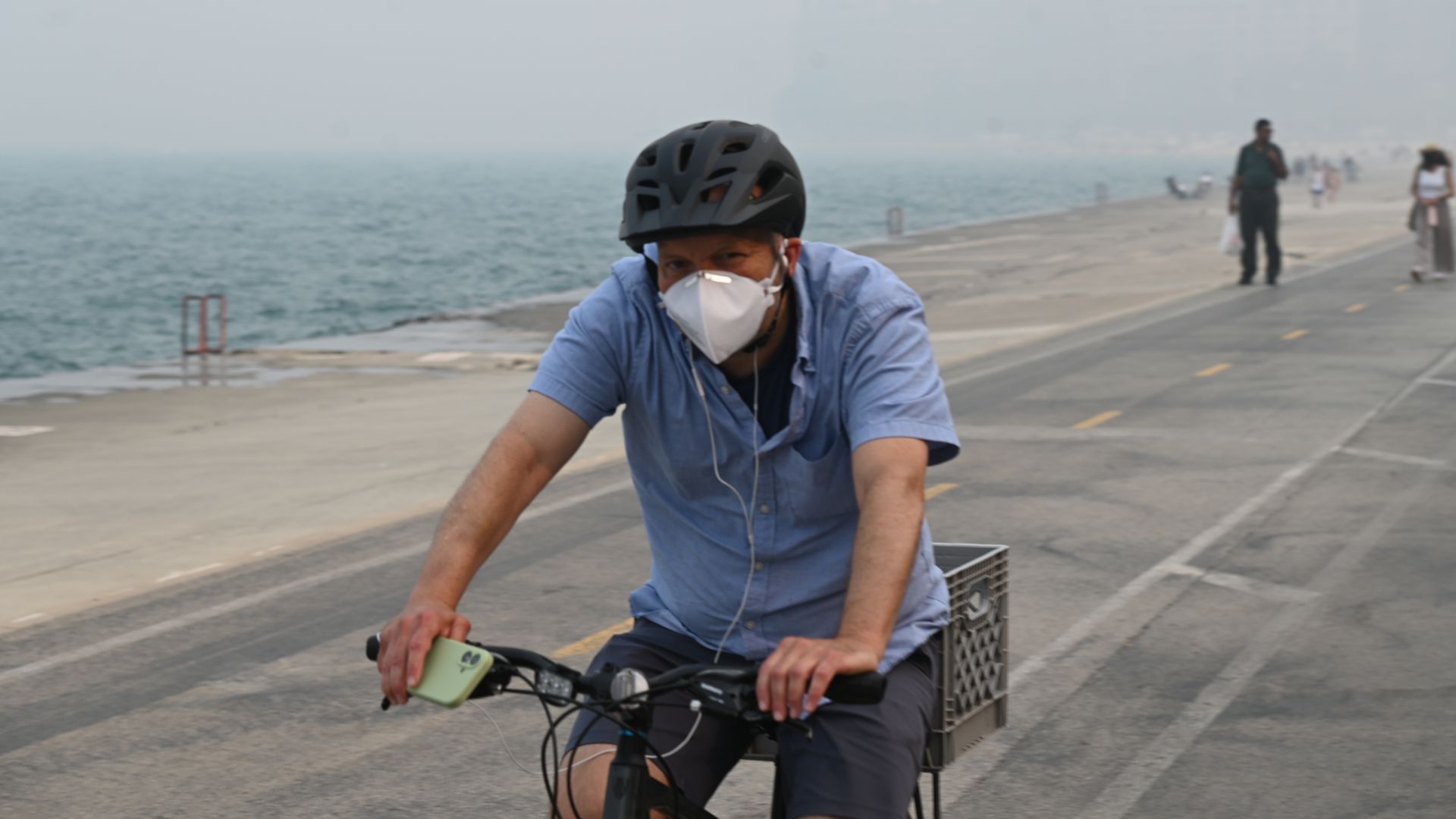
Smoke hangs over Lake Michigan on Thursday. Photo: Jacek Boczarski/Anadolu via Getty Images
Two days of hazardous air may force Chicago to face a new reality: We may need to start planning for a yearly "smoke season."
Why it matters: Chicago has always planned around winter storms and summer heat. Wildfire smoke may become another seasonal disruption for residents, businesses and public agencies.
The latest: Smoke from massive Canadian wildfires blanketed a large swath of the United States this week, pushing air quality to hazardous levels in major cities.
- Chicago was the most polluted major city in the world on Thursday, according to IQAir.
By the numbers: Chicago's PM2.5 levels reached as high as 669 on Thursday. Anything above 300 is considered a "health warning of emergency conditions," according to AirNow.
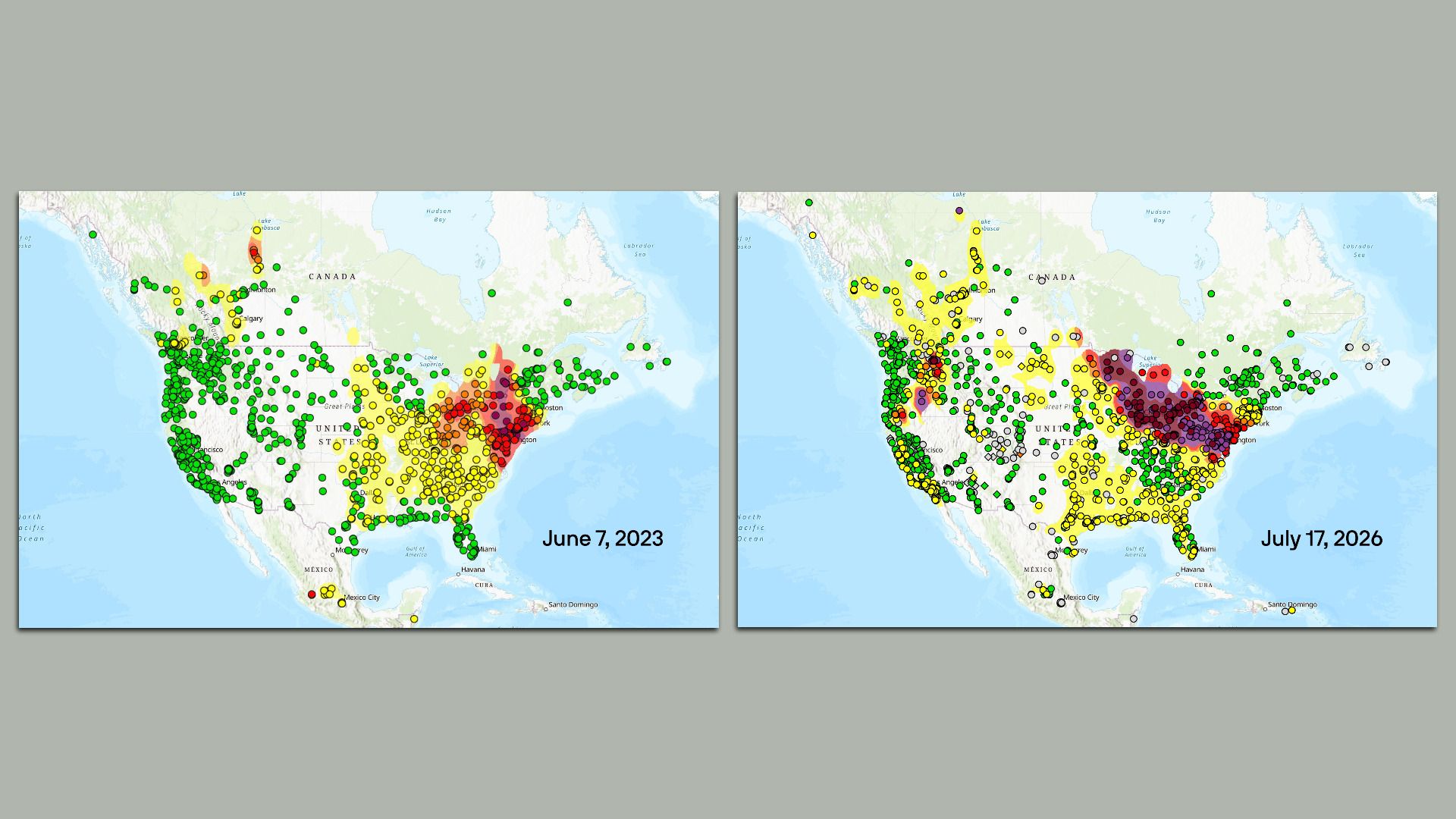
The ripple effects: Smoke didn't just keep people indoors. Restaurants closed patios, day camps shut down, outdoor concerts were canceled and festivals scaled back.
Zoom in: Indoor spaces felt the sting, too. HVAC units were working overtime to filter out particles while dealing with the extreme heat.
- Systems can be damaged when filters clog with soot and ash. It also spikes energy consumption and can cause systems to overheat.
What they're saying: Wildfire smoke can also affect the power grid by driving more people indoors and prompting them to run their air conditioning.
- "If temperatures were milder and people had their windows open, then worsening air quality could prompt more households to turn on their AC, creating a noticeable increase in demand," West Monroe Energy and Utilities senior partner Tim Valin tells Axios.
- "Ultimately, it's the weather-driven cooling load, rather than the air quality alone, that utilities are managing."
Zoom out: It's too early to tie these wildfires directly to climate change.
- But researchers have shown that human-caused climate change is making wildfires more likely and more intense.
One headline finding from a Climate Central report last year: "Per-person exposure to harmful wildfire smoke in the U.S. was four times higher during 2020-2024, on average each year, than during 2006-2019."
The bottom line: Americans out West have long understood "fire season." Chicago may need to start thinking about "smoke season," too.