Chicago storm damage: What to do when your home or car are hit

Add Axios as your preferred source to
see more of our stories on Google.
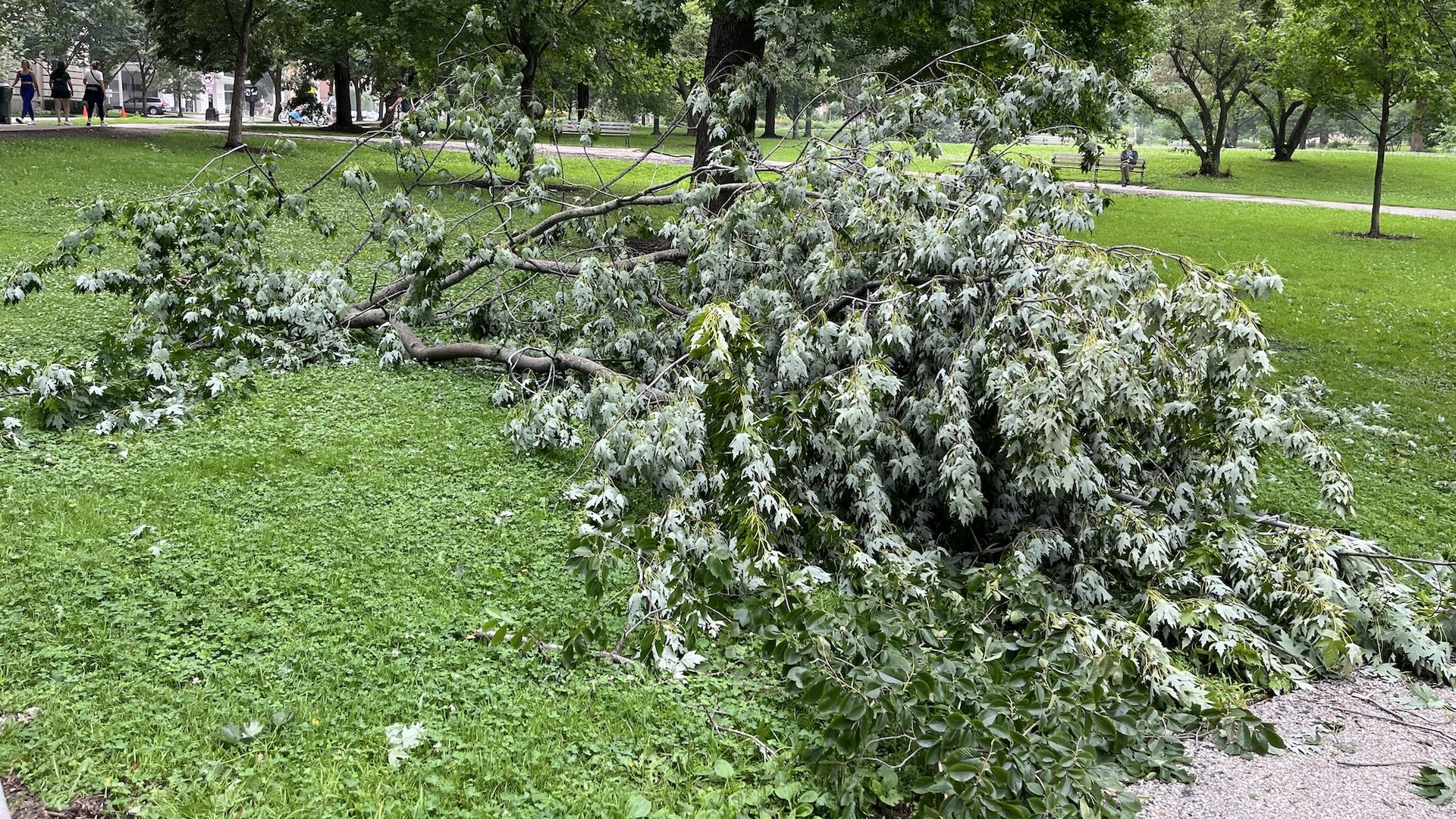
Tree down in Lincoln Park on July 5. Photo: Carrie Shepherd/Axios
Continuous heavy rainfall and storms in Chicago have led to fallen trees and flooded homes. Here's what home and car owners need to know.
The big picture: Climate change is leading to more precipitation, extreme storms and flooding. Average rainfall could increase by up to 10% by 2069, according to Chicago's Climate Action Plan, putting pressure on some of the aging infrastructure designed to deter flooding.
Reality check: For the first time in history, Chicago's Deep Tunnel, the massive underground system meant to hold flood water, is almost full after a weekend of heavy rain. Suburban reservoirs are also near or at capacity, increasing the risk for sewers to overflow into the waterways.
State of play: Heavy storms over the July Fourth weekend knocked out power for nearly 300,000 ComEd customers, left CTA Yellow Line passengers temporarily stuck, stranded drivers, poured water into CTA buses and left homes underwater.
Flashback: It wasn't just last weekend. Officials are still surveying the damage from last month's storms. If homeowners experienced damage during the June 10 and 11 storms this year, they can fill out a survey that OEMC will use to determine how much additional assistance may be needed.
What to do: Call 311 or file a request online for tree emergencies, such as limbs, branches and other parts blocking streets.
- Chicago's Department of Streets and Sanitation continues to clean up debris and does not have a timeline for completion, a spokesperson tells Axios.
Fallen trees
From loose limbs and branches in parks to more severe cases like trees on roofs and cars, fallen trees can wreak major havoc.
- Here are some tips from insurance experts on what to do.
If a tree falls on your house, reach out to your insurer or agent as soon as you can to file a claim. Your property insurance typically covers the cost of removal and repair of any damage, insurance expert Lynne McChristian writes on the American Property Casualty Insurance Association (APCIA)'s Substack.
- Yes, but: If the fallen tree misses any structure, it's on the homeowner to pay for the cleanup. Insurance covers only tangible property damage, so flattened grass or ruined landscape doesn't count.
Document the damage with photos and/or video, and don't throw away damaged furniture or items, as insurance adjusters will need to see them.
- Make temporary repairs if it's safe, like holes in the roof or broken windows, and keep all receipts.
- If your house is uninhabitable, ask your insurance company whether it covers additional living expenses, such as temporary housing.
If a tree falls on your car, comprehensive car insurance covers damage beyond collisions, but not everyone has that, so call your agent or dig into your policy.
- You don't need to leave the tree on the car, McChristian tells Axios. Take photos and submit them to the insurance company, but it's always a good idea to call the insurer to see how they prefer to handle it, she adds.
Like a good neighbor
If your neighbor's tree damages your property, your insurance covers it, unless the neighbor knew the tree could fall because it was diseased.
More help
You may be eligible for disaster assistance, but beware of scams. Call your insurer first to report the damage and start your claim, APCIA warns.
- Attorney General Kwame Raoul's office also has tips to avoid scams.