What happens after the DePaul Art Museum closes

Add Axios as your preferred source to
see more of our stories on Google.
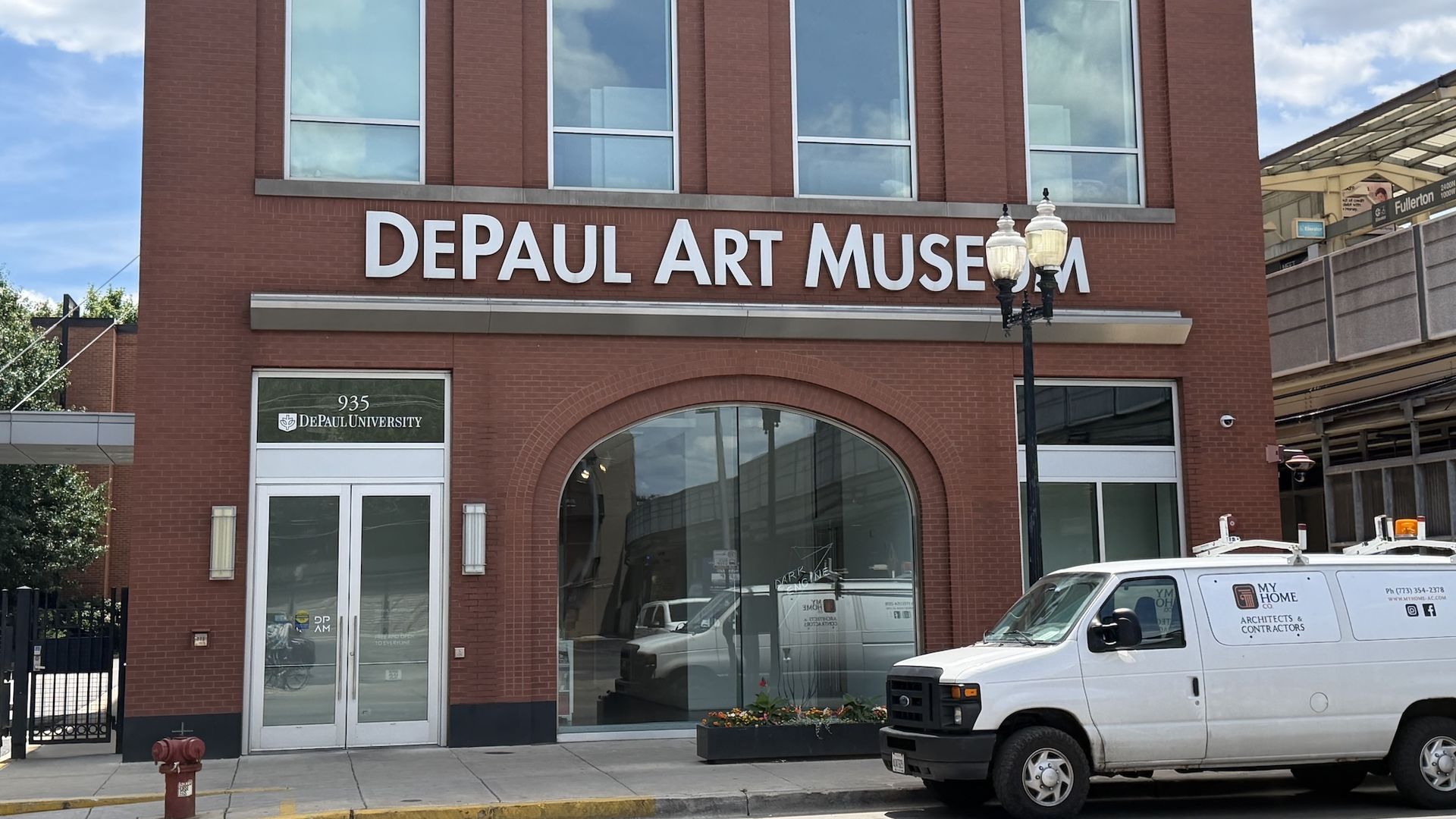
Photo: Monica Eng/Axios
The DePaul Art Museum closes to the public on Sunday, but the permanent collection is staying put.
Why it matters: Opponents of the closure argue that DPAM, which has been dedicated to exhibits centered on social justice and to showcasing underrepresented artists, is essential to helping students become critical thinkers.
- DePaul will continue to keep the more than 4,000-piece collection at the museum's current Lincoln Park location, retaining students' and faculty's access for research and academic purposes.
What they're saying: "I've always maintained that because we are a resource for teaching, we're able to have really difficult conversations in ways that other museums can't, or are much more timid at doing," DPAM director Laura-Caroline de Lara tells Axios.
Between the lines: It's not just art students who lose out when a university art museum closes, de Lara notes, but all students and faculty who use the museum as another outlet to tap into their academic pursuits and interests.
- "We had hospitality students that were helping us to think through how you build up a rental program. We had biology students that would come in and were taking anatomy classes and learning to draw based on sketches and things in the collection," de Lara explains.
Reality check: DePaul has no intention of tearing down the building that houses the museum to make way for something else, a spokesperson tells Axios.
Catch up quick: Last October, DePaul president Robert Manuel projected a $12.6 million shortfall for 2026, with a need to reduce spending by more than $27 million.
- The Catholic university cut more than 110 staffers in December, and its leadership announced plans to close DPAM in February.
The latest: DePaul's Board of Trustees passed the 2027 budget last month, and said in a statement that "university leadership recognizes continued reductions on their own will not position DePaul for future success. Our plans combine continued cost management with targeted investments intended to strengthen enrollment, student success, academic quality, and long-term institutional competitiveness."
Zoom in: Since its opening in 2011, DPAM has featured the works of more than 600 Chicagoans and underrepresented artists, the university noted in its closure announcement.
- de Lara points to the 2021 exhibition "Remaking the Exceptional: Tea, Torture & Reparations | Chicago to Guantanamo" as an example of shows about challenging topics, such as torture and police violence, that DPAM hosted.
- The director says university leadership generally gave her the space and freedom to curate exhibitions that some institutions would shy away from.
What's next: In addition to educational visits, DPAM will loan works from its collection to other institutions, continuing to platform artists who aren't as well-represented in other museums.