Gender stereotypes still influence voter preferences

Add Axios as your preferred source to
see more of our stories on Google.
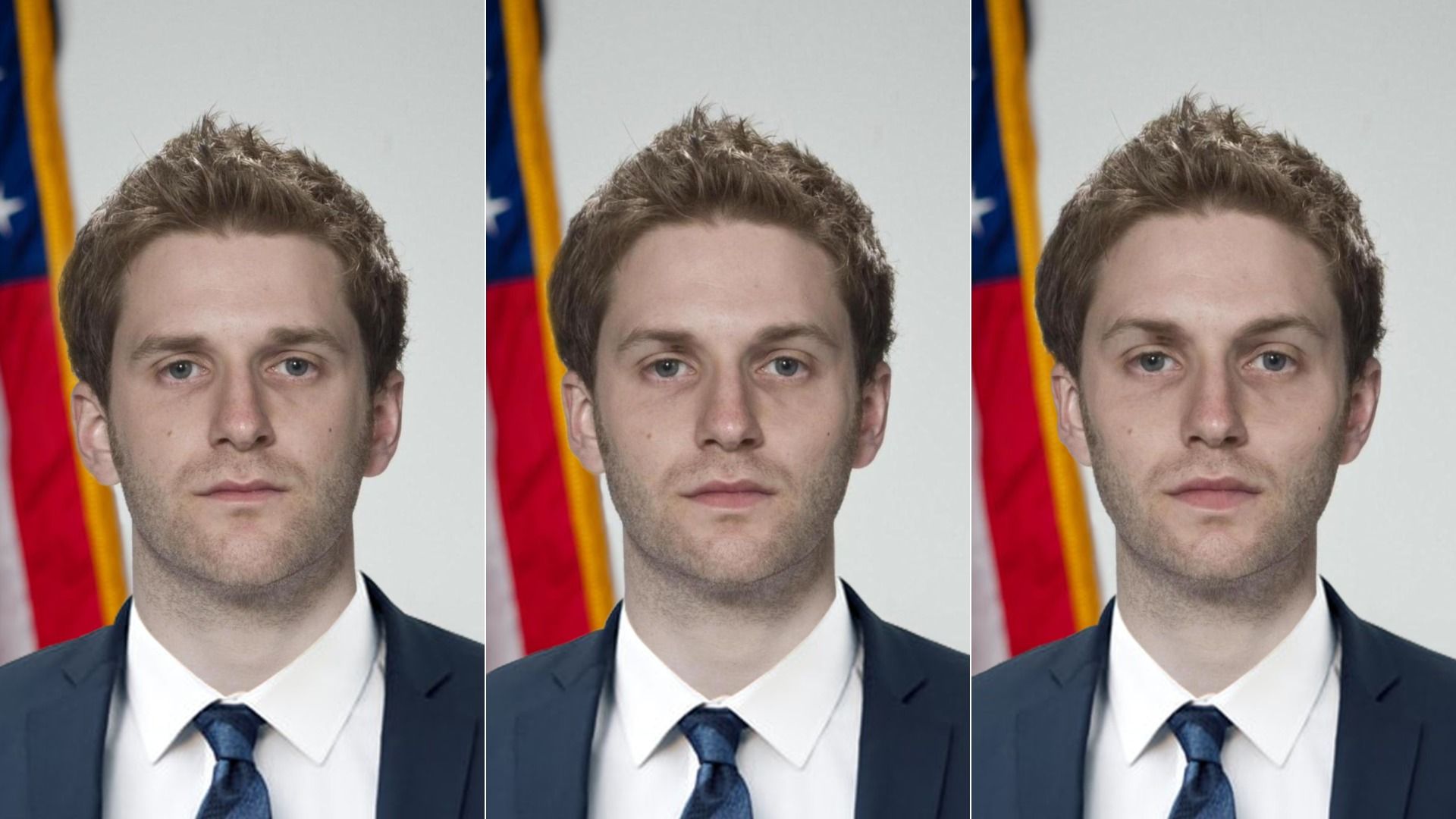
An image of a hypothetical male candidate (left) followed by two "feminized versions" of the same man. Photo: Courtesy of Martin Naunov, Northwestern University
A new study from Northwestern University says voters are more accepting of LGBTQ candidates in the last decade, but that support is conditional.
Why it matters: The research found it's harder for candidates who don't look or sound "straight," regardless of sexuality.
What they did: Northwestern professor and author Martin Naunov asked respondents to evaluate hypothetical candidates based on a headshot and a 20-second audio message.
- Naunov manipulated gender presentation by changing specific candidates' vocal pitches.
- A baseline image of a hypothetical male candidate and two "feminized versions" of the same man, labeled "slightly gender nonconforming man" and "gender nonconforming man," were also shown.
The result: Both Republicans and Democrats express bias against candidates who don't conform to gender stereotypes, Naunov found.
- Democrats prefer gay candidates but penalize those candidates if they don't conform to a traditional, stereotypical male gender presentation.
Flashback: Former South Bend Mayor Pete Buttigieg's 2020 presidential run marked a shift in national attitudes toward LGBTQ candidates, leading Buttigieg to argue that Americans were over "old prejudices."
By the numbers: From 2018 to 2022 alone, there was a 60% rise in the number of LGBTQ candidates, resulting in more than a thousand openly LGBTQ elected officials nationwide, according to Naunov's study.
Yes, but: Buttigieg's campaign led to discussions within the queer community about whether a more effeminate candidate would have been accepted in the same way, Naunov points out.
What they're saying: "I think that most members of marginalized communities already know these biases are operating ... what the study offers is empirical validation of a lived experience that's too easily doubted or trivialized when it sits in personal testimony alone," the author tells Axios.
- "The study also exposes biases among voters who are egalitarian-minded — voters who explicitly reject anti-gay bias ... What the study tries to make clear is that being truly egalitarian asks more than refusing to penalize someone for being gay (or a member of some other minority group)," Naunov adds.
The bottom line: While election results point to more acceptance of LGBTQ candidates in recent years, that's not the full story.
- Researchers need to dig further to understand what other factors are keeping some people out of electoral politics.