Chicago bike lanes spark protests as residents push back on parking loss

Add Axios as your preferred source to
see more of our stories on Google.
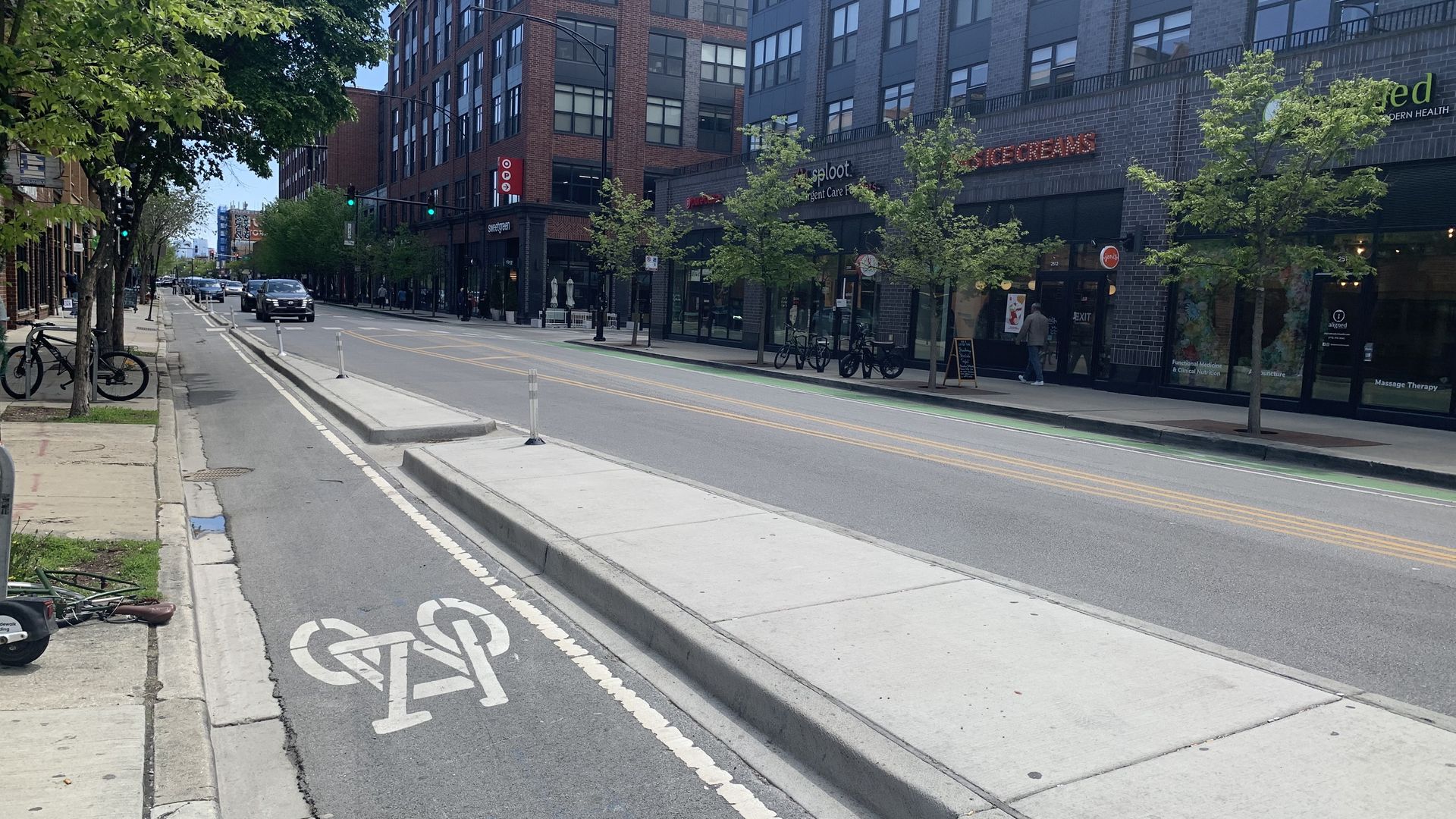
Permanent bike lanes and less parking along Milwaukee Avenue in Logan Square. Photo: Justin Kaufmann/Axios
Chicago's protected bike lane expansion is facing resistance in some neighborhoods, exposing growing tension between cyclists, drivers and residents.
Why it matters: As the city pushes to make streets more bike- and pedestrian-friendly, complaints are mounting about the cost of reshaping how traffic flows through neighborhoods.
The latest: After months of protests, Brighton Park residents won a small victory last week when the city said it would remove part of a concrete-protected bike lane to restore some parking.
- Neighborhood organizers say the change could ease congestion at the busy intersection of Archer and Kedzie avenues.
What's happening: The city's bike plan is reconfiguring some Chicago streets by installing concrete barriers for bike lanes while removing parking spaces.
- It's part of a plan that began along Kinzie Street in 2011 and was approved for widespread implementation in 2021.
- According to the city, traffic fatalities in 2025 were down nearly 30% from 2021.
Friction point: In West Town and Logan Square, some residents say the changes feel poorly planned.
- Along Grand Avenue west of Damen, new bike lanes and bus boarding islands have altered traffic patterns, with buses now stopping in travel lanes instead of pulling to the curb.
- A West Town neighborhood group is protesting a second phase of the Grand Avenue project near Ogden Avenue, holding weekly rush-hour demonstrations that have drawn counterprotesters who say the lanes improve safety.
What they're saying: "This project responds to longstanding community concerns about high vehicle speeds and crashes along Grand Avenue," a Chicago Department of Transportation spokesperson said.
In Logan Square, recent redesigns added protected bike lanes along Milwaukee Avenue, removing parking along a busy commercial corridor.
- Some business owners also worry about faster-moving e-scooters using the lanes, raising concerns about pedestrian safety.
The other side: City officials say they held community meetings over these projects. They are also expanding rider education programs as scooter use grows to record highs.
- "We're bringing together education, infrastructure, and accountability to support safer riding, reduce conflicts on sidewalks, and ensure shared mobility works for all Chicagoans," Mayor Brandon Johnson said.
Zoom out: While some neighborhood protests have led to tweaks, the city is moving forward with plans to expand protected bike lanes citywide.
The bottom line: Neighborhood pushback may tweak projects, but it won't stop the broader rollout.