This 1920s Chinese cafe served up Chicago jazz

Add Axios as your preferred source to
see more of our stories on Google.
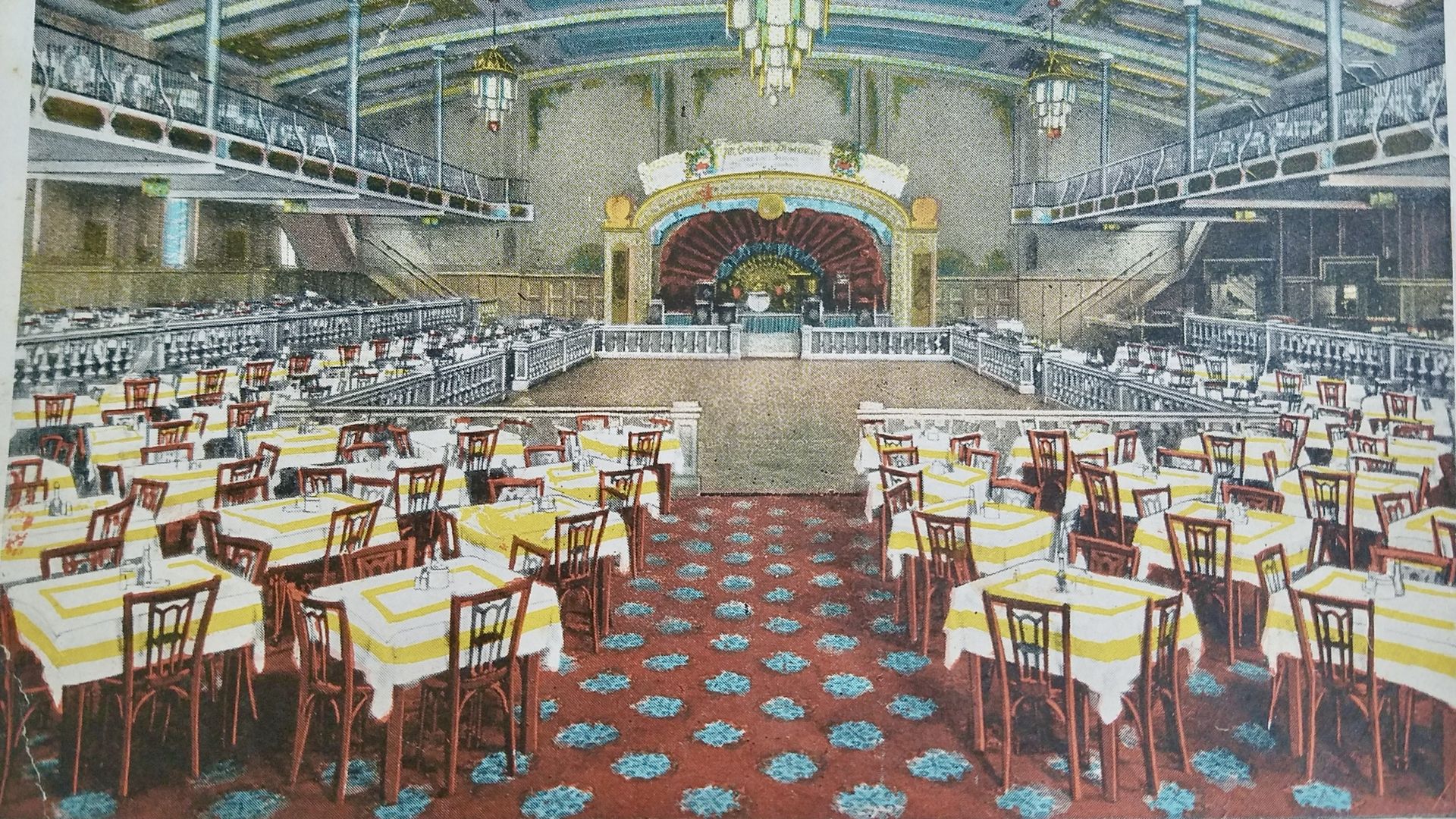
A postcard shows the dining room and stage of the Golden Pumpkin in Garfield Park. Photo: Monica Eng/Axios
In honor of International Jazz Day tomorrow, I'm looking back at the role of Chinese restaurants in jazz history — specifically my great-grandpa, Joe Eng's Golden Pumpkin in Garfield Park.
Why it matters: Few people remember the "Dine & Dance" era of Chinese-American restaurants that ran from the 1910-ish through the '40s, colorfully novelized in Lisa See's "China Dolls."
Catch up quick: In the early 20th century, Chinese restaurants were considered risqué joints by some, including Chicago aldermen who advanced legislation to ban them.
- A 1910 Tribune editorial claimed "more than 300 Chicago white girls had sacrificed themselves to the influence of chop suey joints during the last year" after smoking, drinking and becoming "hypnotized by the dreamy seductive music that is always on tap."
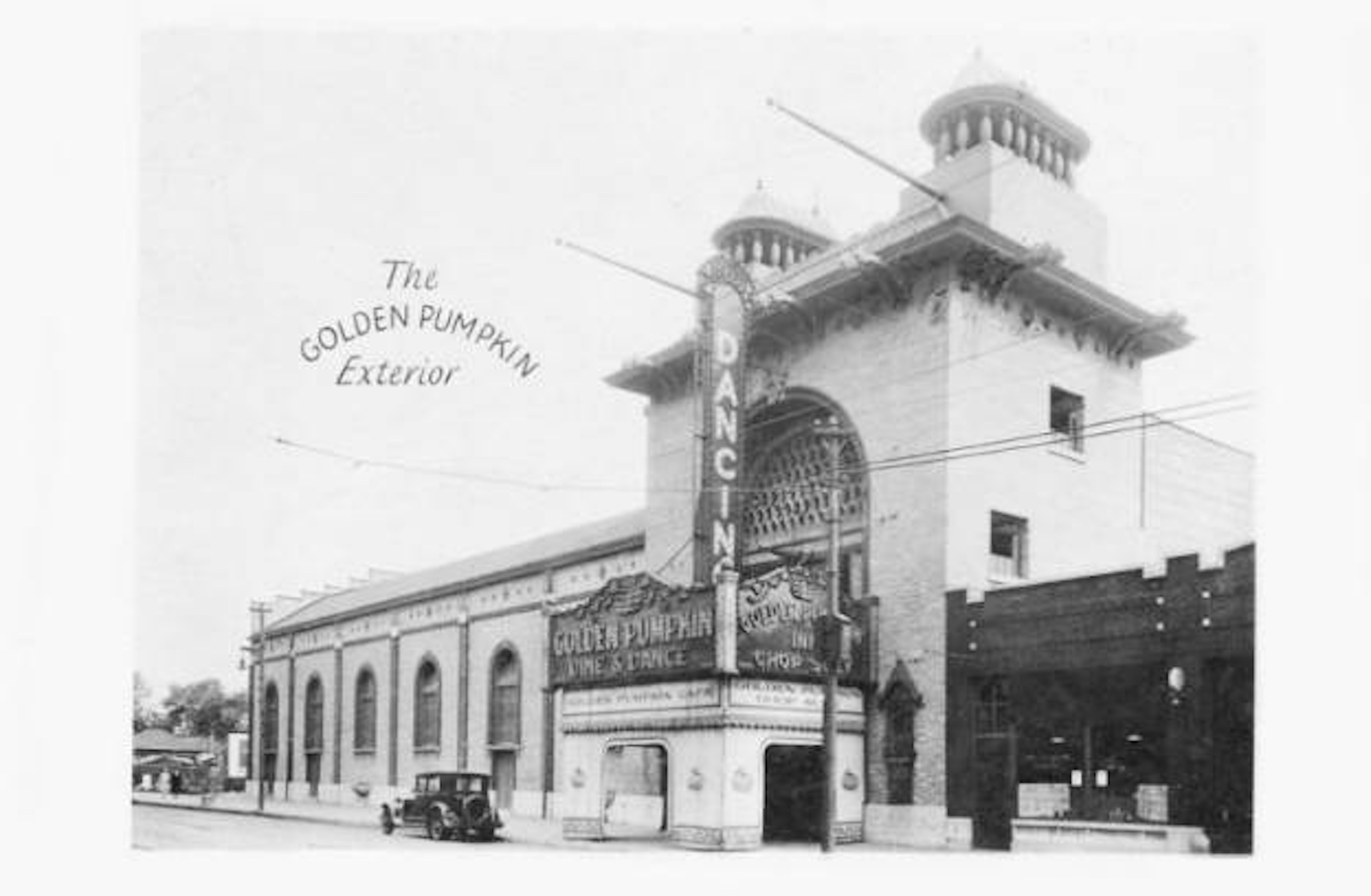
Zoom in: Great-grandpa Joe opened the Golden Pumpkin in 1927 at 3829 W. Madison in Garfield Park's bustling entertainment district anchored by the Marbro and Paradise Theater.
- On one of his postcards, he called it the "largest and most beautiful Chinese cafe in the world" with a capacity for 2,000.
State of play: Thelma Terry, a rare female bassist bandleader, helmed the Pumpkins' house band called "The Playboys," featuring "Austin High School Gang" alum Gene Krupa on drums.
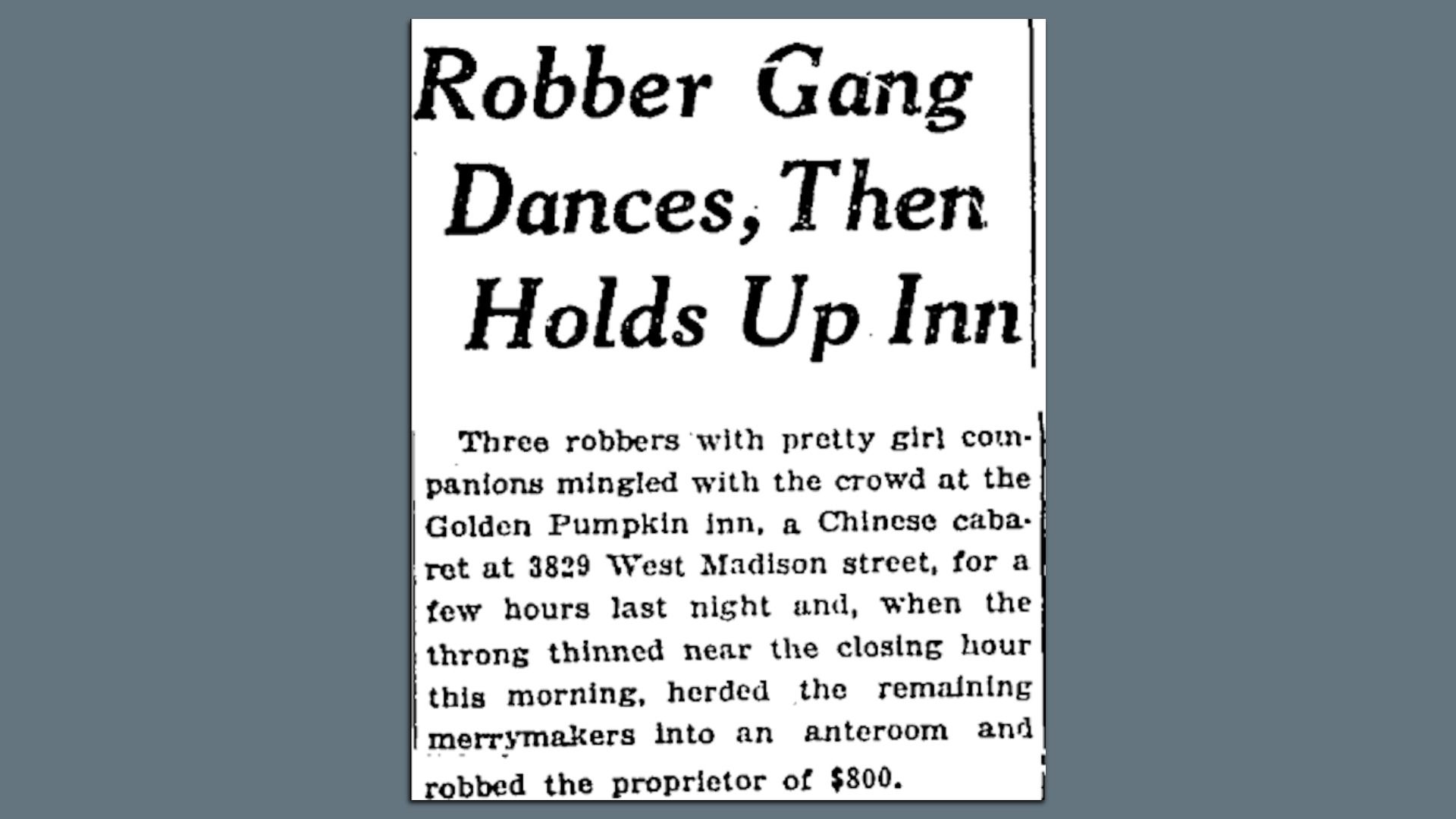
Dining and danger: A 1929 Tribune story described robbers who danced all night at the Pumpkin, sent their "pretty girl companions" home at 1am and swiped $800.
- Later that year, my great-grandpa lost his shirt in the stock market crash and shut the Pumpkin down by 1932.
- He'd relaunch in 1932 with the huge new Hoe Sai Gai on Randolph Street (where Daley Plaza now stands), featuring lush interiors but no more jazz bands.