Illinois tops U.S. in tornadoes as FEMA aid lags

Add Axios as your preferred source to
see more of our stories on Google.
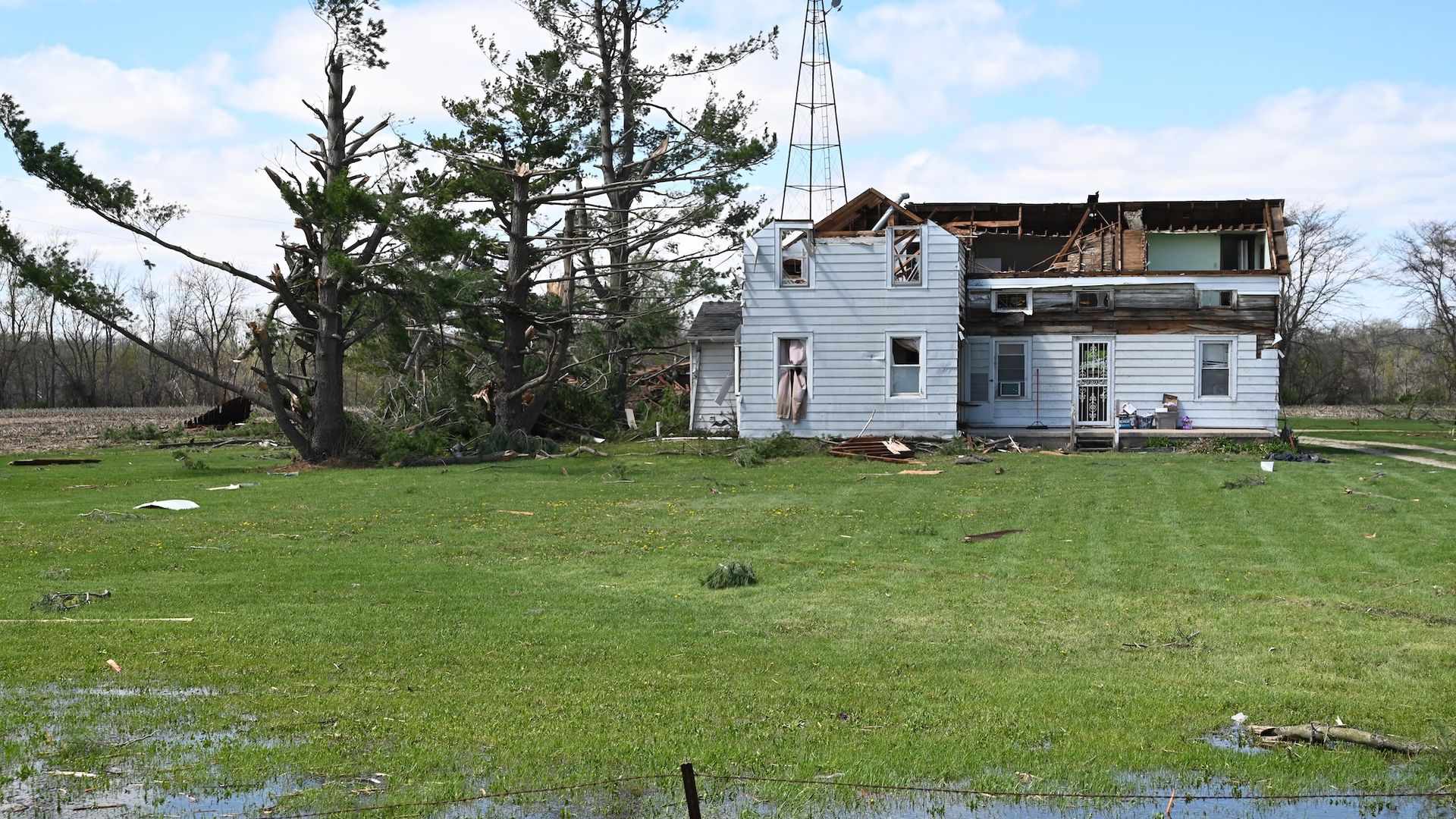
A home in Lena, Illinois, on April 18 following a confirmed tornado touchdown a day earlier. Photo: Jacek Boczarski/Anadolu via Getty Images
Illinois has seen more severe weather warnings than any state this year, but local and state officials say FEMA isn't delivering aid as it has in the past.
Why it matters: With climate change driving more frequent severe weather, federal disaster aid is often critical for recovery, but local officials warn that slower or reduced support places more of the burden on state and city governments.
The latest: Seven tornadoes touched down in Northern Illinois late last week, according to the National Weather Service.
- Both the Des Plaines and Fox rivers are still under a flood warning.
By the numbers: It's peak season for severe weather in Illinois, clocking 80 tornado reports through April 19, almost twice as many as in Mississippi, the state with the second most reports (43).
- Natural disasters have cost more than a billion dollars over the last 40 years, up from an average of three disasters annually in the 1980s to 13 annually now, according to the Chicago Office of Emergency Management and Communications (OEMC).
- Roughly 1 in 10 homes was affected by natural disasters in 2025.
- 59 flooding events occurred in 2025, the most in the last five years.
Flashback: Gov. JB Pritzker said FEMA's denial of the state's request last year for a major disaster declaration was politically motivated. "Ignoring the realities of widespread damage from the August 2025 severe storms, speaks volumes about the federal government's vindictive priorities and complete disregard for American livelihoods," Pritzker said in February.
What they're saying: FEMA is shifting responsibility for disaster recovery centers to state and local governments, OEMC's Matt Doughtie told Axios.
- "Most years, the data that I produced from those two storms last year would have been enough to get us a disaster declaration, and it was denied."
Reality check: Asked whether the funding denial was the result of the Trump administration's acrimonious relationship with Illinois, a Democratic-led state, Doughtie pointed out a pattern: "You look at other disasters across the nation that did not get a presidential disaster declaration, you'll probably start seeing some trends."
Between the lines: OEMC executive director Frank Velez said there has been some improvement in communication since Department of Homeland Security director Kristi Noem was fired last month. DHS runs FEMA.
- Doughtie pointed to a reduction of FEMA staff in Illinois as an obstacle as well.
What we're watching: The New York Times reported last week that FEMA could finally have a permanent head, Cameron Hamilton, who had been pushed out as acting leader last year.
- Californians have been waiting years for support promised by FEMA, NPR reported this week.