Why Illinois utility bills may be too high

Add Axios as your preferred source to
see more of our stories on Google.
Illustration: Tiffany Herring/Axios
Your utility bill may be higher than it needs to be — and Illinois lawmakers want to change that.
Why it matters: While utilities such as ComEd and People's Gas are not allowed to mark up the cost of electricity and heat, alternative suppliers can, driving up consumers' bills.
- There are more than 50 registered electric suppliers where ComEd operates, according to Citizens Utility Board (CUB).
Driving the news: As state senators return to Springfield this week and representatives next week, one bill they could take up is HB 4313, known as the "No More Utility Bill Rip-Offs Customer Protection Act," sponsored by Rep. Kimberly Du Buclet.
State of play: Most people don't look closely at their monthly bill, and even if they do, they probably don't know what a kilowatt is or how it affects their bill.
- A kilowatt is the unit of measure for electricity and a therm is how gas is measured.
- ComEd's current rate is 9.66 cents per kilowatt-hour (kWh), so if you used 1,000 kWh in a month, it would cost about $96 in supply charges.
How it works: The bill requires alternative utility suppliers to report rate changes from the previous year and prohibits these companies from paying salespeople solely on commission, which would push them to close deals even when it's against consumers' interests.
- The bill sets price caps on alternate suppliers — no more than 25% above the current utility supply price.
- It also prevents suppliers from automatically renewing customers from a fixed price to a monthly rate without signed consent.
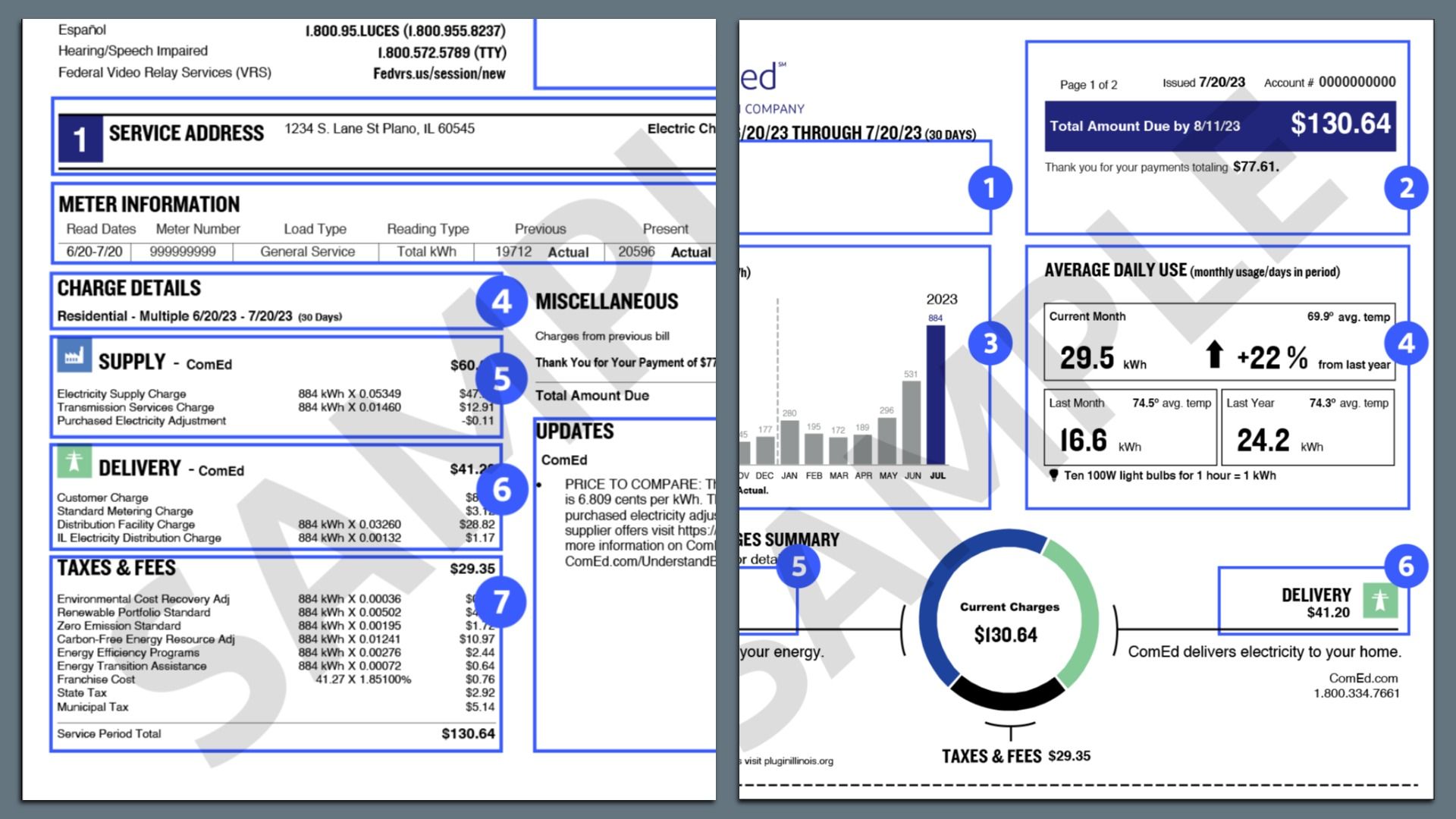
Zoom in: CUB has a helpful explanation of each section of an average bill.
Zoom out: The Illinois Commerce Commission must decide this year whether to allow People's Gas to raise prices by about $11 per customer per month, or about $130 per customer per year.
- People's Gas says the hike is needed to replace aging pipes, a process that has come in over budget and under-delivered, sparking a statewide review.
What to do: CUB offers free bill analysis and hosts workshops.
The bottom line: Lawmakers will have to balance consumer protection concerns with energy suppliers' interests as they consider the bill.