Illinois midterm robotexts and calls could help voter turnout

Add Axios as your preferred source to
see more of our stories on Google.
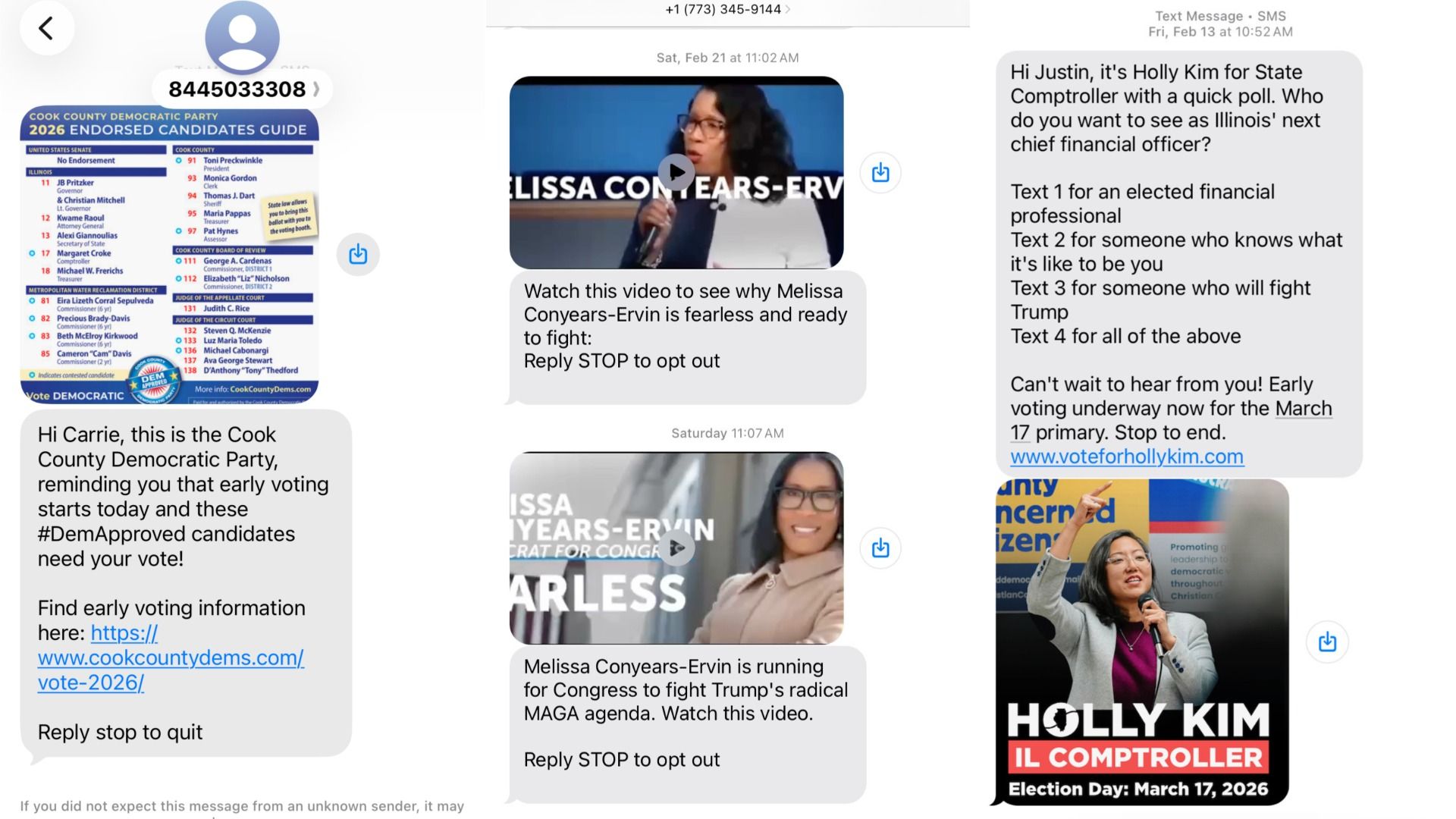
Examples of robotexts the Axios Chicago team has received this midterm. Photos: Carrie Shepherd and Justin Kaufmann/Axios
With less than two weeks until the midterm, your phone is probably blowing up with robocalls and texts. But those annoying pings could be good for democracy.
Why it matters: Mass messaging to phones is a relatively inexpensive way for campaigns to spread the word about their candidates and to criticize their opponents, but it also serves as a good reminder to vote.
- That's especially important during midterms plagued by low turnout.
Reality check: Even if you registered your contact info on the Federal Trade Commission's National Do Not Call Registry, you're likely receiving this spam because political calls and texts are allowed.
State of play: There are still rules. These messages require the recipient's prior permission — unless they are sent manually, meaning a person sends a text by selecting a contact in a computer or dialing a number, rather than from an automatic dialer or computer generating numbers and texts, according to a FCC spokesperson.
- Landlines are fair game for robocalls.
- Once the called party revokes consent by replying "stop" or asking not to be called again on a voice call, the sender or caller must honor that.
What they're saying: "The thing is that they're cheap. You do them at scale, and so even if you just get a few people to vote, to remind them to vote … It's probably worth it," Northwestern's Erik Nesbit tells Axios.
- Nesbit points to one study that found about three to seven votes come out of every 1,000 robocalls.
- Yes, but: Persistence doesn't always pay off. Nesbit says some research shows that, for example, more than six calls per voter could backfire and turn people away from voting.
Case in point: Axios reader Nick Seguin says he's getting about 20 to 30 texts a day, plus three to five phone calls and snail mail, even though his contact is on the registry.
- And none of these have changed if he'll vote — "I always vote," he tells Axios.
- "If anything I think more poorly of the candidate, PACs, a party, some of whom I will vote for," Seguin adds.
By the numbers: Seguin's frustration is not isolated. Illinois ranked No. 4 in the number of complaints about robocalls last year, according to data from the Federal Trade Commission.
- Illinoisans registered more than 95,000 complaints to the FTC.
What to do: If you are receiving texts that you didn't ask for, report the sender by forwarding the texts to 7726 (or "SPAM"), file a complaint with the FCC and reply "Stop" or "End" to text messages to prevent future ones.