Illinois bettors pull back as online gambling costs rise

Add Axios as your preferred source to
see more of our stories on Google.
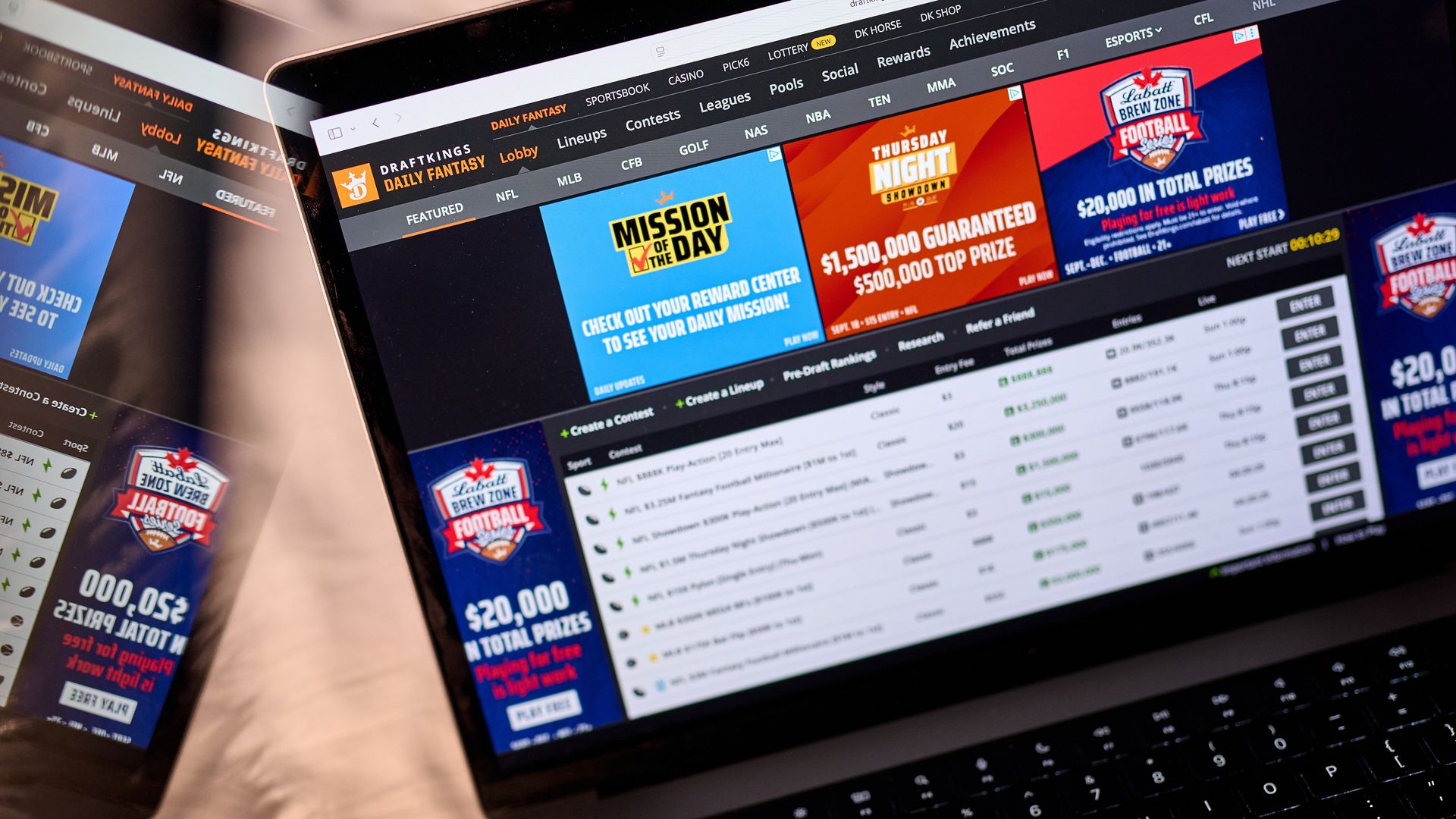
The DraftKings website on a laptop. Photo: Gabby Jones/Bloomberg via Getty Images
Illinois' new online sports wagering tax is taking its toll on consumers and threatening to short much-needed state revenue, according to new data released by the Illinois Gaming Board.
Why it matters: With budget deficits looming for the next fiscal year, the state could lose money if people don't bet.
- The state generated $429 million in sports wagering tax revenue in 2025.
Driving the news: In addition to the state's graduated tax that passed in 2024, the city of Chicago is up next, passing a 10.25% tax on online sports gaming companies in the 2026 budget. It also forces the companies to be licensed to operate in Chicago.
- This led the Sports Betting Alliance to sue the city, claiming it doesn't have the authority to tax gaming companies since they are already regulated by the state.
- The companies threatened to shut down their sites to Chicago consumers right before the college football bowl games and the NFL playoffs, but backed off that threat after meeting with city officials. The lawsuit is still pending.
By the numbers: The gaming board released October figures that show a 15% drop in bets placed in the state, mirroring similar numbers from September, which also saw a steep decline in online bets.
- This coincides with the state's hefty tax on sports wagering providers, which imposed a 50-cent tax on every bet placed by consumers.
The intrigue: Other states with legalized online sports betting have not seen similar declines.
Friction point: If gamblers are scared away by taxes and fees, they may choose to bet fewer times with bigger amounts to avoid the one-time charges. They also could enter the illegal betting market, which would take away from the state's revenue and expose them to fraud, scams and other illicit actions.
What they're saying: "The IGB's recent data illustrates more alarming evidence that tax hikes are creating a lose-lose situation for fans," the Sports Betting Alliance said in a statement.
- "This is a warning sign, and with Chicago city leaders lumping even higher taxes on fans, Illinois lawmakers are putting at risk the very sturdy regulated market they've built since legalization."
Catch up quick: Online sports gambling was legalized in Illinois in 2019, but stumbled out of the gate and didn't start until almost a year later as the state grappled with implementing the law.
- Since then, tax revenue has grown each year, giving lawmakers a strong source to help balance budgets.
It's also led major companies like DraftKings and FanDuel to open brick-and-mortar sportsbooks at Wrigley Field and the United Center.
What we're watching: A bill in Springfield would make it illegal for local municipalities to tax gaming companies already taxed and licensed by the state.