The most climate-friendly foods to buy right now

Add Axios as your preferred source to
see more of our stories on Google.
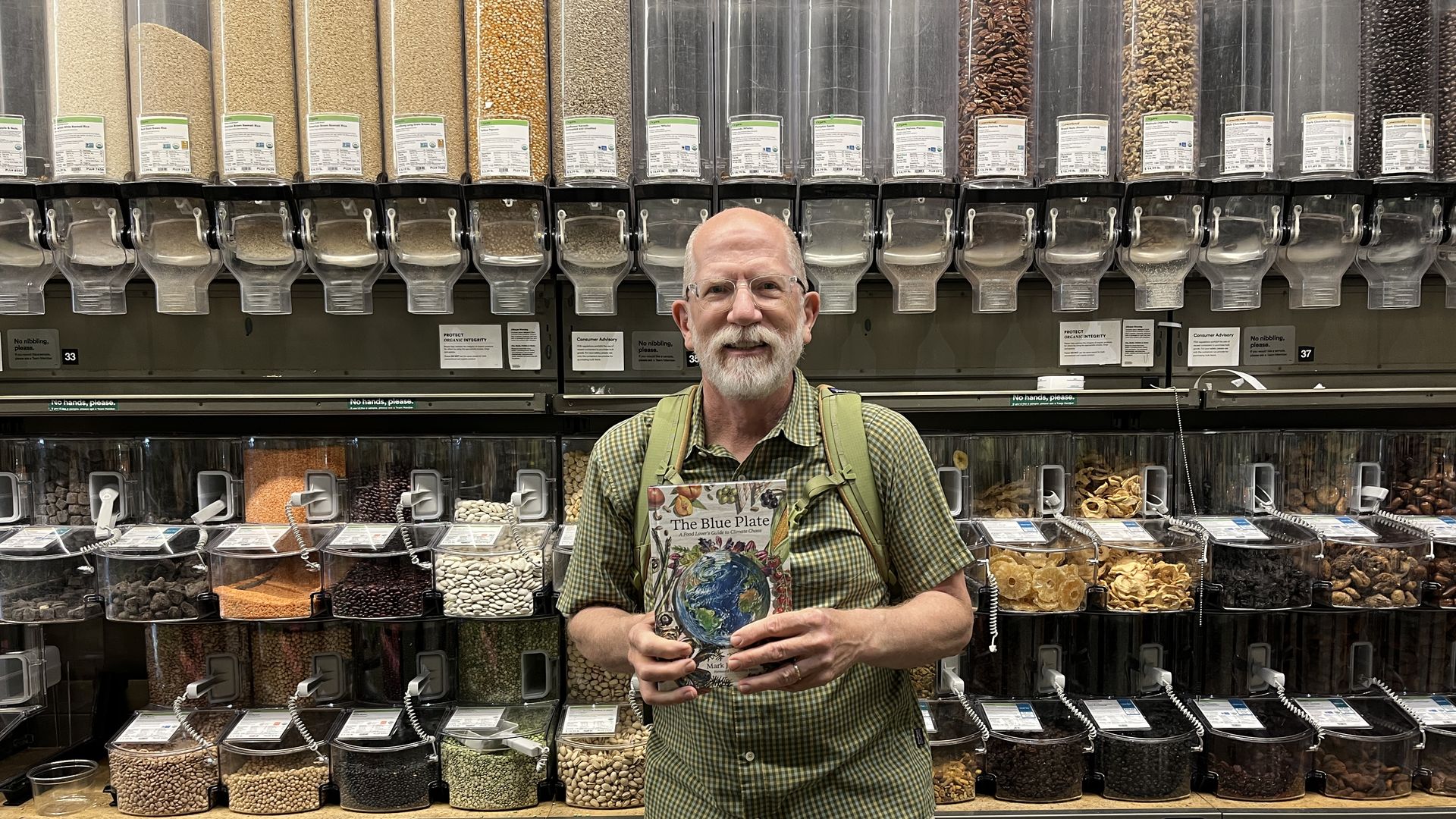
Ecologist Mark Easter stands in front of bulk beans and nuts, some of the most sustainable protein sources available. Photo: Monica Eng/Axios
Now that I've gorged through a weekend of Thanksgiving eating, I'm trying to get back on track with healthier foods for me and the Earth.
Driving the news: I recently toured the South Loop Whole Foods with Mark Easter, ecologist and James Beard-nominated author of "The Blue Plate: A Food Lover's Guide to Climate Chaos," to hunt down the most sustainable foods in the store.
- Oyster lovers will be thrilled. Shrimp eaters, not so much.
The big picture: Easter, a fellow at the Colorado State University School of Global Environmental Sustainability, has spent decades calculating the carbon cycle and footprint of various products and methods.
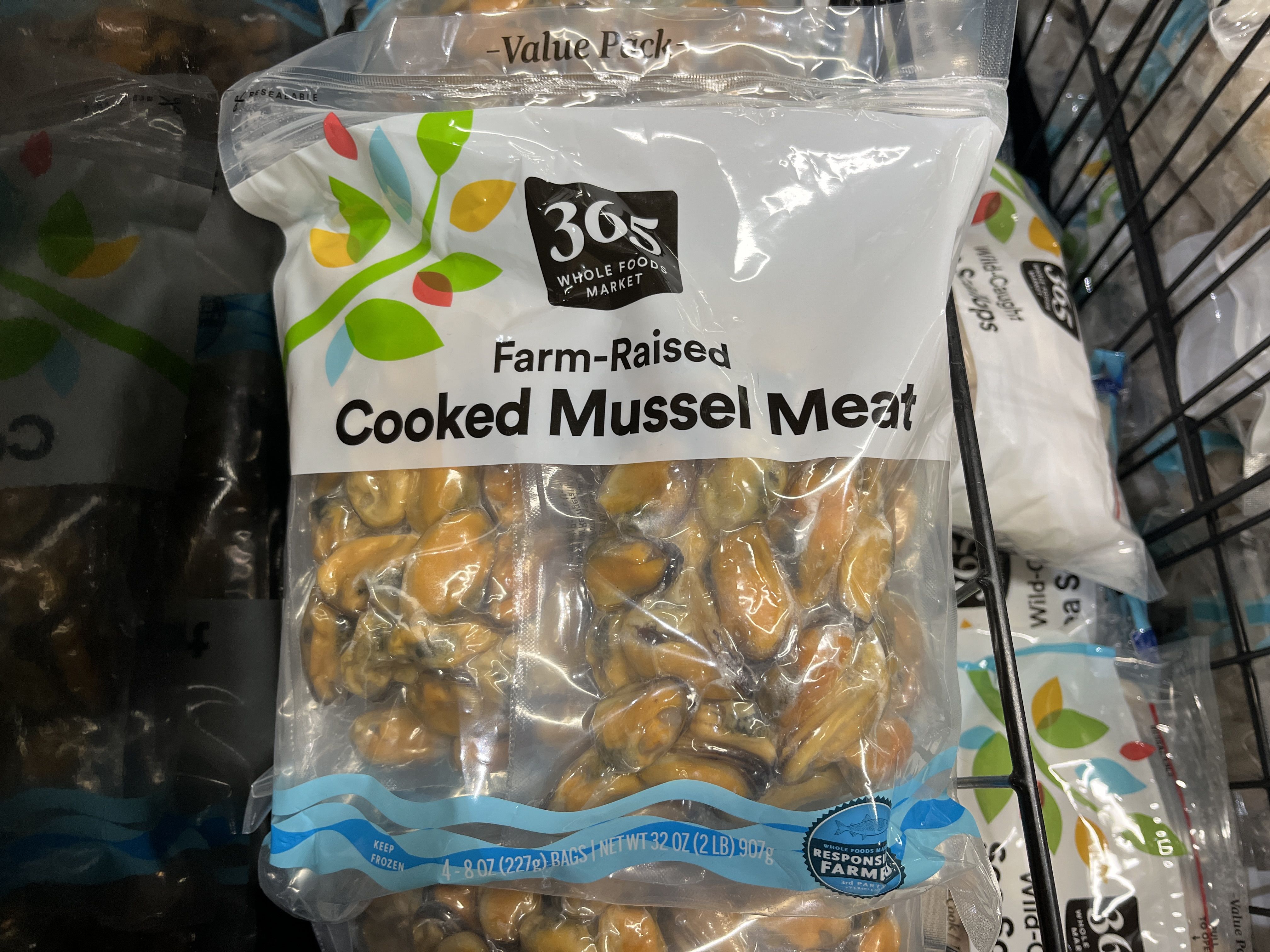
Five best bets: Shellfish (oysters, mussels and scallops) because "their shells grow by capturing carbon dioxide from the water," Easter says. "They also clean the water and create habitat for other ocean organisms. A great climate solution."
- Tree nuts like pecans, walnuts and almonds (with a few exceptions) "have a zero or even negative carbon footprint," Easter says, because their trees and soil pull more carbon from the atmosphere than they require to grow and process.
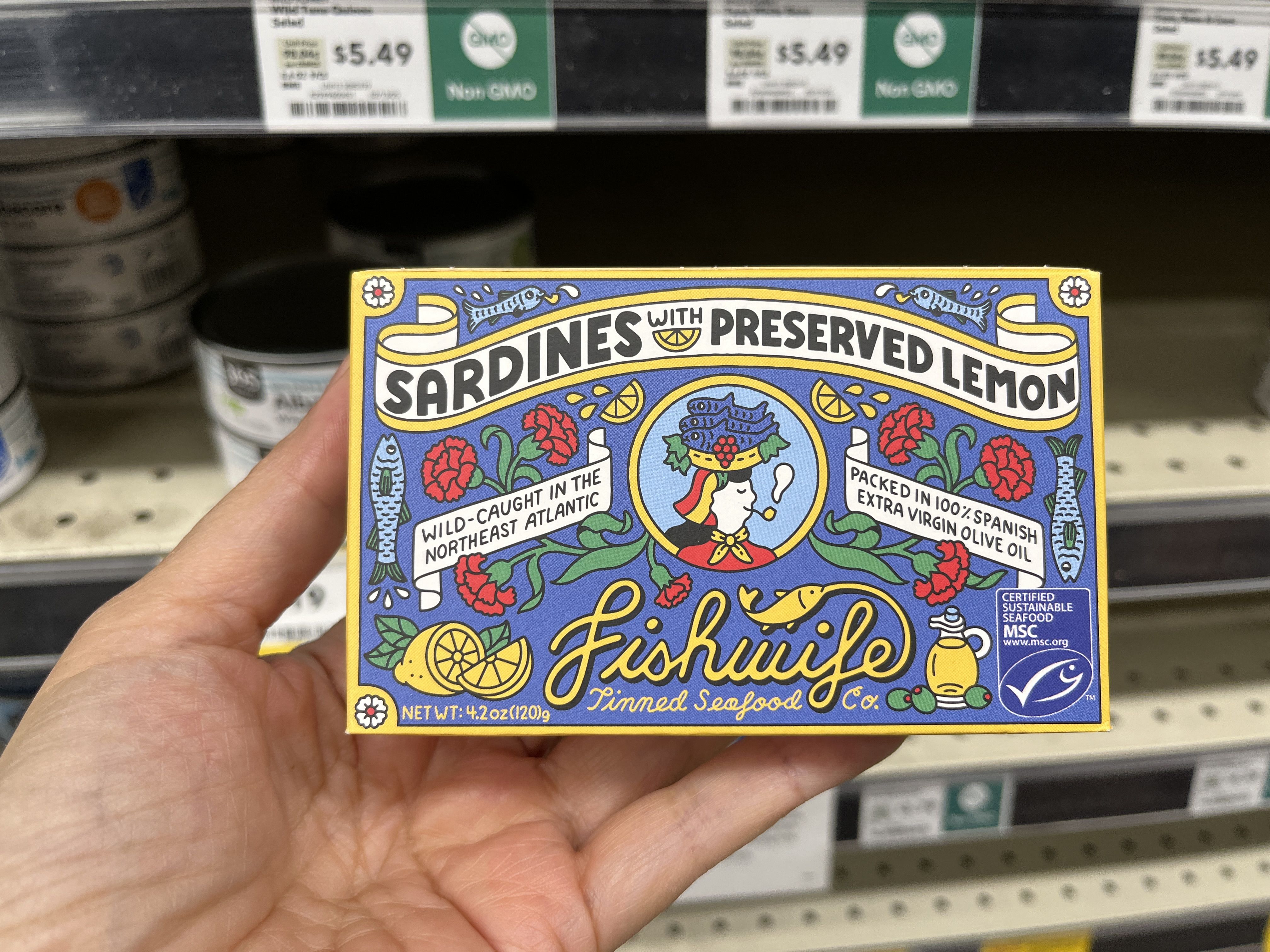
- Small fish (sardines, herring and anchovies) offer "some of the best nutrition and a low carbon footprint because humans are eating them directly rather than using them as feedstock for farmed salmon and shrimp."
- Beans are "excellent nutrition and carry some of the lowest footprint of any protein source," he says, offering extra points to dry beans that don't require shipping water and metal across the country.
- Wild-caught salmon "grown from an ecosystem that is well managed and protected tends to be the best solution," for that fish, he says.
Worst bets: "Beef and lamb carry the highest carbon footprints of all the food we can find," Easter says, noting they create about 20 times more carbon dioxide than shellfish per pound.
- Farmed shrimp have driven the destruction of carbon-absorbing mangrove forests and are often fed with small fish that humans could be eating directly, making them "one of the heaviest carbon burdens out there," he notes.
- Wild-caught shrimp are "typically caught with trawlers creating even more carbon loss from the ocean ecosystem," he says, deepening the shrimp cocktail buzz kill.
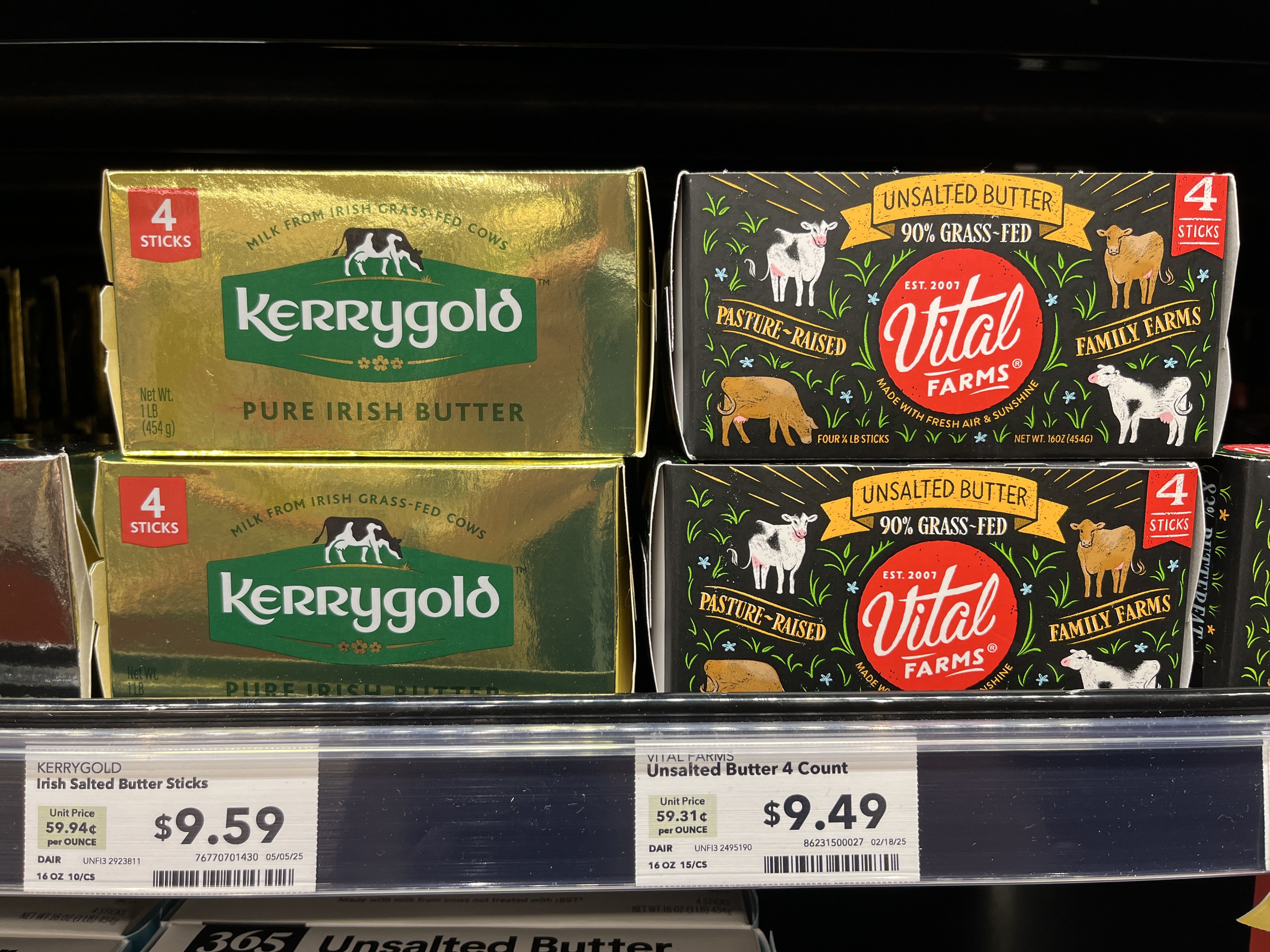
Birds and butter: For lower-carbon chicken and dairy, Easter recommends pastured birds and dairy derived from cows raised on a grass-based system.
- This reduces the need to grow and transport animal feed and naturally spreads manure.
Midwest moves: For midwesterners, the author says some of your best holiday bets include fresh Wisconsin-grown cranberries, which freeze beautifully for smoothies and pies for months.
- Opting for pastured turkeys, chickens, and ducks at holiday meals.
- And purchasing fall produce from regenerative local farms like Just Roots Chicago.
The bottom line: Eco-conscious holiday eaters may want to load up on the beans, nuts, shellfish and sardines but lay off the shrimp cocktail and filet mignon.
Bonus: You can hear my whole South Loop interview with Easter on the "Chewing" podcast here.