Nearly 2 million Illinoisans could lose SNAP benefits


Add Axios as your preferred source to
see more of our stories on Google.
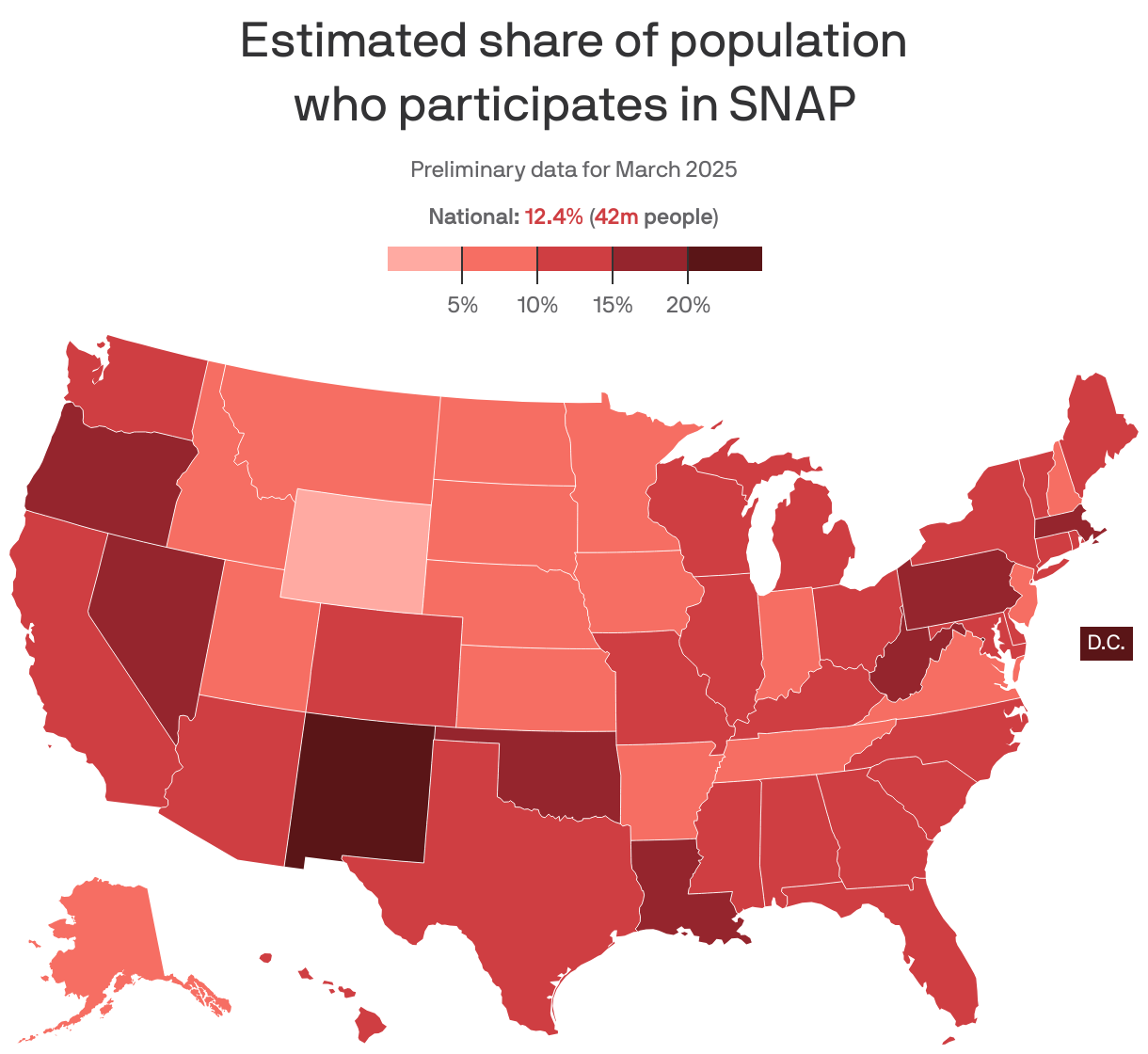
Illinois families could soon feel the effects of the federal government shutdown if it drags into November, threatening critical food assistance programs.
Why it matters: Millions of mothers, infants and low-income families who rely on WIC and SNAP could lose that support in a prolonged shutdown.
By the numbers: 1.9 million people in Illinois, or about 14% of the population, would lose SNAP benefits next month, according to the Illinois Department of Human Services, if Congress can't reach a deal.
- 37% of SNAP households have older adults
- 45% have children
- The average monthly SNAP benefit is approximately $370, IDHS reports.
State of play: WIC could run out of funds within weeks, and SNAP enrollees are also vulnerable.
- Existing federal funds may keep WIC running for one to two weeks, but after that, millions of pregnant women, new mothers and young children could lose access to healthy foods.
Reality check: Chicago-based Feeding America has a database of food banks across the U.S., but many are already strapped.
- The Greater Chicago Food Depository also has a map of resources.
What they're saying: "Trump promised to lower costs but that's not happening – the very least they could do is preserve SNAP access for low-income families struggling to feed their kids. This doesn't just impact families – it hurts grocers, it hurts employees, and it hurts local economies," Gov. JB Pritzker said in a statement last week.
Context: WIC funding is allocated quarterly from the USDA to states, but with the shutdown starting at the beginning of the fiscal year, states are left with just $150 million in contingency funds to keep the programs afloat.
- States can tap unspent funds from the last fiscal year, but they may need to use their own tax dollars until Congress restores full funding.
- OMB has committed funding for SNAP — which support more than 40 million Americans monthly — through October, but it hasn't confirmed how long funds would last after that.
Flashback: The 2019 shutdown during President Trump's first term also put SNAP and WIC at risk.
- While SNAP benefits continued, participants received February benefits earlier than normal — in mid-January — leaving some households with a gap of up to 40 days before March benefits arrived.
- WIC remained operational, but providers warned that a longer shutdown could force states to freeze new applications or even close clinics.