Yoko Ono's interactive MCA retrospective breaks the museum mold

Add Axios as your preferred source to
see more of our stories on Google.
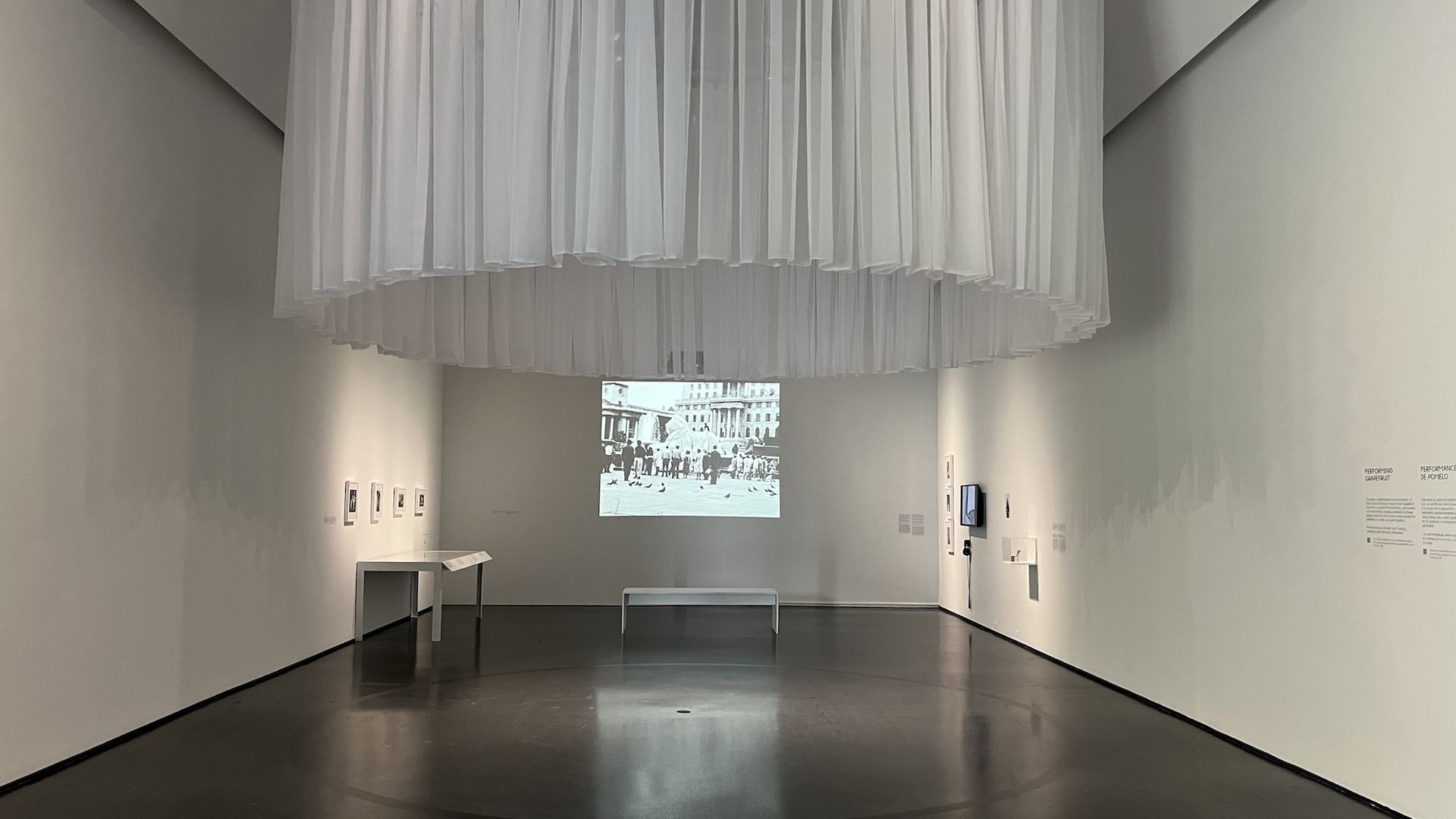
A large tapestry over a circle on the floor that doubles as a performance space. Photo: Carrie Shepherd/Axios
The new Yoko Ono retrospective at the Museum of Contemporary Art is not your standard "look, don't touch" museum experience. It all but requires audience interaction.
Why it matters: "Yoko Ono: Music of the Mind" is billed as one of the most comprehensive exhibitions of the multi-media creator's work, tracing back to the 1950s through her time with John Lennon, and as one of the key members of the Fluxus movement.
- The MCA show is currently the only scheduled U.S. stop.
If you go: "Yoko Ono: Music of the Mind" runs through Feb. 22 at the MCA, with related events featuring a performance of Ono's score and a screening and discussion of "One to One: John and Yoko."
Zoom in: Chronology directs the flow of the exhibition, beginning with some of Ono's early Fluxus works, including "Cut Piece," a video of the artist kneeling as people cut off pieces of her clothing.
- "Painting to Shake Hands (painting for cowards)," a work from 1961, is a blank canvas with a hole ruptured through the center, large enough for a person to extend their hand without having to show their face.
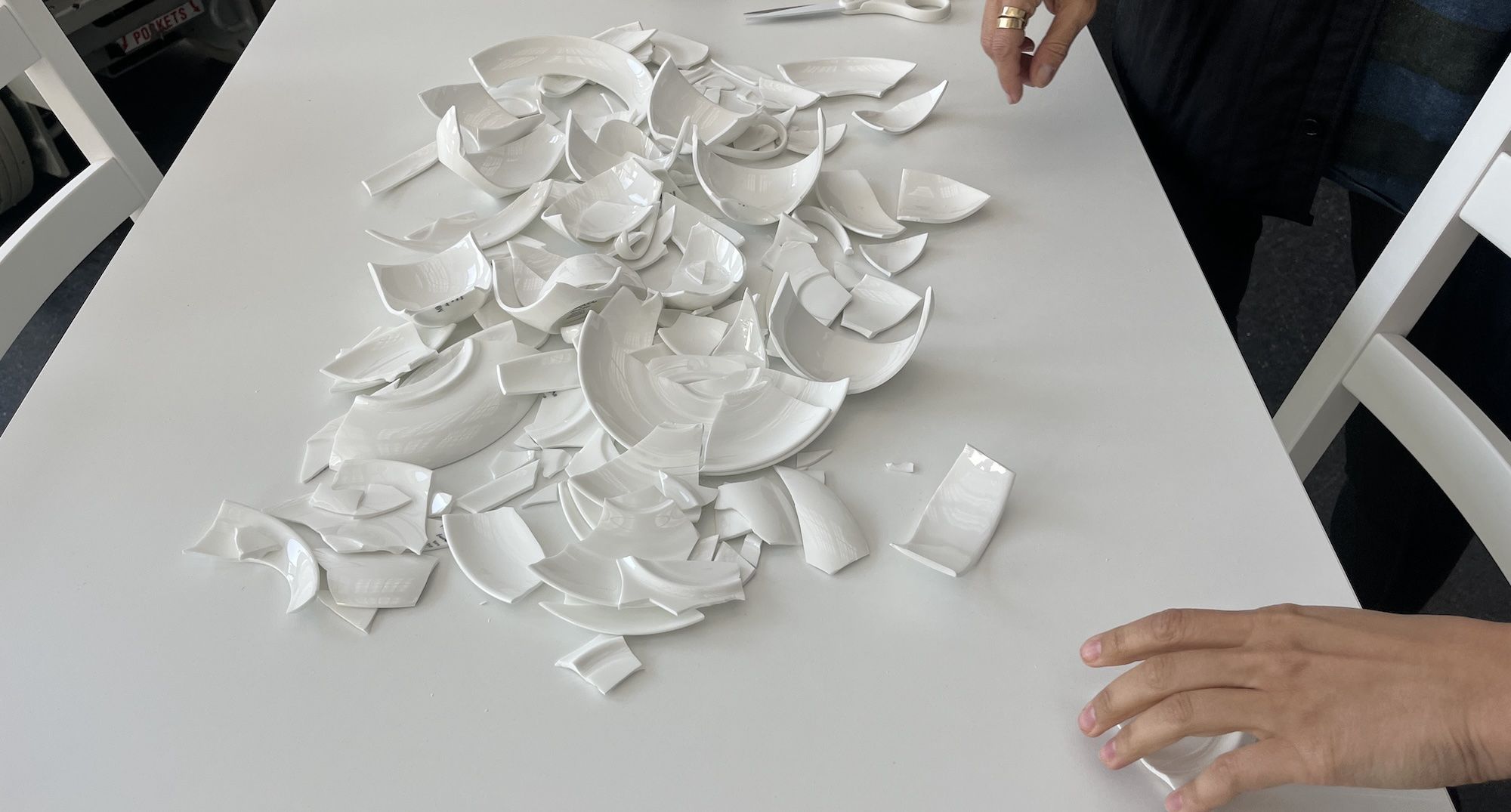
State of play: Several installations demand participation, like "Bag Piece," which invites people to wear a black, floor-length cloth and "interpret the piece as you wish."
- The halfway point of the exhibition features "Mend Piece," tables with shattered ceramic dishes alongside instructions to use scotch tape and gold string to create new works of art from the remnants.
- "Something that's central to Ono's work is that she gives permission, right? So here you have permission to really engage her creativity and engage with her work in a way that you usually can't in museums," MCA curatorial assistant Korina Hernandez tells Axios.
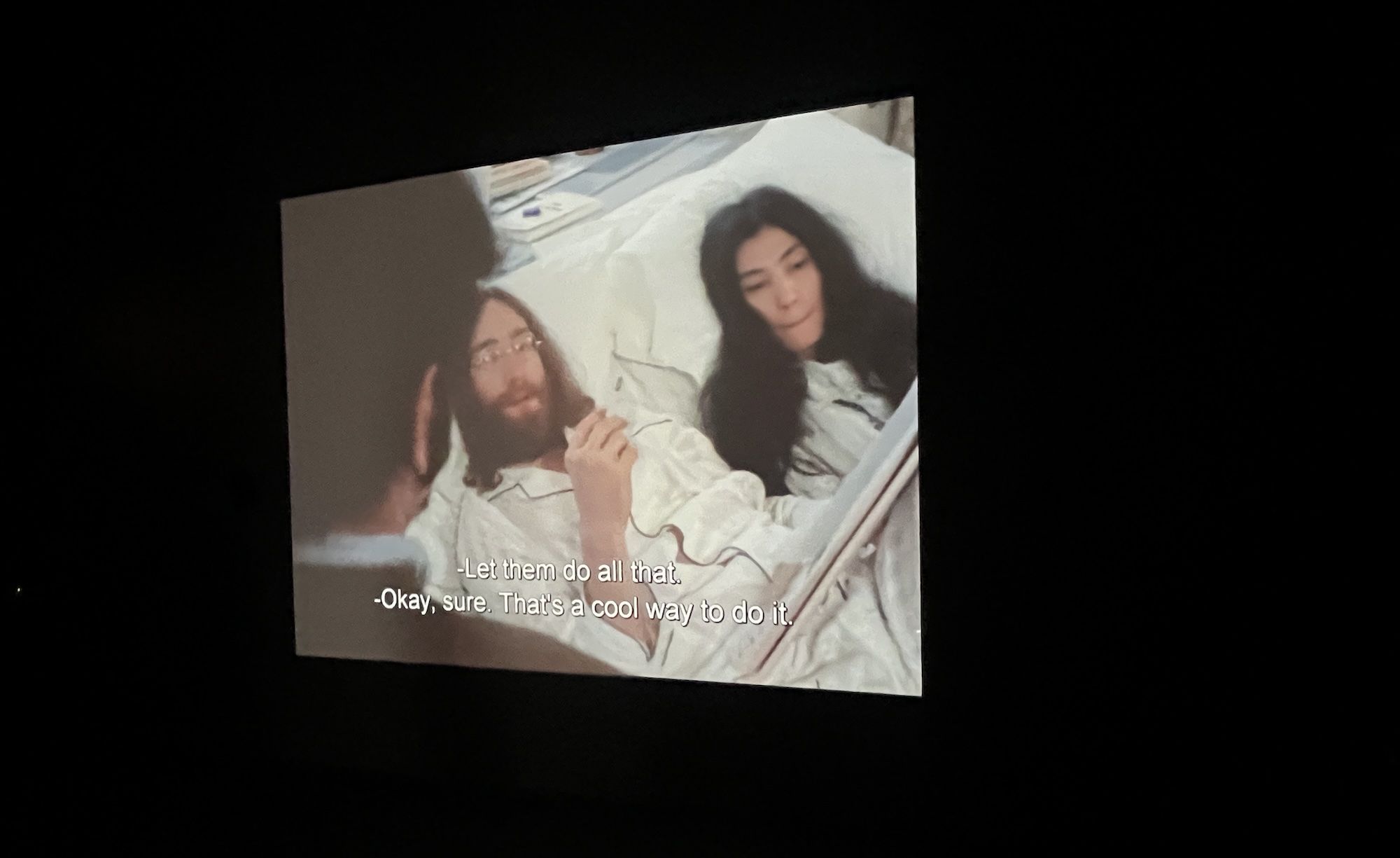
The intrigue: Lennon first appears about halfway through the show, introduced as part of Ono's London years. "Bed In," the couple's performance work promoting peace from their hotel bed, projects on a gallery wall next to nude album covers and posters exclaiming "War is Over! If you want it."
Yes, but: The exhibition successfully reiterates, or perhaps informs for the first time, that Yoko Ono was a well-established, respected artist long before she met Lennon.