Bears' new stadium district will need infrastructure improvements

Add Axios as your preferred source to
see more of our stories on Google.
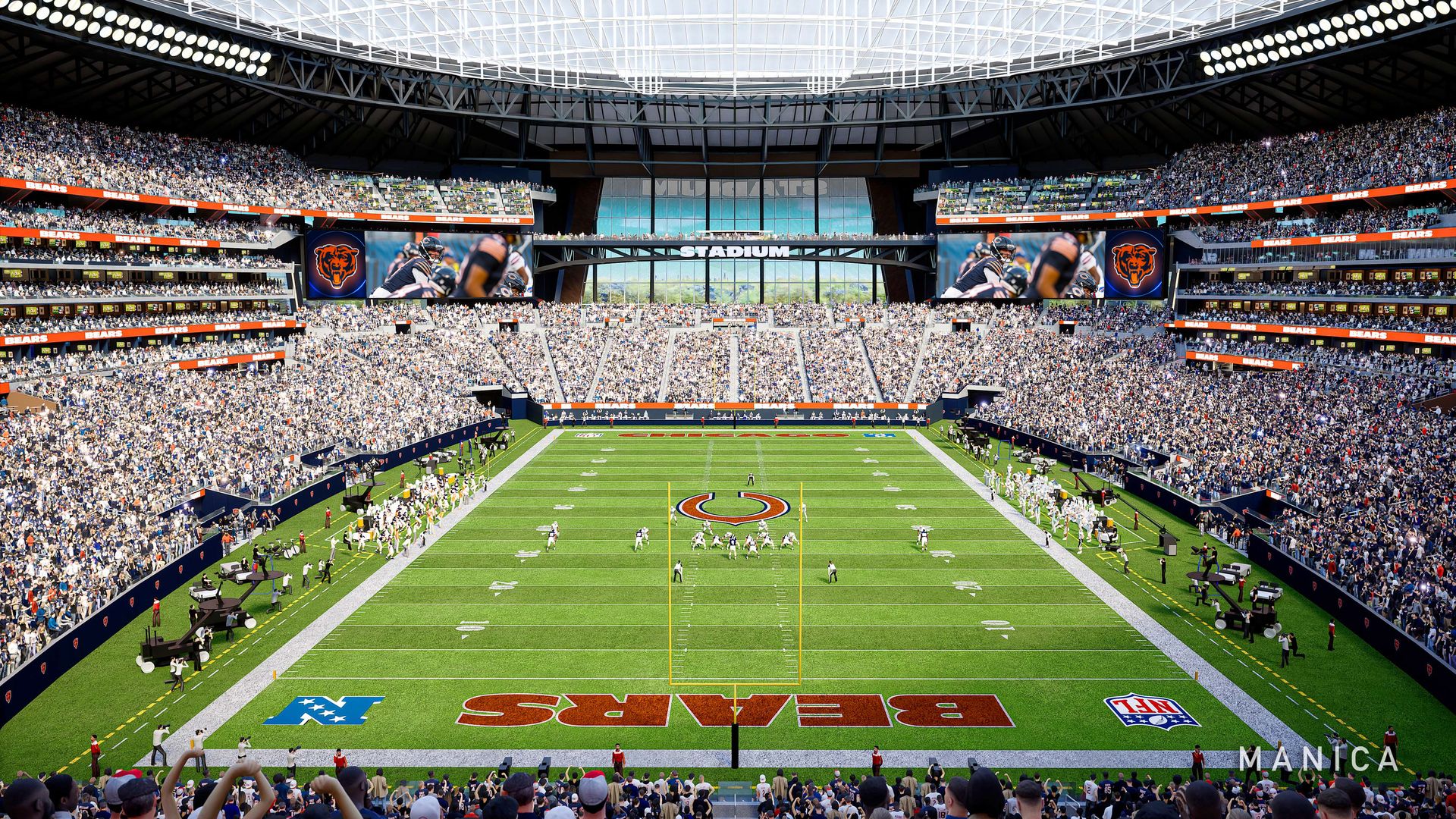
Rendering of the proposed Bears stadium in Arlington Heights. Rendering: Courtesy of Manica Architecture
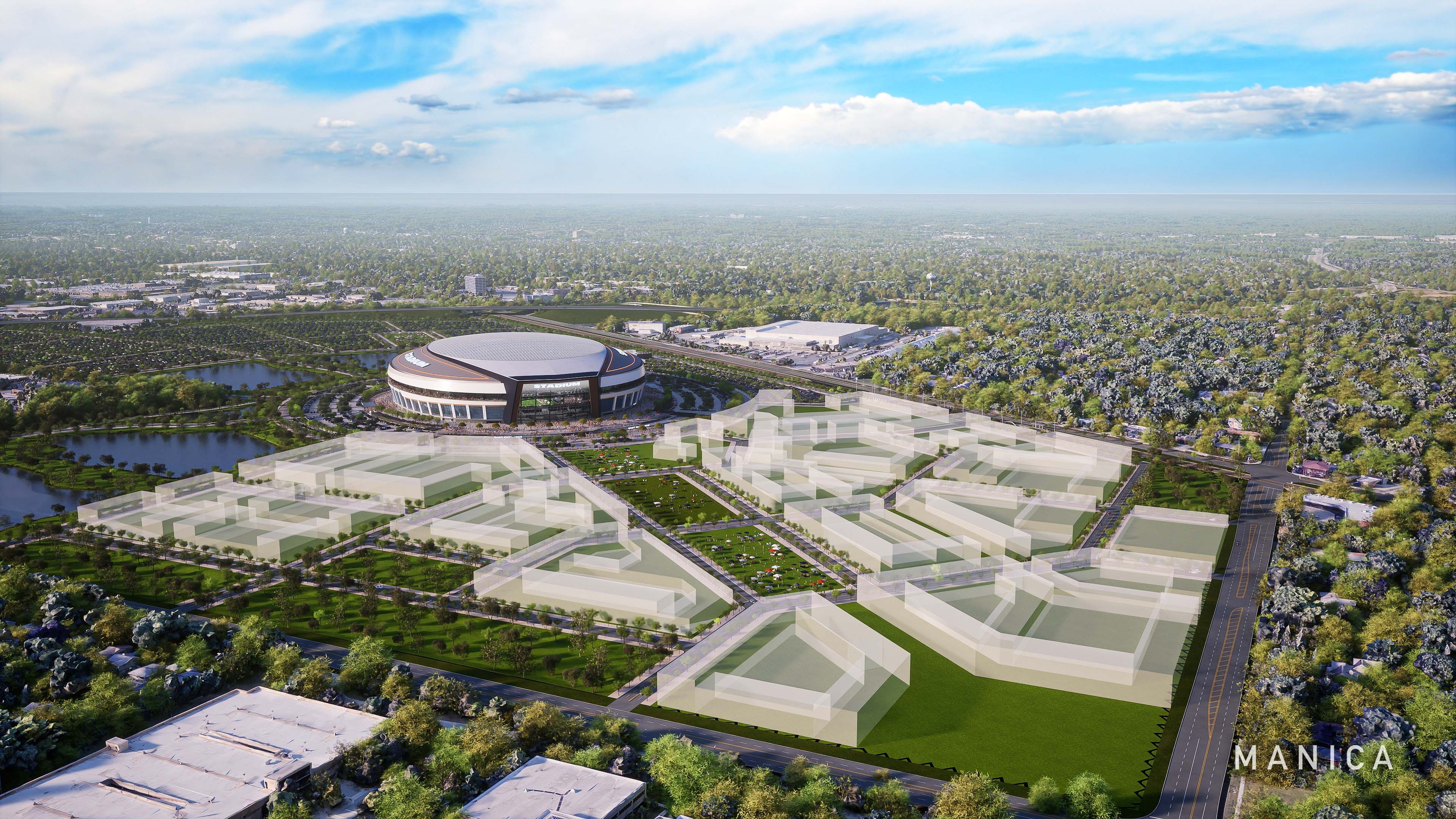
The Chicago Bears have released renderings and a cost assessment for their planned stadium and nearby mixed-use development in Arlington Heights.
Why it matters: The new details shed light on what the stadium may generate in revenue, as well as what the team is asking taxpayers to cover.
- While the Bears have previously said they wouldn't use public money to fund the new stadium, the village of Arlington Heights would likely need the state to cough up $855 million in "infrastructure" improvements.
Driving the news: The team's study, prepared by HR&A Advisors, says the project will bring billions of dollars in economic impact to the area, including hundreds of construction jobs. The report says gross state tax revenues could reach $1.3 billion over 40 years.
- It also asks for taxpayer money to fund improvements along Route 53 near the stadium site, plus changes to the Metra line.
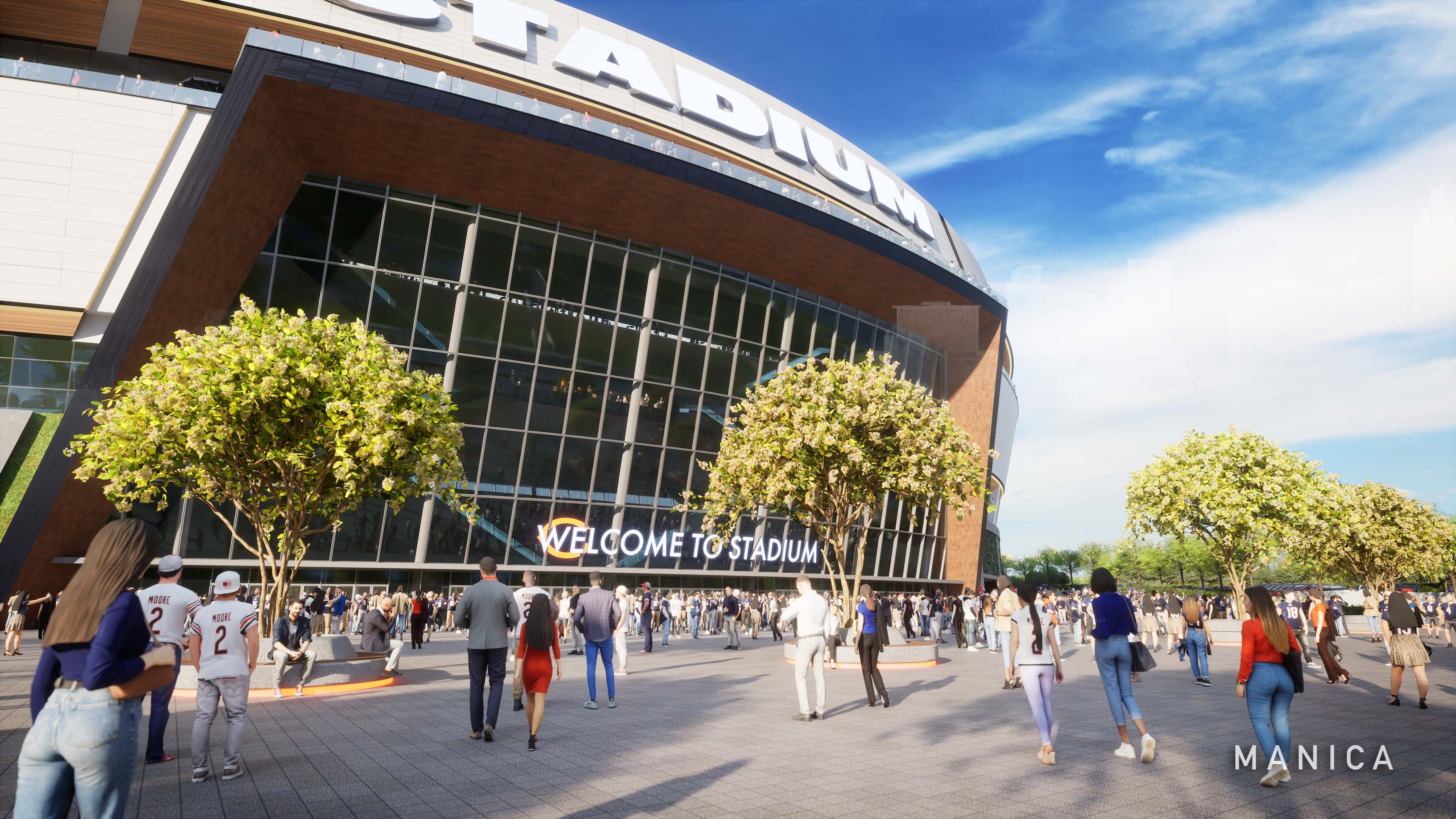
Catch up quick: For the past three years, the Bears organization has waffled between building their new home near Soldier Field in Chicago or on the site of the old Arlington Park Race Track in Arlington Heights, which the team owns.
- The team gave up on plans for the Museum Campus last month, since they couldn't get the state to pony up for funding, including refinancing current debt at Soldier Field.
- The Park District owns the land the Bears were going to build on, so they instead opted for their own property.
- The Bears signaled last month they wouldn't need public money in Arlington Heights, but instead wanted the state legislature to change a property assessment law that would give them the ability to negotiate their property value with the village, bypassing Cook County.
Between the lines: The Bears don't want to just build a stadium; they want to build their own village. The development would include 1,150 multifamily housing units in addition to hotels, retail and restaurants.
Yes, but: The team's shift has us right back where we started: a multimillion-dollar need for taxpayer money that is almost the same amount they were asking the state for when they teamed up with the city to stay downtown.
Reality check: Gov. JB Pritzker has repeatedly said that taxpayer funding is a non-starter.
What we're watching: Whether the infrastructure needs gain any traction when state lawmakers convene in two weeks to discuss several big funding issues, including public transit, public schools and a large budget hole for next year.