Poppi drinkers could be getting a check


Add Axios as your preferred source to
see more of our stories on Google.
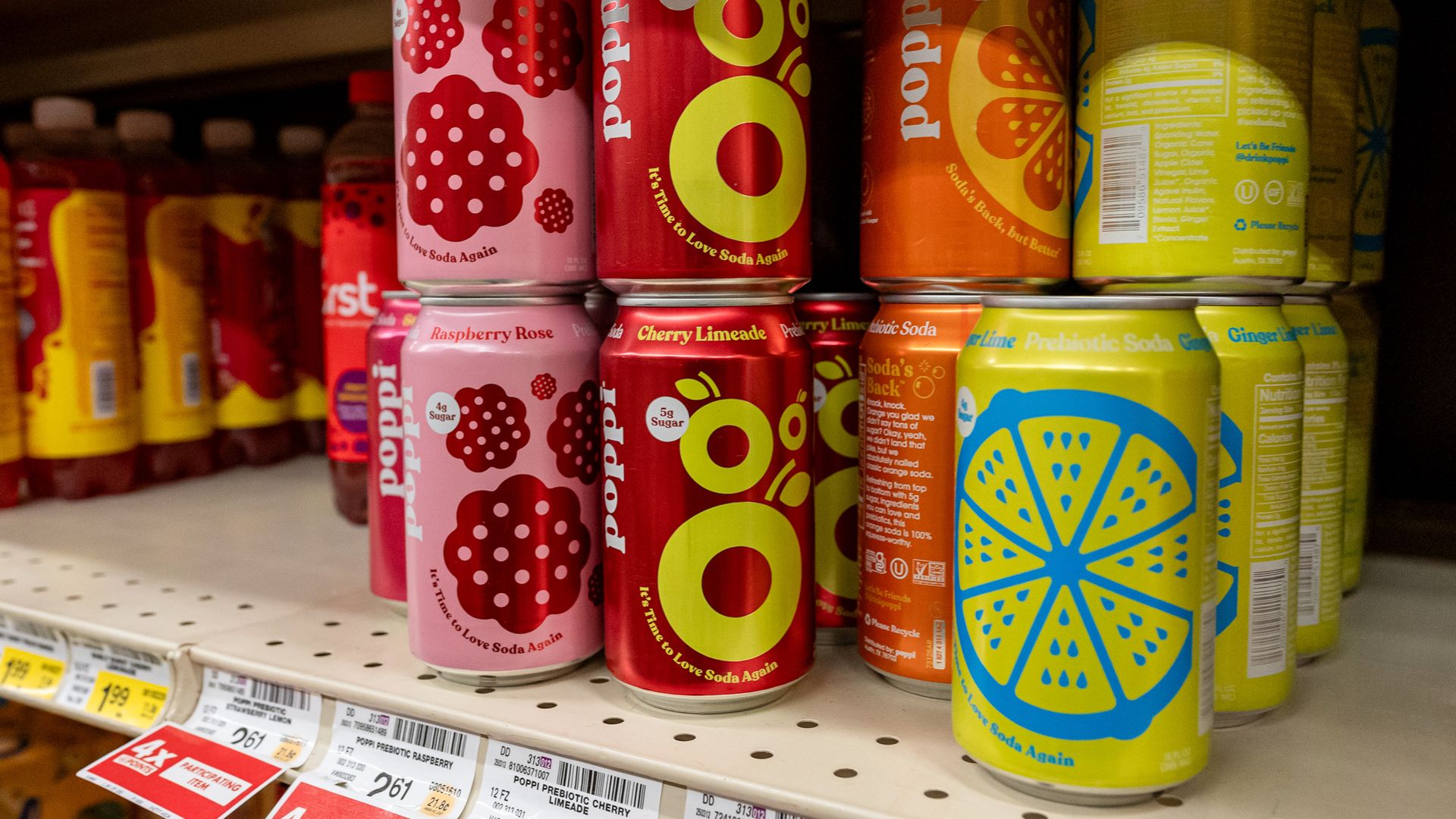
Poppi soda at a store in San Francisco in March. Photo: David Paul Morris/Bloomberg via Getty Images
Prebiotic soft drinks have been popping off, but their "gut-friendly" health claims have landed at least one of them in court.
Why it matters: Most prebiotic sodas contain the fiber inulin, which experts say can be hard to digest and — according to early animal studies and a case study — potentially carcinogenic.
Driving the news: The deadline to submit a claim for a class action settlement involving the prebiotic soda brand Poppi is Friday.
- Customers who purchased Poppi between Jan. 23, 2020 and July 18, 2025 can file a claim for a share of the settlement through poppisettlement.com.
Catch up quick: The company was named in a class action lawsuit last year and agreed to a settlement that includes an $8.9 million fund for payments to consumers.
Yes, but: Poppi denied the claim that its marketing overstated the amount of prebiotic fiber and gut health benefits the drink offers or that any members of the class suffered any injury or are entitled to monetary or other relief, according to the settlement page.
What to know about gut bacteria
How it works: Eating prebiotics — food for gut bacteria — can be anti-inflammatory and "increase the good guys in your gut," says Tamara Duker Freuman, a New York-based dietitian and author.
Yes, but: "You should be aiming to get your fiber from foods: fruits, vegetables, whole grains, nuts and legumes," says Hannah Holscher, registered dietitian and associate professor of nutrition at the University of Illinois in Urbana-Champaign.
- Even a few grams of inulin (also called chicory root) — the fiber typically in prebiotic sodas — can be "incredibly difficult to tolerate," especially for those with conditions like IBS, Freuman says.
Research on inulin and cancer
Friction point: There's emerging, but limited, research on inulin and cancer.
- "Consuming grams of inulin regularly in supplements, beverages and inulin-enriched foods may increase risk of cancer, potentially by dampening anti-tumor immunity," says Andrew Gewirtz, a biomedical science professor at Georgia State University who's studied inulin in animals.
- Gewirtz also co-authored a case report on a man who developed colon cancer after taking 4g of inulin daily.
- "Further studies are needed to help identify who might benefit from it and who should avoid it," he says.
The other side: "Like any fiber, inulin may cause temporary digestive discomfort as the body adjusts to increased fiber intake," Olipop told Axios in a statement. "That's why both nutrition experts and Olipop recommend starting with one can and gradually increasing over time."
- The statement emphasized that the soda offers more fiber than its competitors, and that inulin is Generally Recognized as Safe (GRAS) by the FDA.
Gut check on prebiotic soda
Reality check: Less than 10% of American adults get the daily recommended amount of fiber, and many Americans regularly drink sugary soda — which has links to a host of health risks.
- Substituting a prebiotic soda in place of a higher-sugar one "could be a good, helpful swap" and "help bridge the fiber gap," Holscher says.
- "The occasional can is unlikely to cause major harm," Gewirtz says. "It's regular consumption that I'm not convinced is safe."