Why Jim Edgar's bipartisan legacy stands out in today's politics

Add Axios as your preferred source to
see more of our stories on Google.
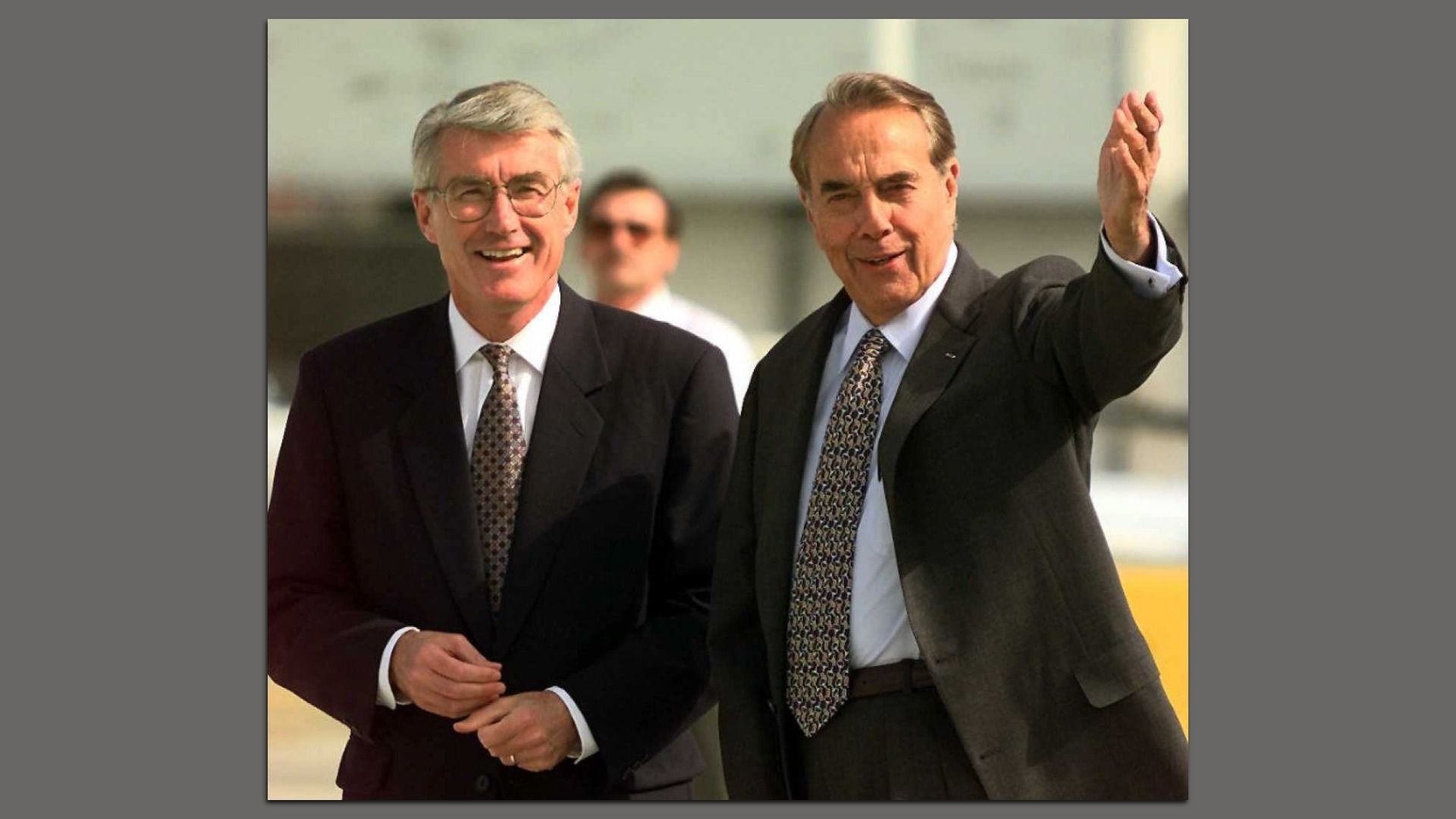
Republican presidential candidate Bob Dole is greeted by Illinois Gov. Jim Edgar (left) while campaigning in 1996. Don Emmert/AFP via Getty Images
Illinoisans are remembering former Gov. Jim Edgar for his willingness to work across the aisle.
Why it matters: Bipartisanship is hard to find these days in Springfield, where Democrats control both chambers and every statewide elected office.
The big picture: Edgar, a Republican who served as governor from 1991 to 1999, died this past weekend after an adverse reaction to treatment for pancreatic cancer. He was 79.
State of play: With Edgar's death, politicians are lamenting the loss of what they believe made Edgar a great leader: listening to the other side.
What they're saying: "I believe there are a few key metrics that you will find in most successful elected officials," former Illinois Republican strategist Lance Trover tells Axios. "Be straightforward with voters, operate with integrity and surround yourself with a good team. Governor Edgar did all three."
Reality check: Edgar served in government before social media was used to amplify divisiveness and partisan bubbles.
- Edgar had to communicate through local newspapers, TV and radio, making his statements much more mainstream and less inflammatory. Today, many politicians forgo talking to the media, instead just communicating to their partisan base.
Case in point: Downstate Republican Rep. Adam Niemerg just called for Gov. JB Pritzker to be impeached over "inflammatory comments."
- His resolution cites Pritzker's February State of the State address, in which he likened today's Republican Party to Nazi Germany.
Between the lines: In some ways, Edgar was forced into bipartisanship. The GOP dominated the state Senate, but Democrats controlled the House, led by then-Speaker Michael Madigan.
- "When I had heart surgery, I dedicated one of the bypasses to Madigan," Edgar recounted during a 2021 interview for "The Madigan Rule" podcast. He also remembers trying to make a deal with Madigan from his hospital bed.
- "But I liked him as speaker. He helped me get stuff done," Edgar said.
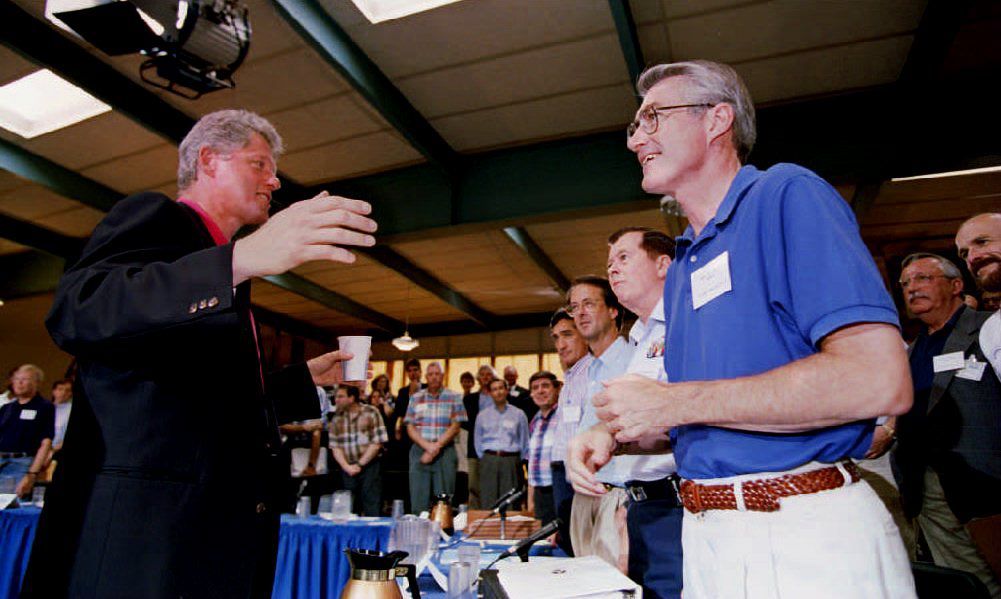
Zoom in: He also had a working relationship with powerful Chicago Mayor Richard M. Daley.
- Daley and Madigan were from Chicago, while Edgar represented downstate Republicans. They couldn't be further divided by ideology and geography, but Edgar seemed to know that if he struck deals with the powerful politicians, they would make life easier for the pragmatic leader.
- For instance, Edgar helped pave the way for Daley to take over Chicago Public Schools, which at the time was run independently. In return, Edgar got Daley's support on a plan to reduce property taxes and increase income taxes to balance that year's budget.
Flashback: After Edgar retired, the baton was passed to another Republican, George Ryan, who only served one term due to a bribery scandal, which landed him in prison.
- It ended what had been an incredible 26-year streak for Republicans in the governor's mansion.
- Since 2002, Democrats have owned majorities in both chambers in the General Assembly and have overwhelmingly won gubernatorial elections, too.
The bottom line: Edgar will be remembered for being bipartisan, but today's political landscape may make it harder for that to ever happen again.