Federal SNAP changes could cut aid, hike costs

Add Axios as your preferred source to
see more of our stories on Google.
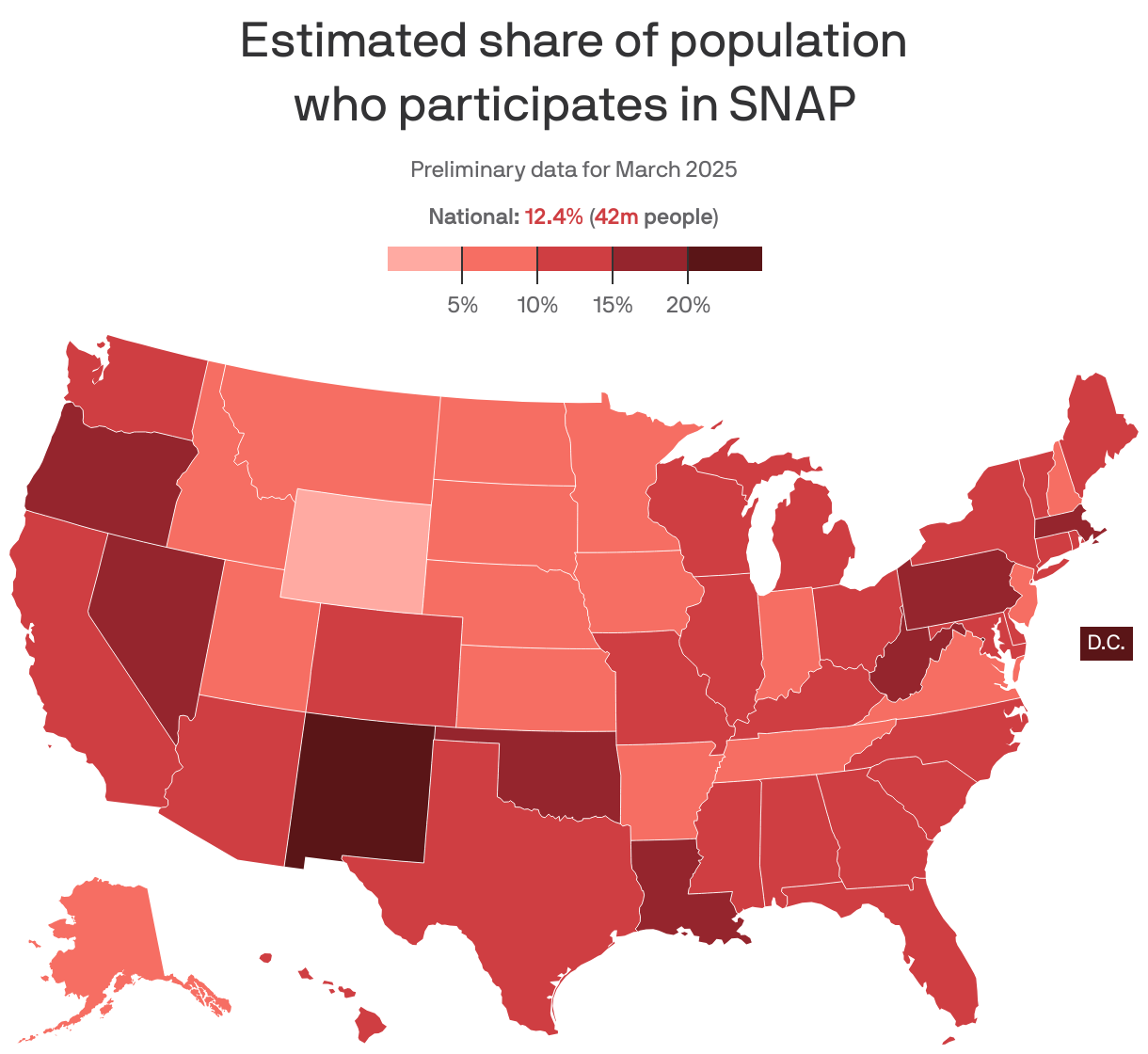
About 360,000 Illinois residents risk losing SNAP benefits under provisions of the "big, beautiful bill," which could also saddle the state with $700 million in additional SNAP costs previously covered by the feds, according to Gov. JB Pritzker's office.
Why it matters: The cuts could have far-reaching effects on hunger as well as spending in the local economy.
- This year, Pritzker's office says, the new provisions could cost Illinois an additional $80 million just to meet administrative requirements at a time when the state is under intense pressure to bail out basic services.
Zoom in: About 15% of state residents, or 1.9 million people, receive SNAP benefits in Illinois. The new rules require Illinois to expand work requirements (proof of 80 hours of work a month) to SNAP recipients who are:
- Able-bodied adults ages 55-64
- Adults with dependents who are over 13 years old
- Adults who had been exempt under Illinois' 4.8% unemployment rate. New rules restrict the exemption to counties with unemployment of 10% or higher.
Between the lines: Illinois can avoid the additional $700 million in SNAP payment responsibility if it reduces its "payment error rate" (PER) from 11% to under 6%.
- The PER measures underpayment or overpayment usually driven by administrative or applicant mistakes. It does not include fraud.
- Illinois has the 10th worst error rate in the nation, but is on par with most big states.
The intrigue: Alaska has an error rate of 20% but Republican Sen. Lisa Murkowski worked out a deal to exempt her state from the requirement to reduce it.
What they're saying: "While the state government will be doing everything in its power to lower the so-called error rate, we cannot gloss over the fact that this provision was intentionally designed as a craven mechanism to deny states funding and feed fewer people in need," Pritzker spokesperson Matt Hill said in a statement.
The other side: "We are incentivizing states to administer the SNAP program more efficiently and effectively, protecting taxpayers and prioritizing limited resources for those who truly need the benefit," Republican Rep. Darin LaHood tells Axios.
What's next: Illinois officials have about a year to drive the error rate below 6% and Hill says they're working on it by "engaging in a deep dive into each error, identifying new technology to reduce errors, improving training, clarifying policies, and hiring more than 100 additional staff."