Airbnb gets in bed with Lollapalooza

Add Axios as your preferred source to
see more of our stories on Google.
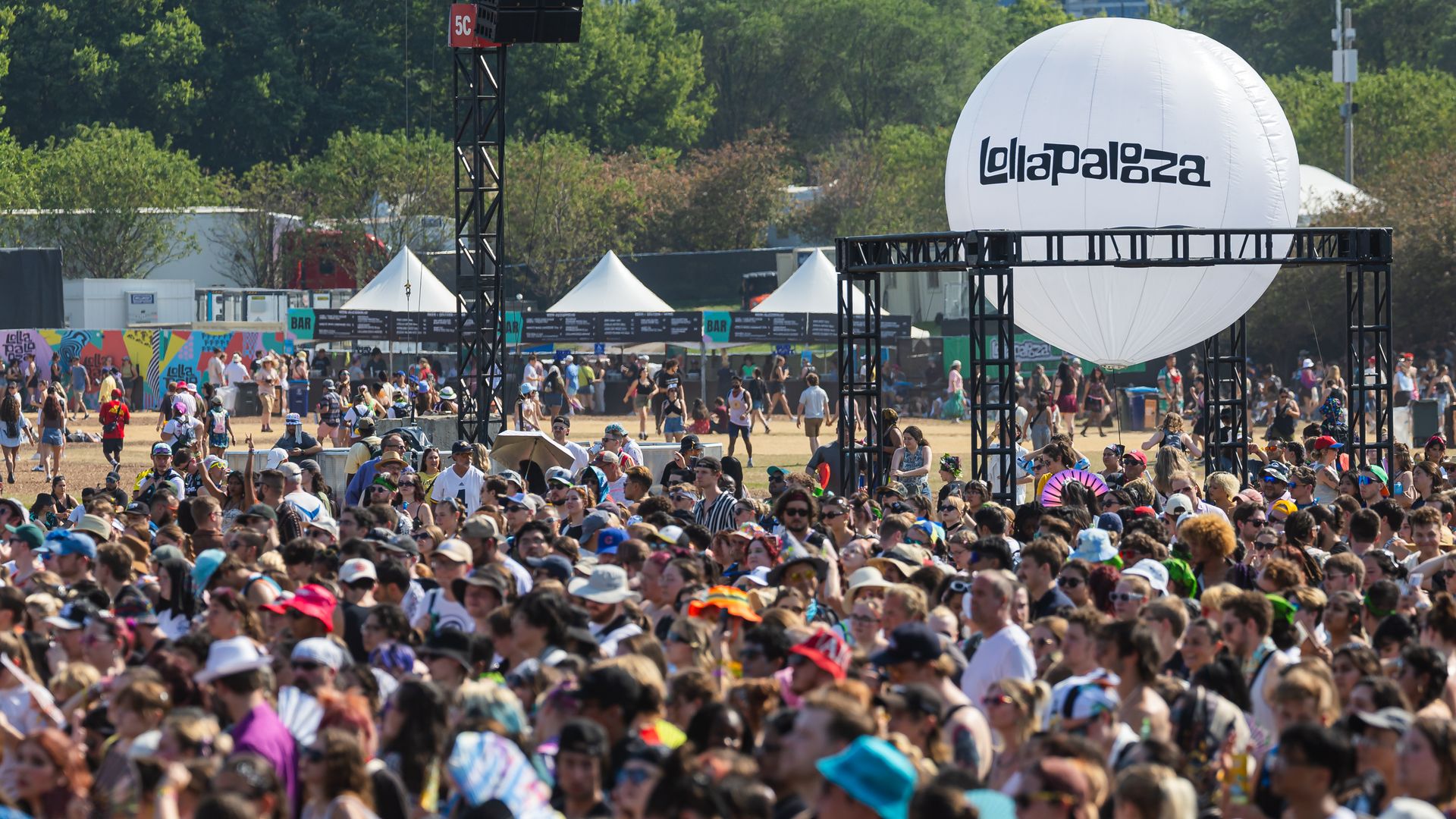
General atmosphere during Lollapalooza at Grant Park last year. Photo: Michael Hickey/Getty Images
One of the biggest music festivals in the country sets up shop in downtown Chicago this weekend, but Lollapalooza's impact will be felt in neighborhoods as well.
The big picture: This weekend is traditionally the biggest driver of Airbnb rentals as hosts are estimated to make over $2.5 million collectively.
- It's estimated that 50% of Lollapalooza attendees will be from outside Chicago.
What they're saying: "Last year, we had 16,000 people staying in Airbnb," Airbnb's chief business officer Dave Stephenson tells Axios.
State of play: Airbnb is doubling down on its efforts to tie itself to the music festival by giving renters exclusive access to Lollapalooza activities, events and activations.
- The partnership features experiences like photography tutorials or lessons on how to mix like a DJ with Chicago's DJ Lady D.
- "This is the first time we've actually had a direct music partnership with Lollapalooza," Stephenson said.
The intrigue: Stephenson says adding exclusive experiences is part of an effort to make Airbnb more than just a short-term rental platform.
Zoom out: Airbnb and other short-term rental companies haven't had it easy in Chicago. The powerful hotel lobby has used its influence with City Council to regulate the business. City leaders have warned of crackdowns if there are parties and other disturbances.
- "Disruptive parties are an incredibly small minority," Stephenson said, adding they've beefed up anti-party measures since 2020. "We have a large trust and safety team that uses artificial intelligence and other tools. We've lowered party percentages by over 80% over the last five years."
Friction point: Taxes and fees are also prohibitive for Airbnb and its clients. Chicago applies its hotel occupancy tax to Airbnb, which is usually passed on to the renter, making Airbnb costs closer to bigger cities like New York and Los Angeles.
- There are also rigorous regulations for hosts looking to rent out their spaces.
The latest: The state recently passed a law that applies its 6% hotel occupancy tax to short-term rentals.
Yes, but: A measure to ban short-term rentals neighborhood by neighborhood stalled on the City Council floor, which is assuring to Stephenson and the company.
- "Renters spend in the neighborhoods they stay in," Stephenson said. "So I'm really happy with the support we are getting from residents, business leaders and other strong voices."