AMA warns med school loan cap could worsen doctor shortage

Add Axios as your preferred source to
see more of our stories on Google.
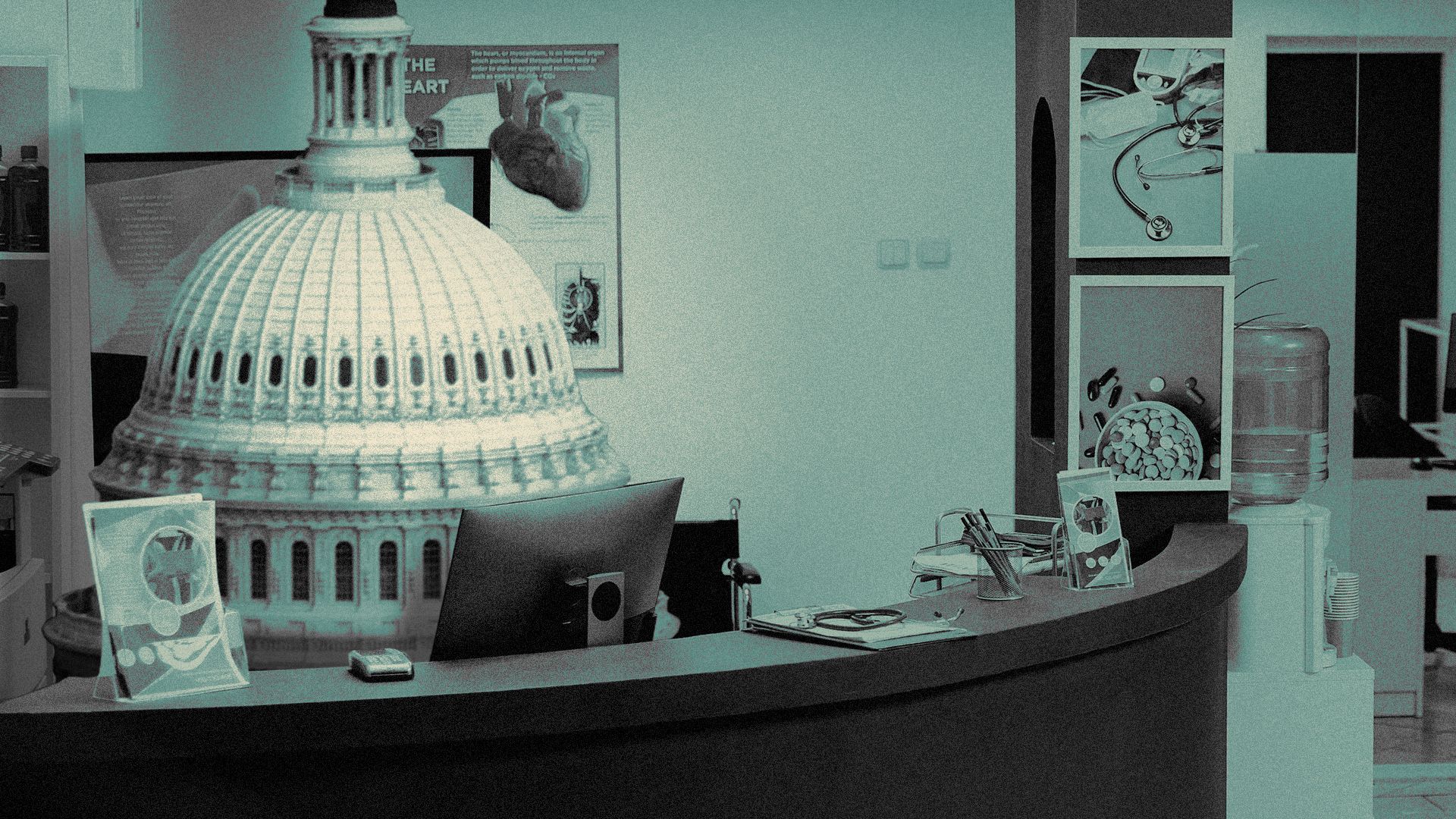
Illustration: Brendan Lynch/Axios
The Chicago-based American Medical Association is warning that the doctor shortage in the U.S. could get worse with Congress' new megabill.
Why it matters: Even before the legislation passed, the Association of American Medical Colleges (AAMC) was predicting the U.S. would have a shortage of more than 85,000 doctors by 2036.
The latest: The spending bill signed by President Trump this month will cap medical school loans at a total of $200,000, but the average med school debt is more than $210,000, according to the AAMC.
- The cost of a public, in-state medical school was as high as $286,000 in 2024 and more than $390,000 for private institutions.
What they're saying: AMA president Bobby Mukkamala called the legislation "disappointing, maddening, and unacceptable."
Between the lines: Med students who exceed the new cap and need to take out private loans won't be eligible for public service loan forgiveness, which allows graduates to have their federally borrowed student debt forgiven after 10 years if they work at a nonprofit, which many hospital systems are.
By the numbers: Illinois has nearly 700 Health Professional Shortage Areas (HPSAs), which encompass primary, dental and mental health care professionals.
- The government determines these designations based on the population-to-provider ratio, percent of population below 100% of the federal poverty level (FPL) and travel time to the nearest source of care.
- Fewer health care professionals mean less access to care, leaving the state with nearly 150 areas that are considered medically underserved, including 41 in Cook County, that have too few primary care providers, high infant mortality, high poverty or a high elderly population.
Threat level: One in five physicians hope to leave their practice in the next two years, one in three want to reduce hours and 40% of medical students may not want to enter clinical practice, according to the AMA.
Zoom out: The association has also been vocal in its opposition to Medicaid cuts in the spending bill, for the damage it will do to patient care and the medical profession, they argue.
- Medicaid cuts will total about $930 billion over the next decade, and nearly $50 billion in Illinois during that period, according to a KFF analysis.
- "The cuts to federal health care programs, including Medicaid and CHIP, will shift costs to the states and specifically to physicians and hospitals to provide uncompensated care at a time when rural hospitals and physician practices are struggling to keep their doors open," the AMA said in a statement.
The other side: Trump and Republicans, many of whom still see Medicaid coverage as an "entitlement program," maintain the cuts will save the government $1 trillion over the next decade, though the Congressional Budget Office expects the bill will add $3.3 trillion to the national debt over 10 years.
What we're watching: One solution to the shortage has been relying on immigrant physicians, with some health care companies offering help with visas in order to fill staffing gaps, Axios' Emily Peck reported.
Yes, but: Immigration is down this year, which some attribute to Trump's strict immigration policies.
Editor's note: This story has been corrected to attribute to the Association of American Medical Colleges (not to the American Medical Association) the predicted shortage of doctors and the estimate of the average medical school debt.