Proposed Medicaid cuts echo early AIDS crisis

Add Axios as your preferred source to
see more of our stories on Google.
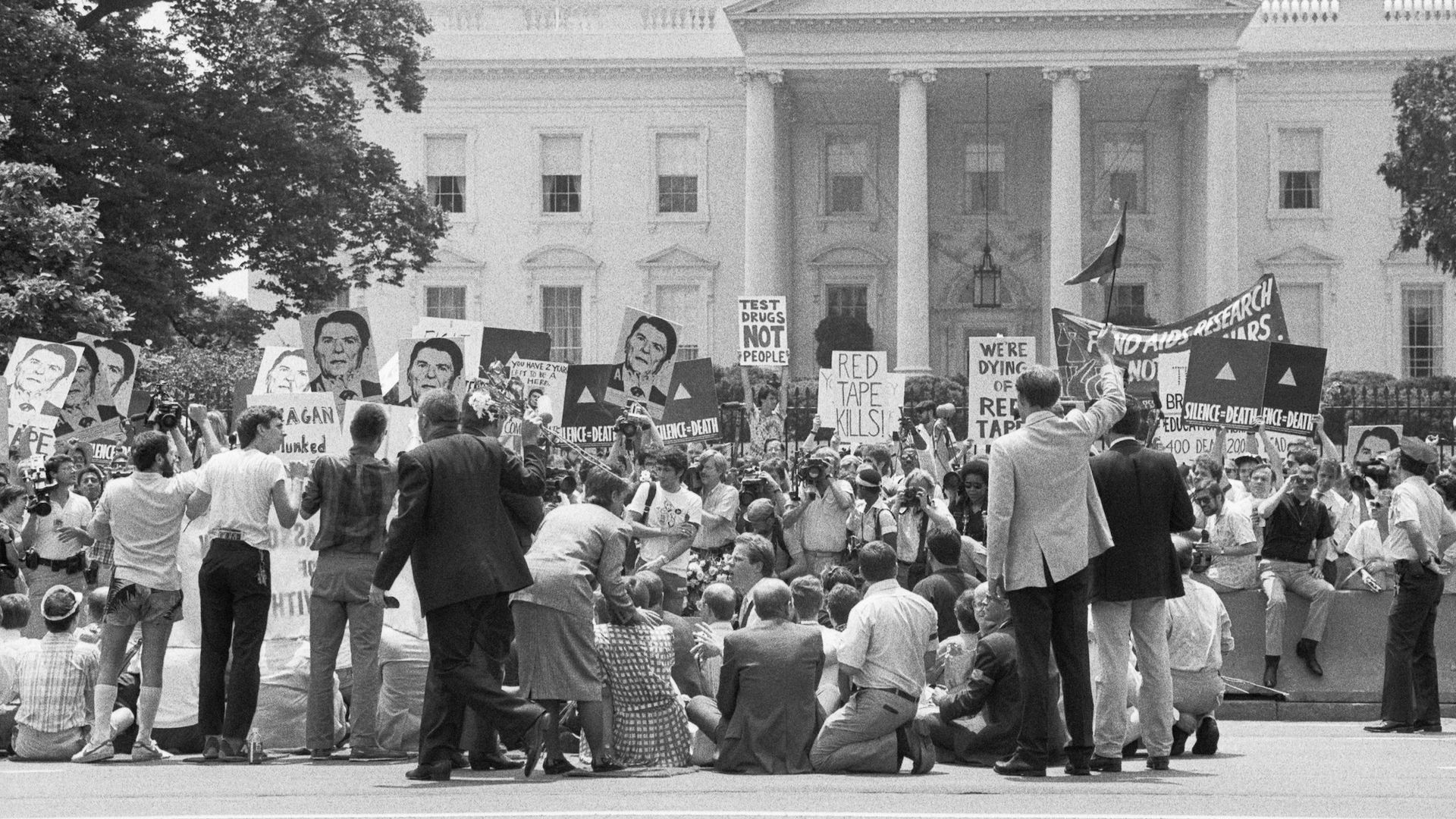
ACT UP demonstrators in front of the White House, demanding more money for AIDS research in 1987. Photo: Bettmann/Getty
Potential cuts to Medicaid in the Republicans' federal spending bill could threaten vital services for people living with HIV and AIDS.
Why it matters: Advocates working today to preserve federal funds for health care, housing and prevention research for people living with AIDS and HIV say the fight for funds is eerily reminiscent of the early days of the virus in the 1980s and '90s, when government inaction made AIDS a crisis.
Driving the news: President Trump and Republicans want the Senate to pass the spending bill that proposes $793 billion in Medicaid cuts over the next 10 years before lawmakers break next week for the July 4 holiday.
The big picture: Medicaid is the largest source of health care coverage for adults with HIV in the U.S., with an estimated 40% of people living with the disease relying on the federal program, according to KFF.
- An estimated 15,000 to 18,000 out of more than 41,000 people living with HIV in Illinois rely on Medicaid.
Flashback: Larry Kramer led the formation of the AIDS Coalition To Unleash Power, or ACT UP, in 1987 in New York, but Chicago's role in the fight came a few years later, including hosting one of the largest AIDS demonstrations, according to Chicago magazine.
Context: Ann Sather owner and former alderman Tom Tunney says that as momentum was building, restaurants like his became meeting places for advocates.
- "We incubated so many groups of AIDS activism," Tunney told Axios. "This building in 1992 was all AIDS service providers. We had Chicago House, Open Hand [Chicago] … we had Test, Positive, Aware [Network]."
- Ann Sather also served meals to people with AIDS, their caretakers and activists.
State of play: In the early days of the epidemic in the 1980s, then-President Reagan wouldn't even say the word AIDS, which "showed deep disregard for the community's pain," AIDS Foundation of Chicago (AFC) president John Peller says.
- Peller is too young to have been an activist in the ACT UP era, but he knows the history and sees parallels to now.
- Trump and Republicans' plan to cut Medicaid is "the same kind of willful and deliberate disregard for the lives and health of people with HIV that we saw from the government in the '80s," Peller tells Axios.
What they're saying: "I grew up in the ACT UP era," Mark Ishaug of Thresholds told Axios. "There was a very famous saying years ago, 'Silence equals death.'"
- "And we cannot be silent at the moment."
Between the lines: While methods of protest have adapted over the decades, Peller says he sees people show up when the LGBTQ+ communities are under threat.
- "I think that the outrage is alive and well. It's just being shown in different ways today. We sent an action alert out to the community. We had 500 people responding within 24 hours to send messages to their members of Congress about the federal funding ban to say, 'This is not acceptable for people living with HIV.'"
The other side: Axios asked Illinois Republican Reps. Darin LaHood, Mary Miller and Mike Bost, all of whom voted for the House bill, for comment about how Medicaid cuts could affect AIDS and HIV care, and they did not respond.
By the numbers: HIV funding has increased from "a few hundred thousand dollars" in 1982 to about $43 billion in 2022 for combined domestic and global efforts, KFF reports.
- Trump's spending bill cuts domestic HIV program funding by $1.5 billion compared to 2025.
The bottom line: Activists will continue to sound the alarm on what's at stake. "We need to be visible. Need to tell our stories. We need to be loud and clear about what the negative impact of these cuts would be," Ishaug said.
What's next: Chicago's Pride Parade is Sunday at 11am in Northalsted with the theme "Pride is Power."