Chicago transit leaders say $1.5 billion could avoid "drastic service cuts"

Add Axios as your preferred source to
see more of our stories on Google.
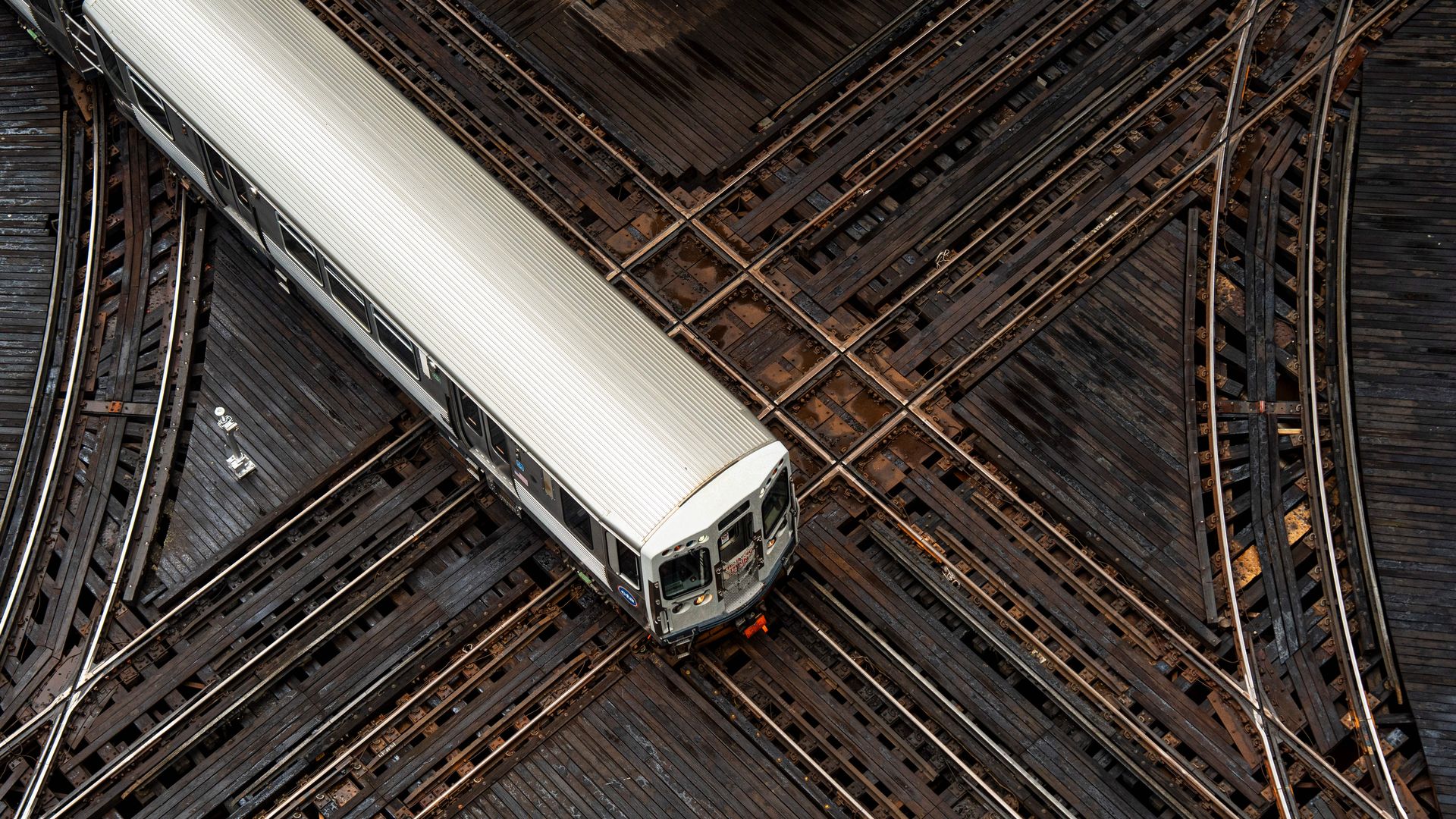
An L train in the Loop on Aug. 15, 2024. Photo: Al Drago/Bloomberg via Getty Images
Commercials urging residents to take action to prevent a major fiscal crisis for mass transit are flooding airwaves in Chicago, but it might not be enough to persuade state lawmakers to take action.
Why it matters: The Regional Transportation Authority (RTA) is sounding the alarm about possible service cuts to the CTA, Metra and Pace if state lawmakers don't chip in on the $1.5 billion RTA says it needs.
- The agency predicts a $770 million shortfall as ridership and revenues have declined in the last decade and COVID-era recovery funds have expired.
- The $1.5 billion was determined by independent experts, including the Chicago Metropolitan Agency for Planning (CMAP).
Threat level: The RTA in March warned of "unprecedented cuts," including one in five Chicagoans not having transit for their daily commute, no weekend service for Pace riders, cuts to Metra schedules and the loss of nearly 3,000 transit-related jobs.
The latest: RTA executive director Leanne Redden tells Axios she was in Springfield this week and is "cautiously optimistic" about funding help from the state.
- "I am committed to investing in a public transit system that will serve our region for decades — not just meet next year's needs or temporarily fill a budget gap," state Sen. Ram Villivalam, chair of the Senate Transportation Committee, told Axios in a statement.
- "Every day I am working alongside stakeholders, advocates and everyday riders about how to address the issues that face our current system."
State of play: RTA launched a campaign last month called "Save Transit Now," which includes ads urging commuters to call and write their lawmakers asking them to give the agency money.
- The commercials promise shorter wait times and cleaner trains and buses if the funding comes through.
- More than 5,000 letters have been sent to legislators, according to Redden.
Friction point: That campaign has been criticized by some, including the Tribune's editorial board and state Rep. Kam Buckner, who argued that a public agency in financial trouble shouldn't be spending $750,000 on ads.
- Buckner, a transit advocate who has been vocal about the CTA's problems in particular, wrote in an op-ed: "[T]o cry broke with one hand and drop three-quarters of a million dollars on a PR campaign with the other is wrong, and frankly, it's irresponsible."
The other side: "We can't afford not to raise awareness at this moment," Redden said. "Our research, through input from the region's riders and taxpayers, showed that nearly half of residents weren't even aware of the fiscal cliff and it is our obligation to inform them."
Reality check: Buckner agrees that Chicago transit is underfunded compared to some of its peers.
Zoom out: Illinois funds 17% of Chicago's public transportation system, WTTW reported, compared to Philadelphia's transit system receiving 50% from the state and New York City receiving 28%.
- Randy Clarke, head of Washington, D.C., transit, said they had to raise fares 12.5% last year — a change riders often balk at but something the RTA may be considering.
Between the lines: Service problems continue to plague transit, especially the CTA, but acting director Nora Leerhsen promises she's bringing fresh eyes and ears to rider complaints.
- CTA launched a chatbot last year, and an issue continues to dominate: smoking on the trains. "Not all rule violations are created equal, and I think smoking really has an ability to really set a tone for a rider that is not indicative of what we want them to see," Leerhsen told WTTW.
The bottom line: "Without funding certainty, we'll be forced to prepare for drastic service cuts, thousands of layoffs, route eliminations, and steep fare increases," RTA's Redden warns.
- The Illinois Legislature wraps up May 31.