Chicago food giants mum on food dye move

Add Axios as your preferred source to
see more of our stories on Google.
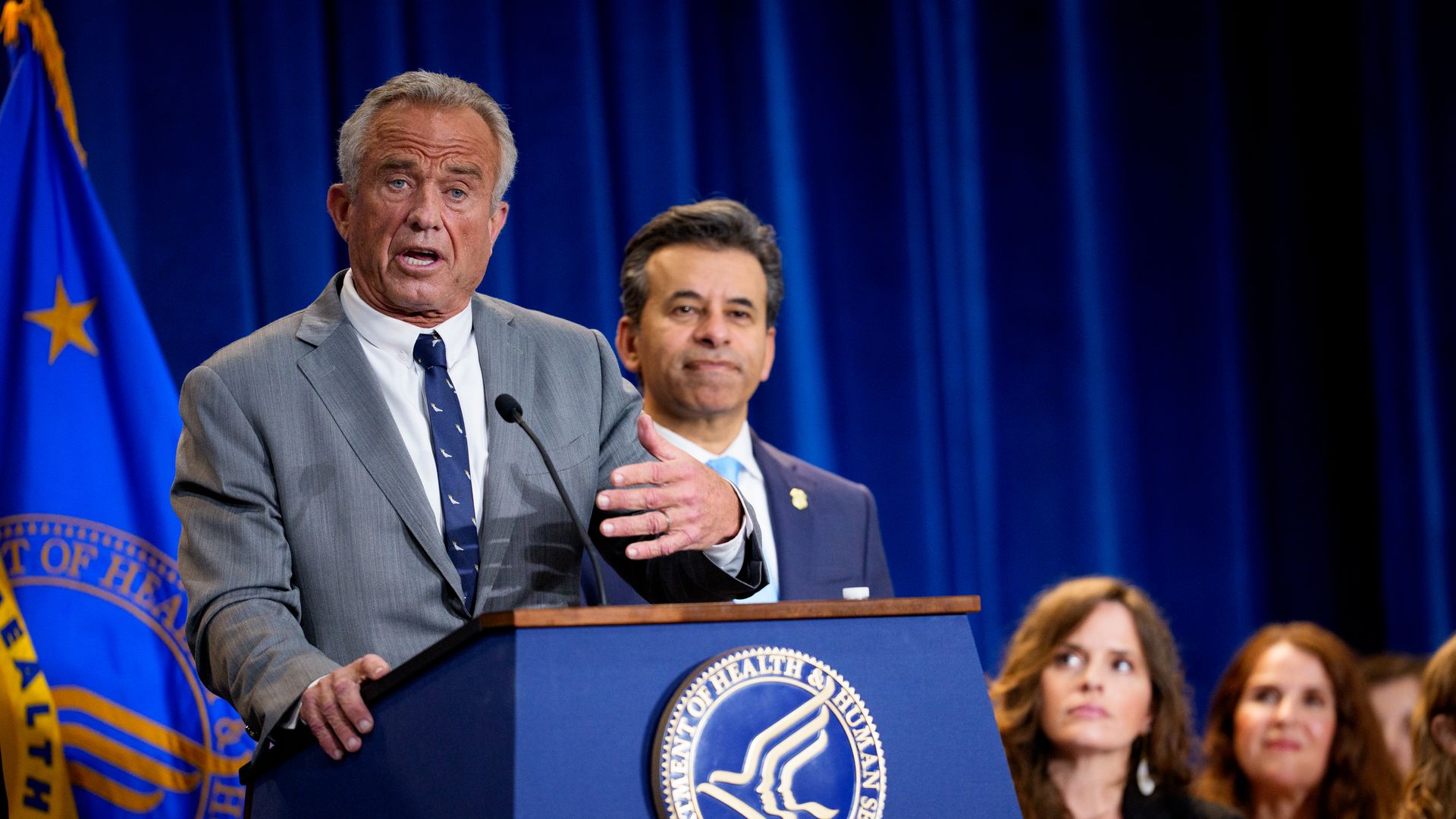
Health and Human Services Secretary Robert F. Kennedy Jr., during a Tuesday news conference. Photo: Andrew Harnik/Getty Images
Many health advocates are applauding HHS Secretary Robert F. Kennedy Jr.'s push to remove eight artificial food dyes from American products, but some Chicago-based food giants may not be on board.
Why it matters: Kennedy's voluntary phase-out plan will need the cooperation of large local food players including the Institute of Food Technologists (IFT), Kraft-Heinz and Mondelēz.
- He said on Tuesday "industry has voluntarily agreed" to the plan, but neither Kraft-Heinz nor Mondelēz responded to questions from Axios confirming agreement.
- No food company officials appeared at Kennedy's press announcement, and last month an association representing major food companies, issued a memo of concern about the plan.
The big picture: The effort by the Food and Drug Administration is part of a broader push to target additives in sodas, snacks and processed foods that the administration contends are a risk to children's health, though some evidence suggests they're safe at the levels currently used.
Zoom in: While Kraft-Heinz and Mondelēz are so far mum on Kennedy's proposal, both started making moves in that direction a decade ago.
- Kraft removed artificial dyes from its macaroni and cheese in 2015.
- That same year, Mondelēz pledged to remove artificial dyes in its products by 2020. Company representatives, however, did not respond to Axios questions about where that effort stands.
Between the lines: Mondelēz may not see artificial ingredients as a big consumer concern.
- Earlier this month, the company highlighted results from its State of Snacking survey showing that "most consumers prioritize enjoying an indulgent snack over focusing on ingredients."
State of play: If phased out, the eight petroleum-based food dyes would join Red Dye No. 3, which the Biden administration barred earlier this year based on studies linking the dye to cancer in rats.
What they're saying: "While there is lack of scientific consensus to support [the bans] — food dyes are generally considered low risk for the broad population, dependent on dietary and consumption patterns — additional research is needed," Bryan Hitchcock, IFT's chief science and technology officer, tells Axios.
- IFT, a global group whose 12,000 members include scientists and industry officials, has a history of highlighting the benefits of processed foods and additives.
Monica's thought bubble: As someone who has covered food policy for decades, I was surprised by Kennedy's statements, including that "sugar is poison." I've never seen a federal food official speak that plainly.
- Yes, but: As of Wednesday morning, Kennedy's position still appeared at odds with the website of the FDA (which he oversees) stating "color additives are safe when they are used in accordance with FDA regulations."
What we're watching: How Chicago companies comply with these groundbreaking voluntary standards and whether they become mandatory by the end of the year.