Gov. Pritzker goes after Trump while unveiling state budget

Add Axios as your preferred source to
see more of our stories on Google.
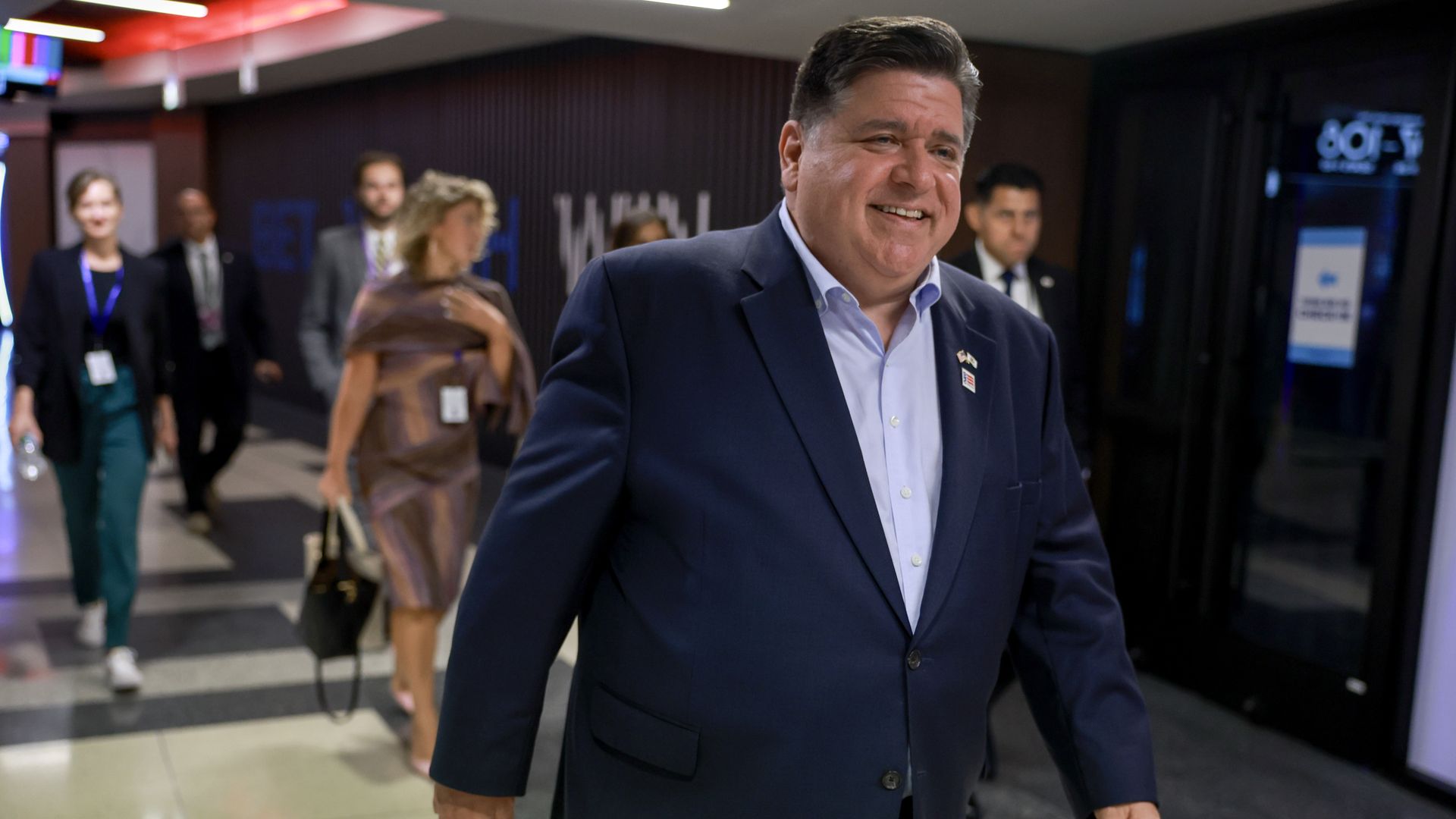
Illinois Gov. J.B. Pritzker visits the United Center on Aug. 18, 2024. Photo: Joe Raedle/Getty Images
Illinois Gov. JB Pritzker proposed a $55 billion budget — which Republicans say is the largest in the state's history — in his annual speech to the General Assembly on Wednesday.
The big picture: Pritzker proposed new initiatives to shore up education at all levels, lower health care and pharmaceutical prices, and create funds to offset potential federal funding cuts.
The vibe: Very anti-Trump. While the federal government is auditing its spending, Pritzker lambasted the Trump administration's recent cuts for what he says is an "attack on working-class families."
What they're saying: "My oath is to the Constitution of our state and of our country," Pritzker said in the speech.
- "We don't have kings in America — and I don't intend to bend the knee to one. I am not speaking up in service to my ambitions, but in deference to my obligations."
Context: Pritzker, a Democrat who has both attacked and sued the Trump administration in recent weeks, is considered a rising national star in his party.
Zoom in: Pritzker's own budget office revealed a $3.2 billion deficit for 2026 in November, but the governor's office has since revised that to a $1.7 billion deficit.
- The budget calls for revenue to grow by almost 3% to offset the deficit, along with a slew of cost-cutting measures, like streamlining state purchasing and a freeze on new hiring.
Here are six takeaways from the governor's budget:
💵 Migrant money: One of the biggest cuts is health care for undocumented immigrants. Last year, the governor included over $600 million for benefits for immigrants ages 42-64 lacking legal status. This year, it's scratched.
- Last year's budget also called for $140 million to operate a migrant "welcoming center" in Chicago. This year, as the surge has dissipated, the amount is $40 million.
🎰 Tax incentives: Whether it's through the gas tax or casinos, the governor is looking to raise revenue by removing or reconfiguring tax breaks.
- Casinos (outside Chicago) would have table games taxed like slot machines. In 2019, a law gave the casinos tax breaks on table games when gambling was expanded. This could lead to an increase in minimum bets at blackjack and poker tables, for example.
- The motor fuel tax hike will stick around. The increase last year was considered temporary to combat inflation, but it is in this budget. The 47-cent tax is the nation's second-largest and is expected to generate over $170 million.
🗳️ Township consolidation: The governor wants to allow taxpayers to reduce the number of state governmental bodies; Illinois currently has the most of any state in the U.S.
- He is suggesting legislation that would make it easier for voters to decide how to consolidate services through ballot measures.
- This is an issue that the GOP has raised over the last decade, pointing to excessive property taxes to pay for township supervisors and other municipal employees.
- But this would not be an easy lift for lawmakers. Shutting down local municipalities will force layoffs and impact constituents.
🎓 Direct admissions: Pritzker wants to streamline the state's college admission process to reduce application fees.
- This move could be intended to counter the Trump administration's goal of eliminating the U.S. Department of Education, which would push most college admissions activity to the states.
📵 Cellphone ban in schools: Pritzker proposed banning cellphones in K-12 classrooms during instruction time. This has been governed district by district, but the governor signaled he wants it to be statewide.
🩺 Health care expansion: The governor announced several new protections for Medicaid and is pushing for full access to behavioral medicine, too. He also calls for $10 million to fund a reproductive rights hotline and more money to help reimburse out-of-state patients for travel.
The intrigue: Even though the state has a Democratic majority in both legislative chambers, last year's budget, which included tax increases, was not a slam dunk.
- Lawmakers narrowly approved it in the overnight hours on the last day of the spring session.
What's next: This is just a proposal. Budget negotiations will start in the state legislature, which will vote on a new budget before session ends in May.