Chicago braces for Trump's immigration actions


Add Axios as your preferred source to
see more of our stories on Google.
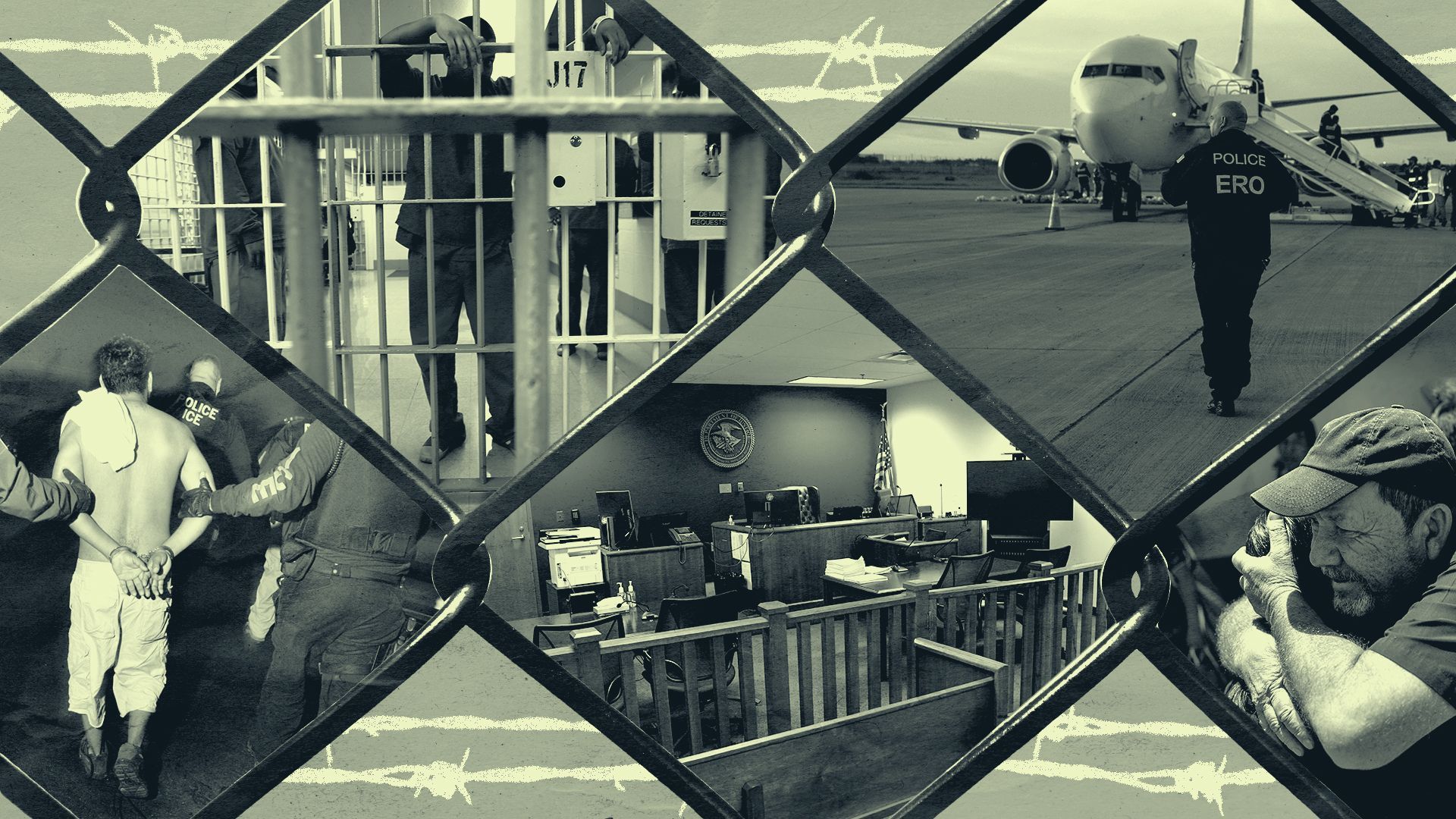
Photo illustration: Allie Carl/Axios. Photo: John Moore, J.Emilio Flores and Veronica G. Cardena/Getty Images, and Pool/Pool via Getty Images
Fears of deportations in the wake of President Trump's executive orders on immigration hadn't materialize by Tuesday afternoon, but local leaders are remaining vigilant and encouraging the city's undocumented population to learn their rights.
Why it matters: Trump officials have designated Chicago as ground zero for deportations.
- While some press reports suggested that U.S. Immigration and Customs Enforcement (ICE) would first focus on noncitizens convicted of crimes, the plan remains unclear, leaving hundreds of thousands of people in Illinois unsure whether it was safe to go to school and work.
The latest: Gov. JB Pritzker said on Tuesday he'd heard ICE was targeting up to 2,000 people in Chicago.
- Law-abiding noncitizens should be left alone, he said, but if there are people "who have been convicted of violent crimes who are undocumented, they are supposed to be deported. ... I don't want them in my state," Crain's reported.
- Meanwhile, Illinois joined other states Tuesday in suing over Trump's attempt to end birthright citizenship.
By the numbers: Illinois is home to about 425,000 undocumented people, 70% of whom have lived here for at least a decade, according to the Migration Policy Institute.
- In the last fiscal year, ICE deported more than 271,000 people — the most in nearly a decade, according to the agency's annual report released in December.
- At that record pace, it would take around four decades to deport all the 11 million undocumented immigrants in the U.S. today.
Reality check: While many fear neighborhood raids, noncitizens do not have to open their doors unless an ICE agent presents a warrant signed by a judge.
Yes, but: The new Trump administration seeks to upend the deportation process, and the GOP-controlled Congress seems poised to pass legislation that would allow agents to bypass current laws.
Zoom in: Officials at CPS and the Chicago Police Department have issued statements about what they will and won't do to assist ICE agents under current rules.
CPD: Per Chicago law, local police said in a statement, they "will not assist or intervene in civil immigration enforcement," but "as always, we will continue to enforce the law if a crime occurs, regardless of the citizenship status of those involved."
CPS: District officials say they do not ask for a student's immigration status, nor do they "share student records with ICE, except in the rare case where there is a court order or consent from the parent/guardian."
- "ICE agents are not permitted access to CPS facilities unless they provide their credentials, the reason they are requesting access, and a criminal judicial warrant signed by a federal judge."
Restaurants: Some local restaurants are keeping I-9 documents and other worker verification paperwork ready in case of ICE visits, Eater reported.
- "America currently faces a workforce shortage of 1.7 million people. We simply don't have enough workers to fill the current job openings, and mass deportations could exacerbate this shortage and put further pressure on businesses," said Sam Sanchez, owner of Third Coast Hospitality, National Restaurant Association board member and co-chair of Comité de 100.
- "Immigrants in the food service industry are essential workers, contributing to the economic success of restaurants across the country. Mass deportations could lead to labor shortages impacting the ability of restaurants in Illinois to feed our local community," said Sam Toia, CEO of the Illinois Restaurant Association.
What we're watching: How deportation threats affect restaurants' ability to stay fully staffed and open this week and school attendance, as students are expected to return today after a five-day break.