Deportations could starve local food industry

Add Axios as your preferred source to
see more of our stories on Google.
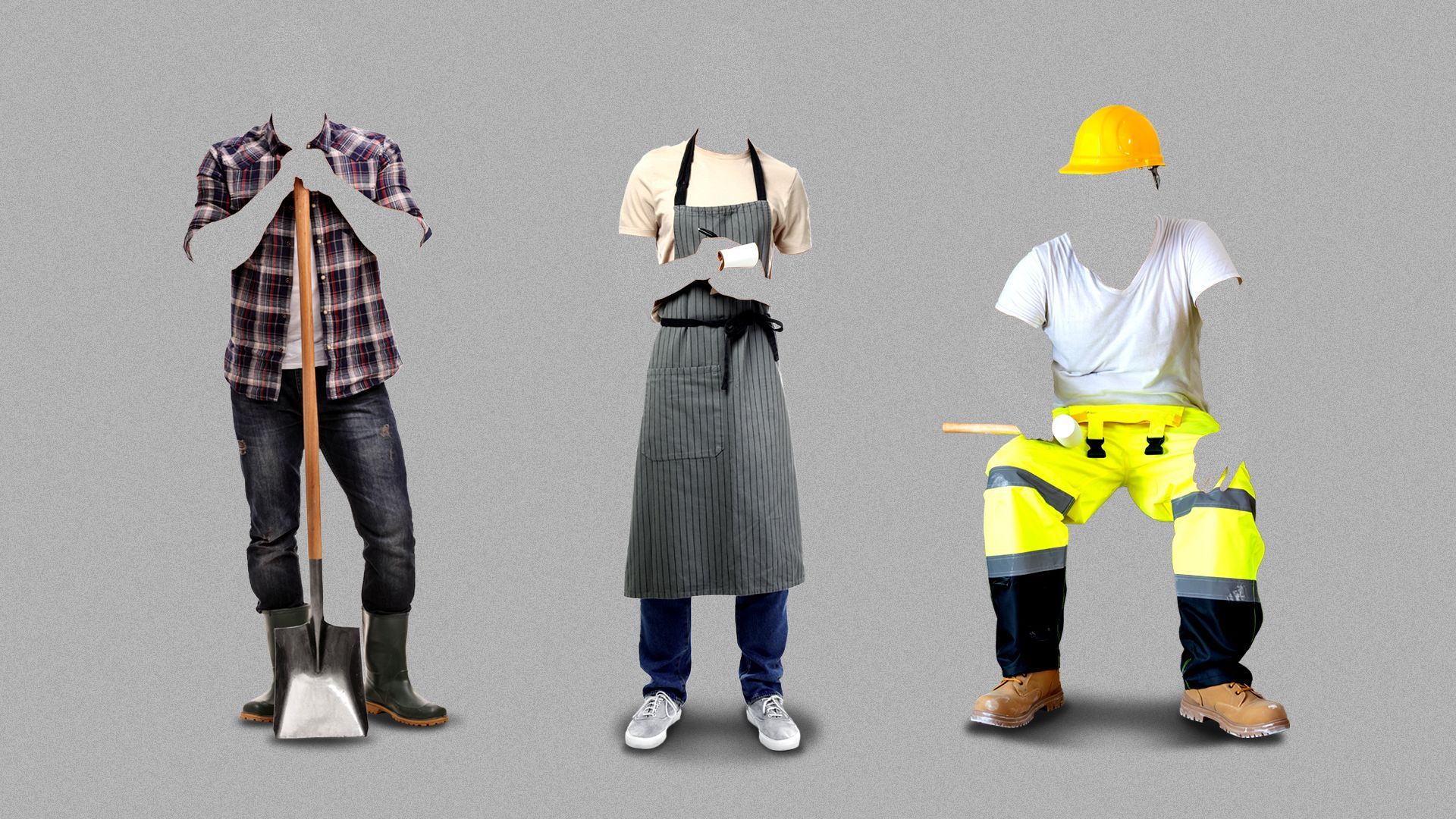
Illustration: Sarah Grillo/Axios
President-elect Trump's plan for mass deportations could hurt local restaurants, meat packers and farmers who rely heavily on immigrant workers, according to data and local experts.
Why it matters: The resulting labor shortages could spike food prices, shutter restaurants and leave produce rotting on the vine.
Between the lines: The undocumented labor force undergirds much of the U.S. food industry, helping keep prices lower than they would be without those workers, according to data analyses and industry leaders.
What they're saying: "This is the elephant that everybody's trying to hide but everybody knows it," Chicago restaurant owner and executive director of the Illinois Restaurant Association Sam Sanchez tells Axios.
- "Without the [undocumented] labor force, restaurants will shut down."
The other side: "While we deeply sympathize with the plight of those seeking a better life, compassion must be balanced with practical governance," Republican Cook County Commissioner Sean Morrison said in a statement.
- "It is imperative that we develop and implement a plan to address and work toward the immediate repatriation of migrants to their nations of origin."
The intrigue: Sanchez says many restaurateurs didn't know how much of their staff was undocumented until COVID-19 arrived.
- "Everyone eligible for unemployment was collecting $1,000 a week and off traveling [during COVID]," he says. [But] "the undocumented showed up and kept our businesses going."
- "They've been living, working and paying taxes here for 10, 20 or 30 years, and now they're being targeted for deportation. It will hurt this industry tremendously."
Yes, but: Deportation proponents argue that restaurateurs could hire documented people for the same jobs at higher wages.
Reality check: "Restaurants can't afford to pay more and no one is gonna pay $30 or $40 for a burger," Sanchez says, predicting that menu prices would have to rise to compensate.
- Plus, he says few people actually want to do kitchen labor because it's so taxing.
By the numbers: The loss of millions of cooks, agricultural workers, meat processors and servers across the country would rob the treasury of billions.
- In 2022, undocumented workers paid $96.7 billion in state, federal and local taxes, including $25.7 billion in Social Security (a benefit most will be ineligible to collect), according to the non-partisan Institute on Taxation and Economic Policy.
Zoom in: About 70% of Illinois' 400,000 undocumented immigrants have lived here for more than a decade, per the Migration Policy Institute.
- In 2022, Illinois raised $1.5 billion in tax revenue from undocumented workers.
Other food industries: The Department of Labor estimates 42% of crop workers are unauthorized, leaving farmers in nearby southwest Michigan bracing for "massive interruptions."
- The Illinois Association of Meat Processors is also seeking help from the federal government to "work swiftly to approve those who are legally seeking citizenship in the United States to allow our meat processors to hire those immigrants within the parameters of the law," IAMP executive secretary Dianne Handsaker tells Axios.
What we're watching: If and when deportations start, Sanchez says he worries that undocumented people will "fear to go to work, and will ask their kids to stop going to school."