New rules speed up Chicago lead pipe removal

Add Axios as your preferred source to
see more of our stories on Google.
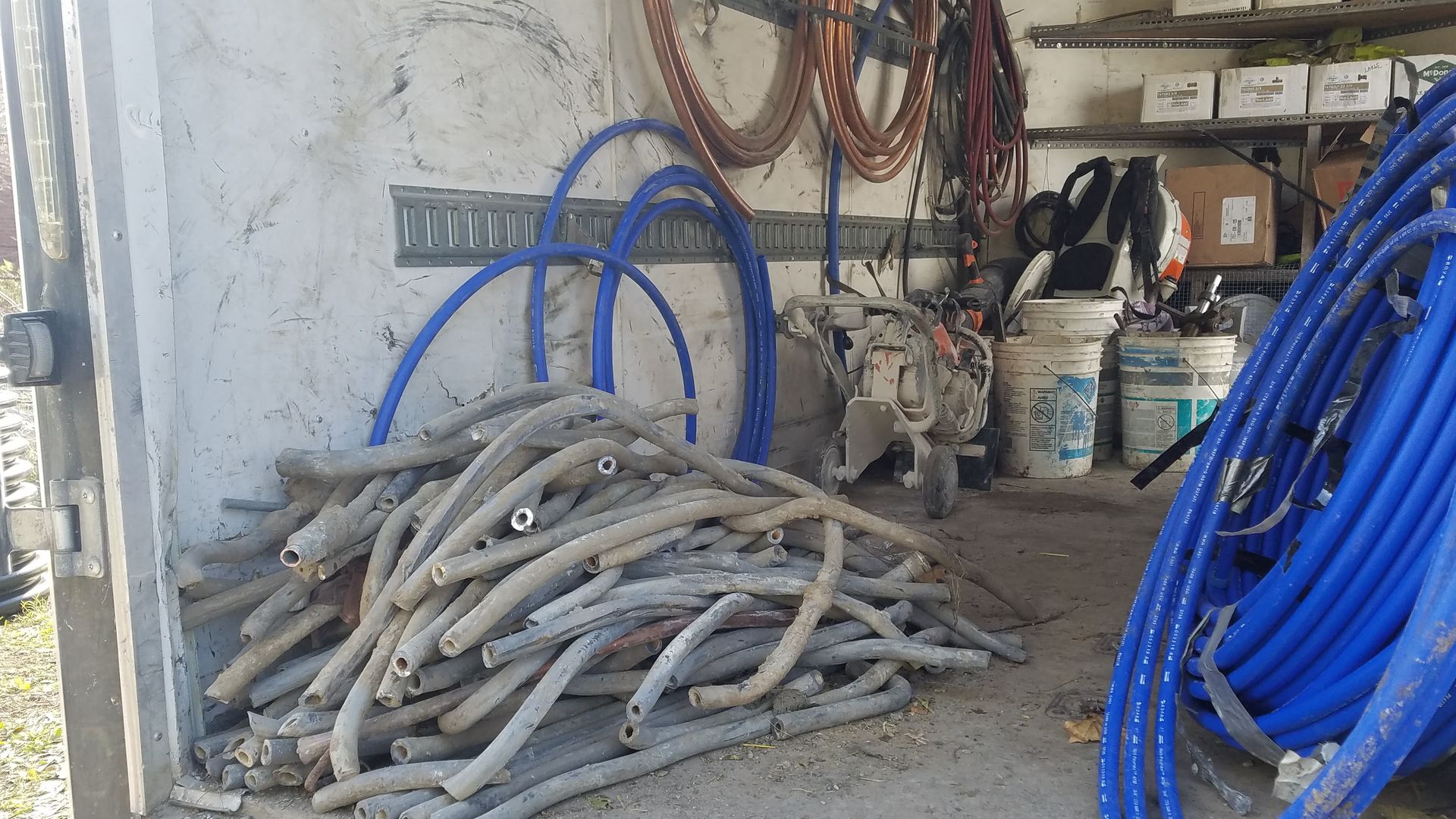
Removed lead lines are placed into a pile for disposal before workers in Gary, Indiana, replace them with safer materials. Photo: Monica Eng/Axios
New federal rules will require Chicago to remove and replace its 400,000 toxic lead water lines about twice as quickly as previous rules did — but still not as fast as most other U.S. cities.
Why it matters: Health authorities say no level of ingested lead is safe, and a 2022 Axios analysis found that more than a third of Chicago homes tested had high levels of lead in their water.
The big picture: The long-awaited update will require nearly every U.S. city to remove and replace any lead line connecting a home to a water main within 10 years.
- Chicago's deadline is longer because our problem is so much bigger, driven by a building code that forced all homes (smaller than a 4-flat) to install the toxic lines until 1986, decades after other cities banned them for health reasons.
- An earlier proposed version of the rule, released last year, would have given Chicago 40-50 years to remove the lines. After significant outcry, EPA officials created a removal formula that halves it.
What they're saying: "This is a big step forward for public health," Erik Olson of the Natural Resources Defense Council tells Axios. "It'll require 9 million lead pipes across the country to be pulled out of the ground, and it will protect the health of tens of millions of children and adults who are currently exposed to this stuff every time they drink a glass of water."
- Olson says, that based on his reading of the 800-page rule change, Chicago would be required to remove its lines over about 22 years.
Zoom in: The new rule lowers the lead action level (from 15 parts per billion to 10 ppb) that when found in water testing would trigger accelerated removal and public notification.
- It also requires officials to check more water during tri-yearly tests.
Catch up fast: Health advocates had been pushing to update the rule for years based on links between lead ingestion and brain damage and heart disease.
- Scientists in the local EPA office published studies as early as 2013 showing how ineffective current protocols are at gauging lead exposure through water.
- Still, Chicago leaders were so resistant to fixing the problem that under Mayors Rahm Emanuel and Lori Lightfoot, the city replaced nearly 800 miles of water mains attached to lead lines, but left the toxic pipes in place.
"Reducing Chicago's lead pipe replacement timeline means clean water and clean water jobs for all Chicagoans within a generation," Iyana Simba, city programs director for the Illinois Environmental Council, tells Axios.
- "Additionally, stronger testing protocols are critical to identifying and protecting people from lead exposure, especially young children."
What we're watching: How Chicago will pay for the removals, which could run from $5 billion to $12 billion based on how much the city has paid for the relatively small number of lines it has already removed.
- In 2021, Chicago officials estimated removals would cost around $20,000 per home — nearly five times higher than the average in most U.S. cities.
- More recently local officials estimated they could remove 30,000 lines with a $336 million federal loan, which would cost about $11,000 per line.
- So far, Chicago officials have removed 5,844 lead water lines.
- Some additional funding could also come from $2.6 billion in newly available drinking water infrastructure funding through the Bipartisan Infrastructure Law.