Johnson's council allies reject city's Lake Shore redesign

Add Axios as your preferred source to
see more of our stories on Google.
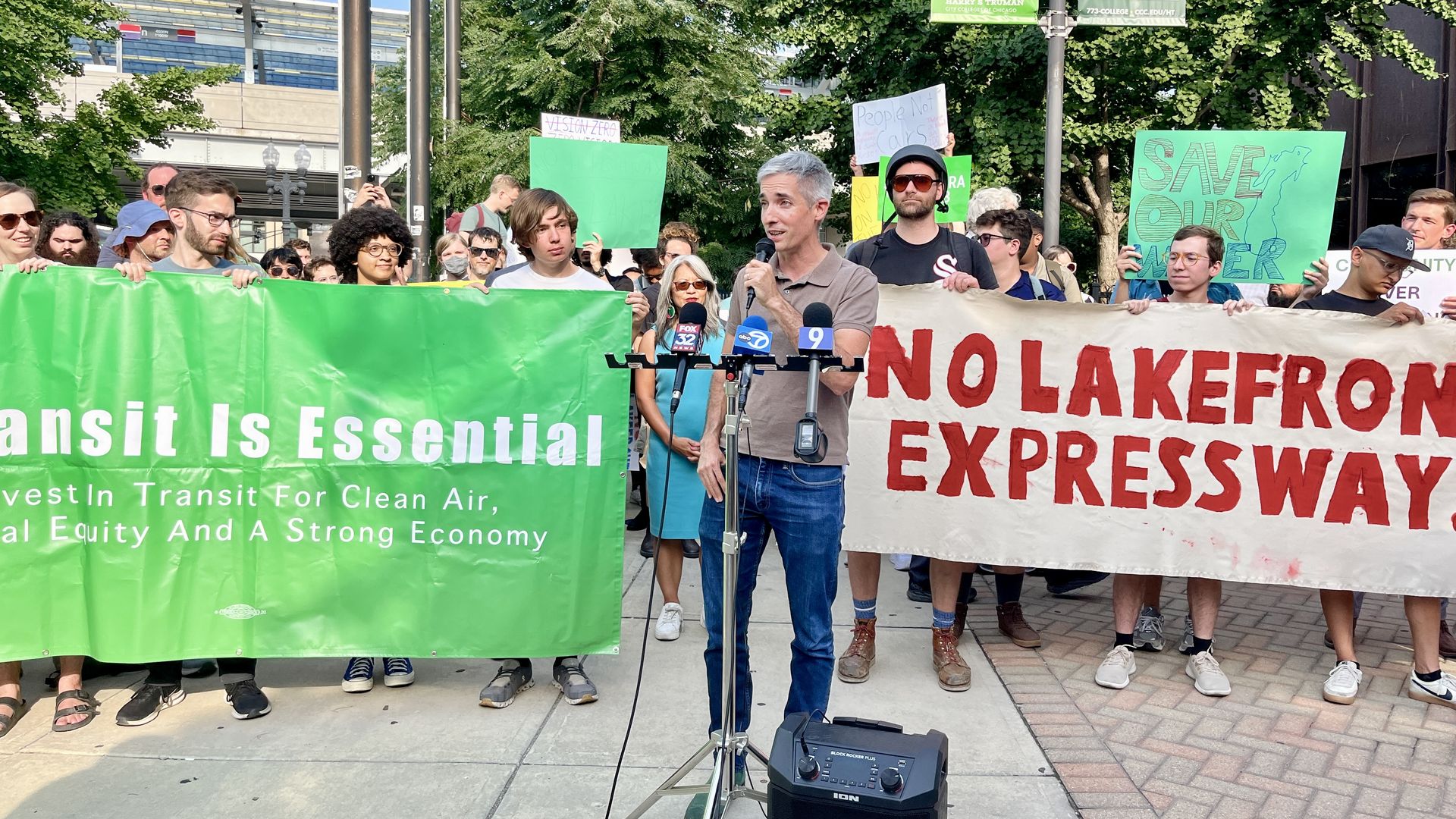
Ald. Daniel La Spata (center) and Leni Manaa-Hoppenworth (behind him) were among several City Council members calling for a revised plan for North DuSable Lake Shore Drive on Thursday. Photo: Monica Eng/Axios
Some of Mayor Brandon Johnson's strongest City Council allies are protesting a plan to redesign DuSable Lake Shore Drive, saying it needs to prioritize public transit and environmental concerns.
Why it matters: After a decade of planning by the Illinois and Chicago transportation departments, Redefine the Drive could dramatically reshape Chicago's most prominent band of infrastructure for generations.
- But the split between Johnson's progressive allies and his transportation department could force him to make a tough decision.
The big picture: The conflict reflects a rift between car users who envision the lakefront as a commuter highway and those who see it as a growing asset for bikes, scooters, pedestrians and more robust public transit.
Driving the news: Several progressive city and state politicians, including Alds. Daniel LaSpata and Maria Hadden protested the plan Thursday at a rally outside Truman College.
- Inside, Illinois and Chicago transportation officials were presenting the details at a public open house.
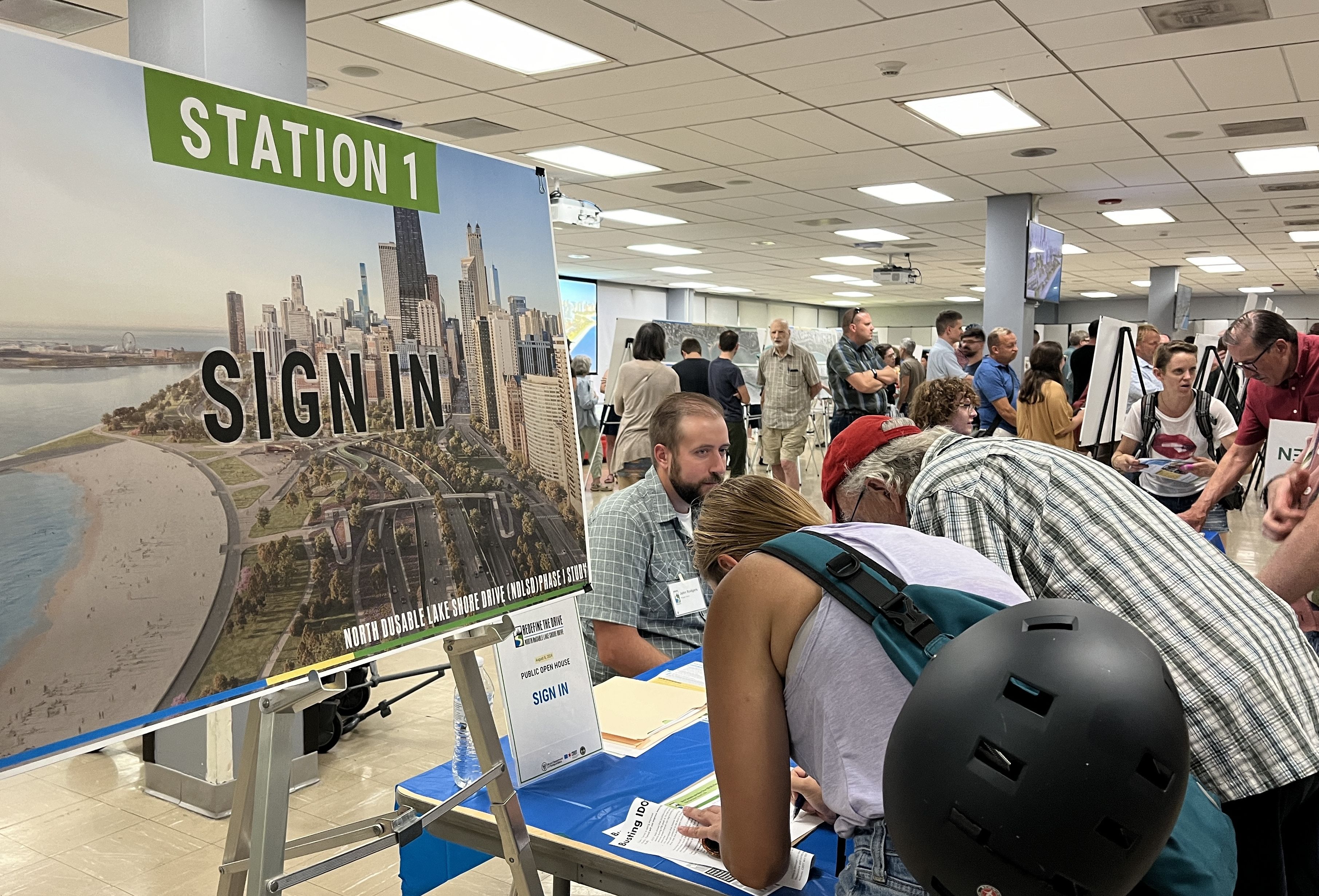
Catch up quick: In June, 14 alders urged city and state transportation officials to slow their planning to consider more input from alders as well as environmental and active transportation advocates.
- Instead officials proceeded to release their preferred design from among five finalists. It offers the most speed benefits for cars and the least for transit riders while leaving out a dedicated bus lane.
- It also removes the stoplight at Chicago Avenue, adds park land and straightens the S curve.
Behind the scenes: Sources close to the city tell Axios the protesting alders believe Johnson — an avid cyclist — favors their side and wonder why he hasn't stood up for them yet. At the rally they were careful to blame the mayor's transportation officials rather than Johnson himself.
What they're saying: "Infrastructure is a conversation between our present and our future," La Spata tells Axios. "We have to be designing for 2050 and 2070 when [Chicago commuting] will need to be fundamentally different, so we need infrastructure that moves us in that direction."
The other side: Plan opponents generally want a dedicated bus lane, reduced car lanes and a design that supports at least a doubling in transit ridership.
- Chicago Department of Transportation commissioner Tom Carney would not say if he supports those features but highlighted the downsides of adding a bus lane and reducing car lanes. He also told Axios that increasing transit capacity is "up to the [Chicago Transit Authority]."
The bottom line: Any final plan needs mayoral approval. But Johnson's office would not say if he supports the CDOT/Illinois Department of Transportation recommendation.
- "We'll continue to collaborate with stakeholders and the community to ensure the project supports Chicago's climate and public transportation goals, and meets the needs of all who travel to, from, and along the north lakefront," mayoral spokesperson Ronnie Reese told Axios.