Chicago's Spire hole fades into history

Add Axios as your preferred source to
see more of our stories on Google.
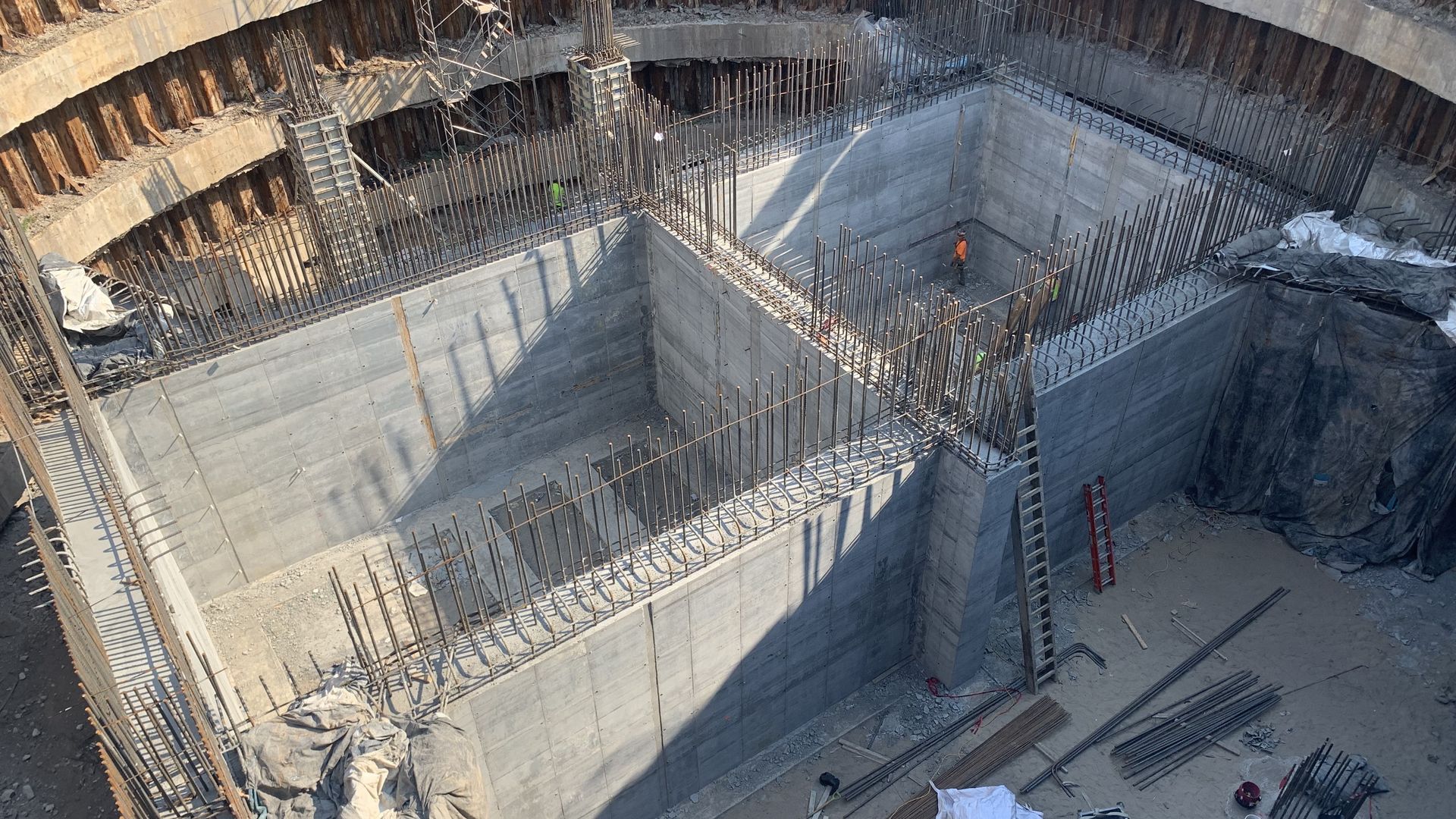
The foundation of 400 Lake Shore, built in the existing Spire hole. Photo: Justin Kaufmann/Axios
The official groundbreaking for the 400 N. Lake Shore skyscrapers took place Monday, but it's hardly the start of the project.
The big picture: Construction crews have been underground for six months, filling the biggest human-made hole in Chicago history.
Flashback: The Spire is one of the most famous Chicago buildings that never was. In 2007, construction started on architect Santiago Calatrava's 150-floor skyscraper. The plan called for a sleek, twisting, modernist design.
Yes, but: Funding dried up due to the 2008 recession, and the building was scrapped, leaving a 76-foot-deep hole just north of the Chicago River and just west of DuSable Lake Shore Drive.
Driving the news: In 2016, developer Related Midwest took control of the property. Last year, it announced plans for two residential towers, both over 70 stories, on the site.
- The towers will feature 1,100-plus condos and more than 600 rental units.
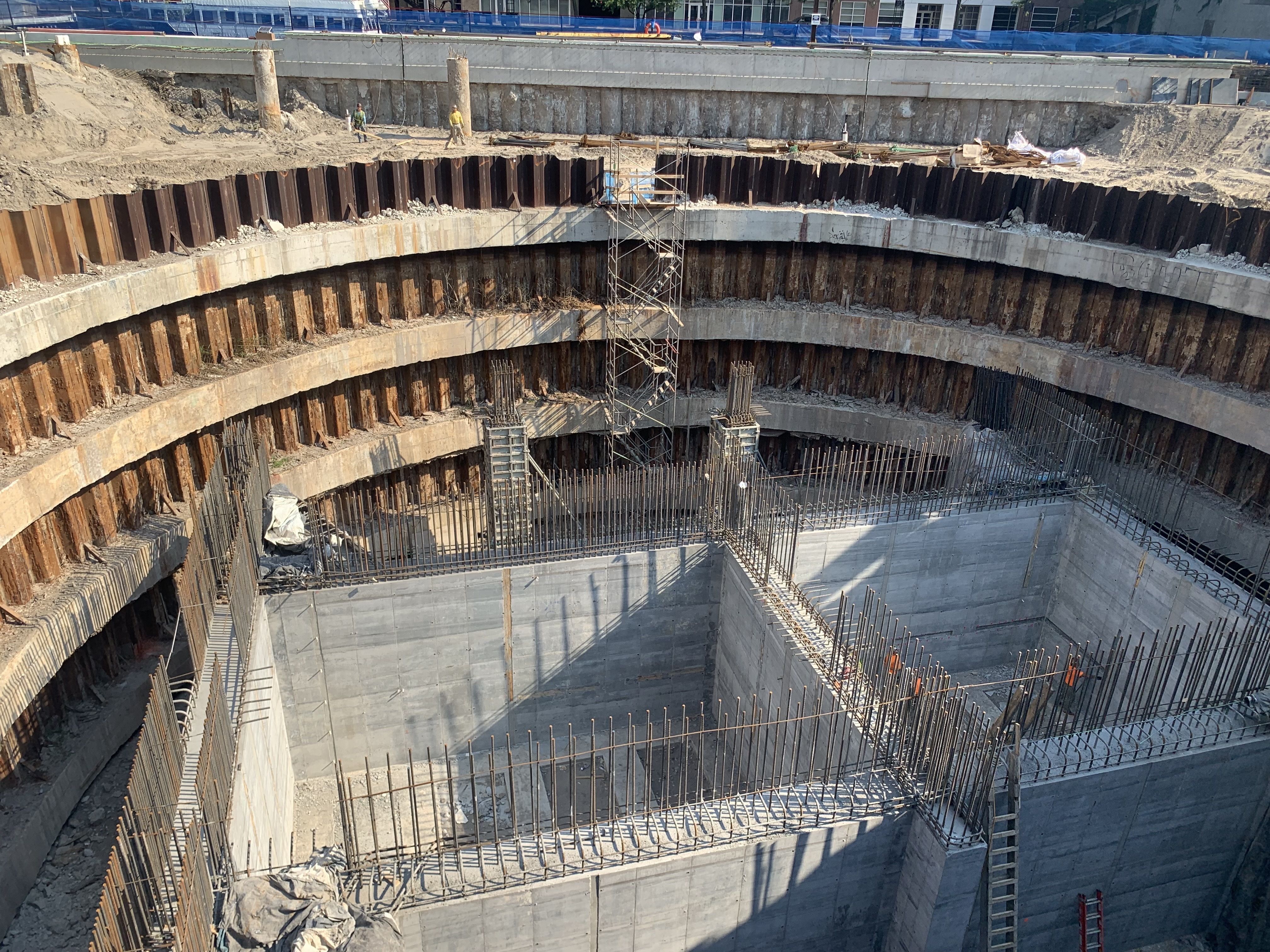
The intrigue: You'd think having an existing hole for the foundation of a skyscraper would be a leg up, but according to Related Midwest, the Spire hole is a huge challenge.
- The ongoing construction was preceded by at least nine months of design and engineering, which took into account whether to build in the existing hole or around it.
- The hole is expected to be filled by August.
What they're saying: "It's the chance of a lifetime," Related Midwest's vice president of development Nick Millot tells Axios.
- "It's a chance to take something that was a bit of a blemish during the Great Recession and turn it around and pronounce our skyline to the rest of the world."
Zoom in: The development will refurbish the riverfront land, which has been vacant up to this date.
- The Park District will continue to develop nearby DuSable Park.
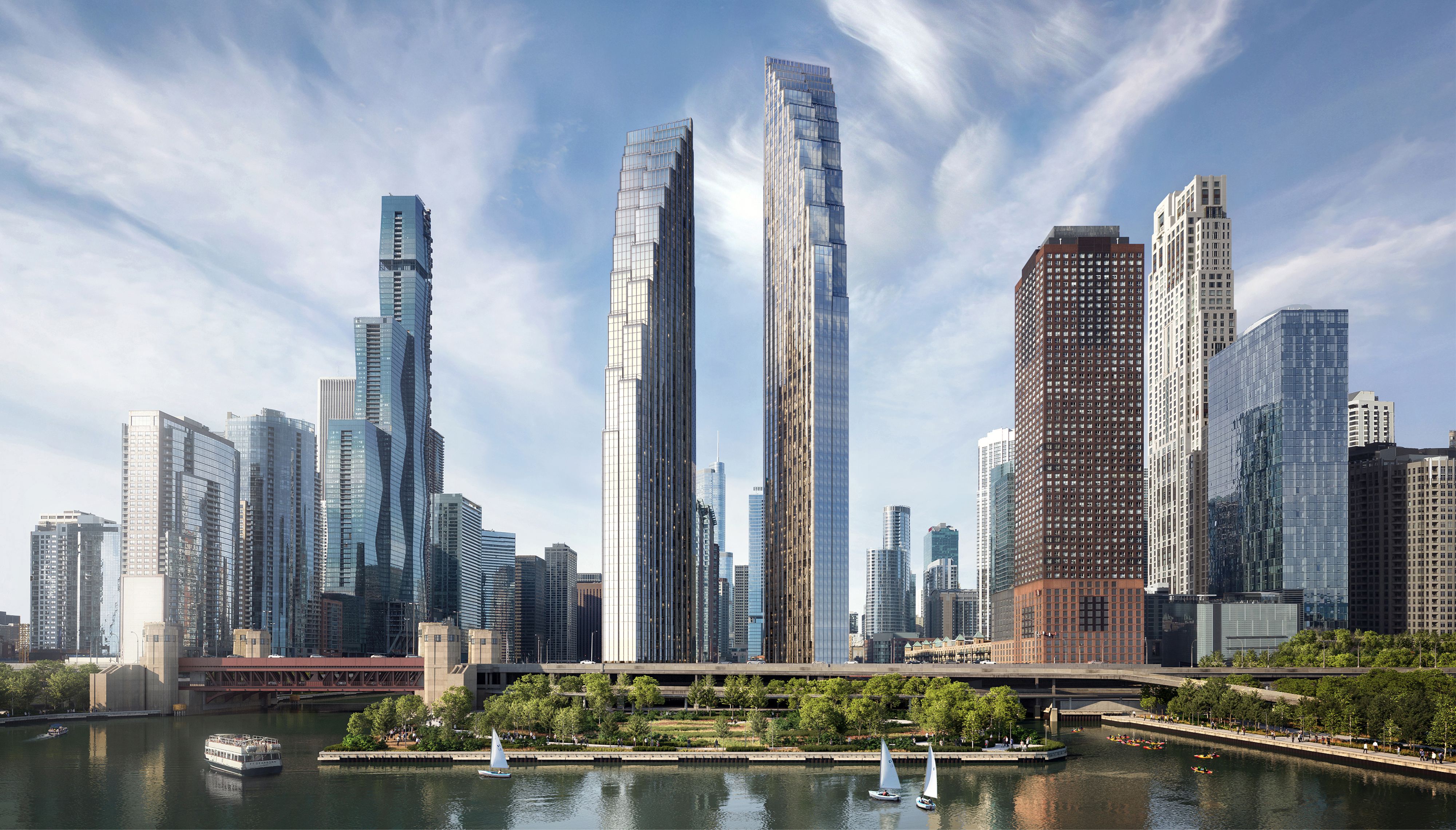
What's next: The first tower should be finished in early 2027. Upon completion, it will be the 13th-tallest building in Chicago. The entire project is expected to cost around $1 billion.