Where and when to worry about cicadas

Add Axios as your preferred source to
see more of our stories on Google.
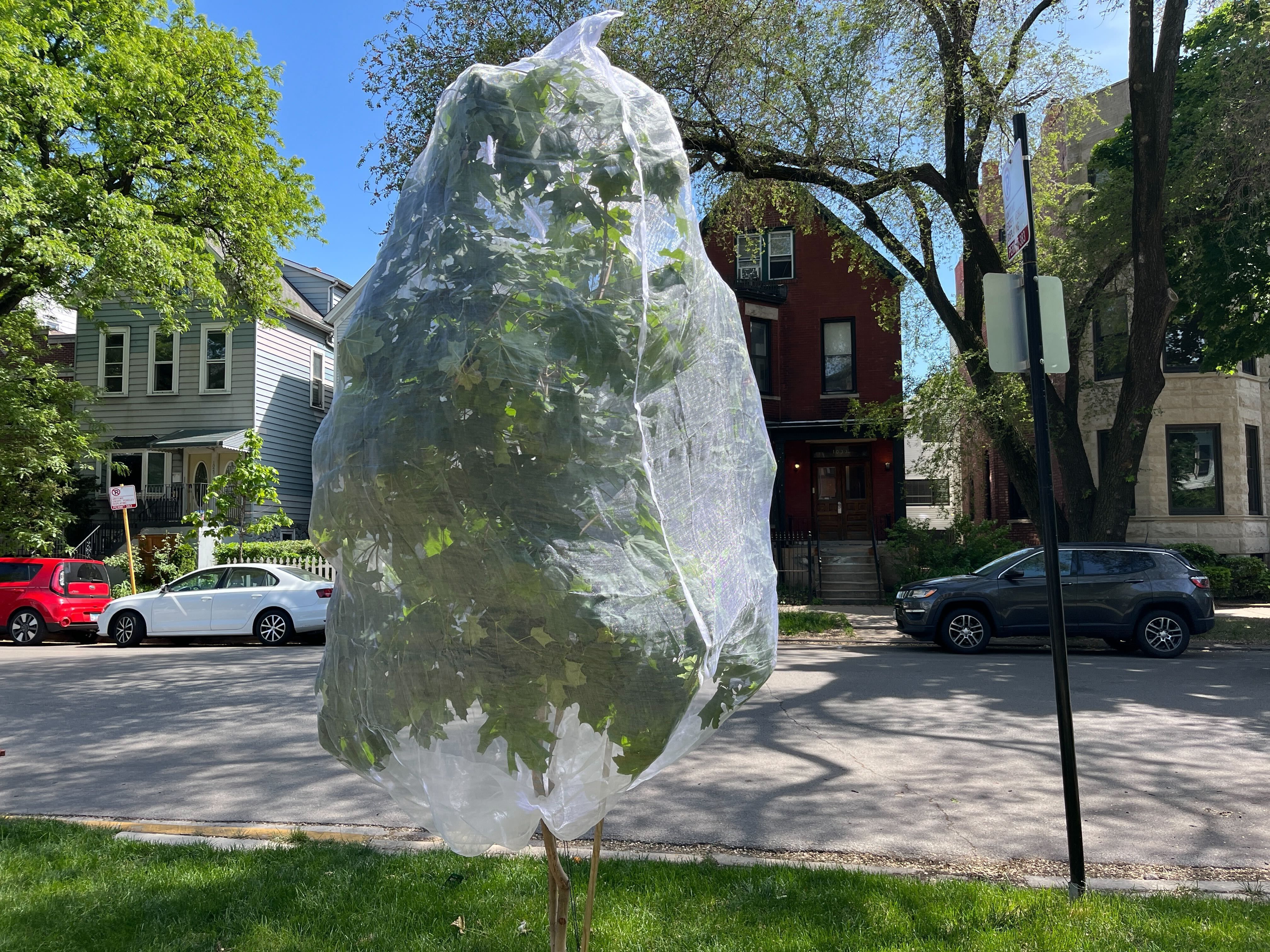
Cicadapalooza has started — especially west of the city — and residents are taking precautions.
What's happening: Over the next week or so, millions of local cicadas will emerge from holes around mature trees, shed their exoskeletons, turn from white to black, unfurl their wings and climb as high as possible to sing.
- About five days later, male timbals will be strong enough to make mating noises, and receptive females will respond by clicking.
- After mating, females will slit thin tree branches and lay eggs in them. Seven weeks later, nymphs will hatch, fall to the ground and tunnel into the soil to restart the cycle.
Threat level: Cicadas are mostly harmless, but here's how to keep trees, pets and kids safe.
Trees: The only trees that need net protection from egg-laying females are those younger than two years or thinner than two inches at the trunk, according to Morton Arboretum experts.
Pets: It's no biggie if Fido eats a few cicadas, but too many could lead to upset stomach, indigestion and, in the worst case, blockage, a vet tells ABC7.

Kids: Cicadas don't bite, pinch or sting, so the emergence creates a great opportunity to teach about nature and metamorphosis, as ecologist Rebecca Fyffe did Sunday in Skokie.
- Doctors at Northwestern say parents can help kids on the autism spectrum who have auditory sensitivity by preparing them for what the noise will sound like and mean.
What's next: Fyffe is hosting another tour near Lorel Park in Skokie on Thursday night. You can register here.