Southern Illinois is a hotspot for solar eclipse tourism

Add Axios as your preferred source to
see more of our stories on Google.
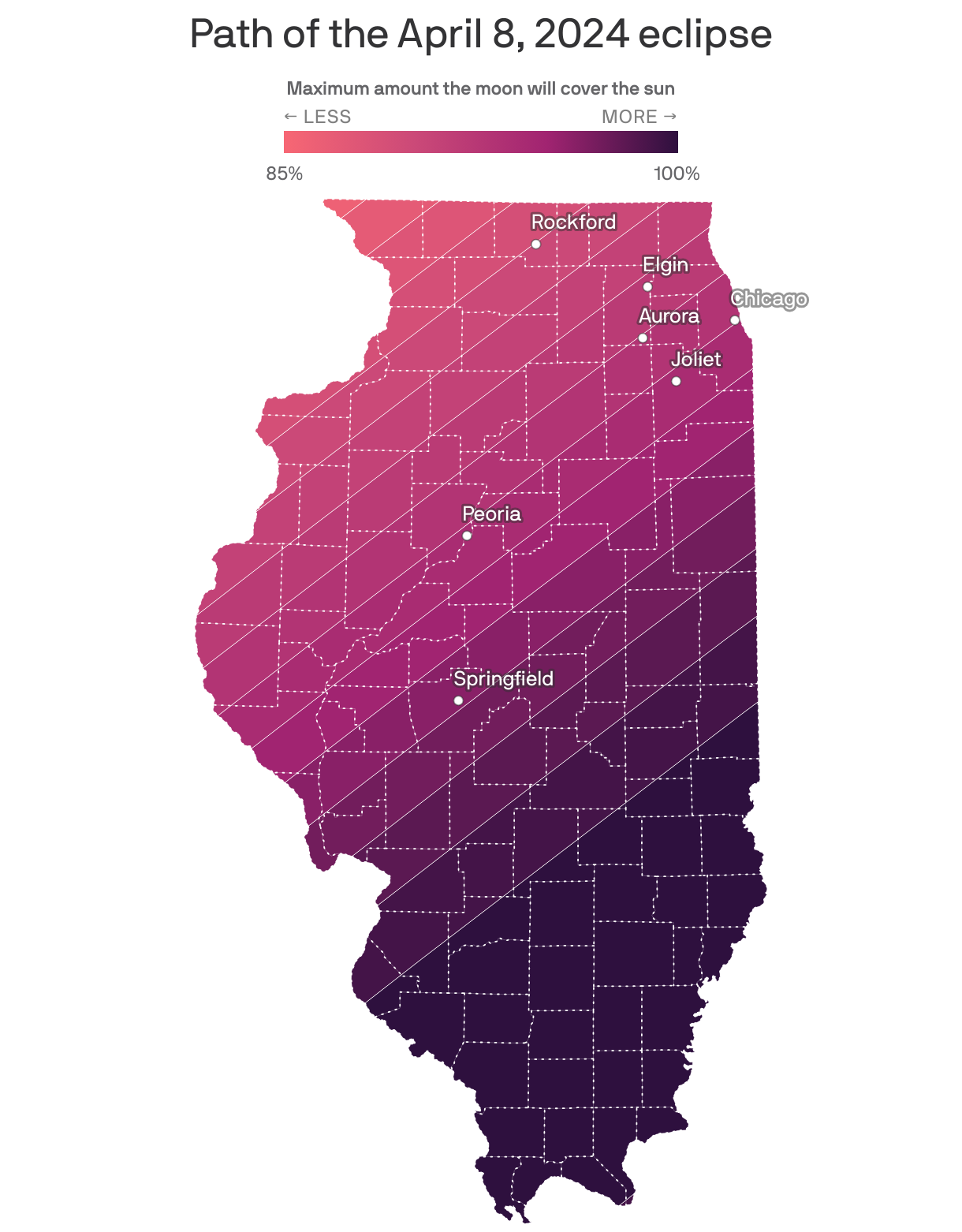
State officials want stargazers to make Illinois their destination for the April 8 solar eclipse.
Why it matters: "Astro tourism" is the top travel trend this year, per Condé Nast Traveler, and it's expected to draw up to 269,000 estimated visitors to the state next month.
Flashback: Our last solar eclipse, in 2017, brought in more than $15 million in tourism revenue, the state's tourism head Daniel Thomas said at a recent press conference.
State of play: Illinois officials are jumping at the opportunity to cash in on eclipse mania, creating a tourism campaign and a lineup of events. They're also highlighting prime viewing locations along the path of totality, when the moon will completely obstruct direct sunlight and unveil the sun's outer atmosphere.
- Local business owners are seeking to capitalize on the demand. Searches for Airbnb rentals are surging, and listings in Carbondale — home to Southern Illinois University and along the path — go for up to $2,700 a night for stays the weekend before and during the eclipse.
- Thomas said hotel rooms and campsites are still available and that the eclipse can be viewed from more than 30 state parks.
How it works: The complete solar eclipse will unfold over about three hours, with the moon starting to cover the sun at 12:43pm CT and moving to complete obstruction by 1:59pm, according to Southern Illinois University.
- The total eclipse will last 4 minutes and 9 seconds, twice as long as the 2017 eclipse.
- Officials are reminding viewers they need to wear protective eyewear with solar lenses to prevent eye damage.
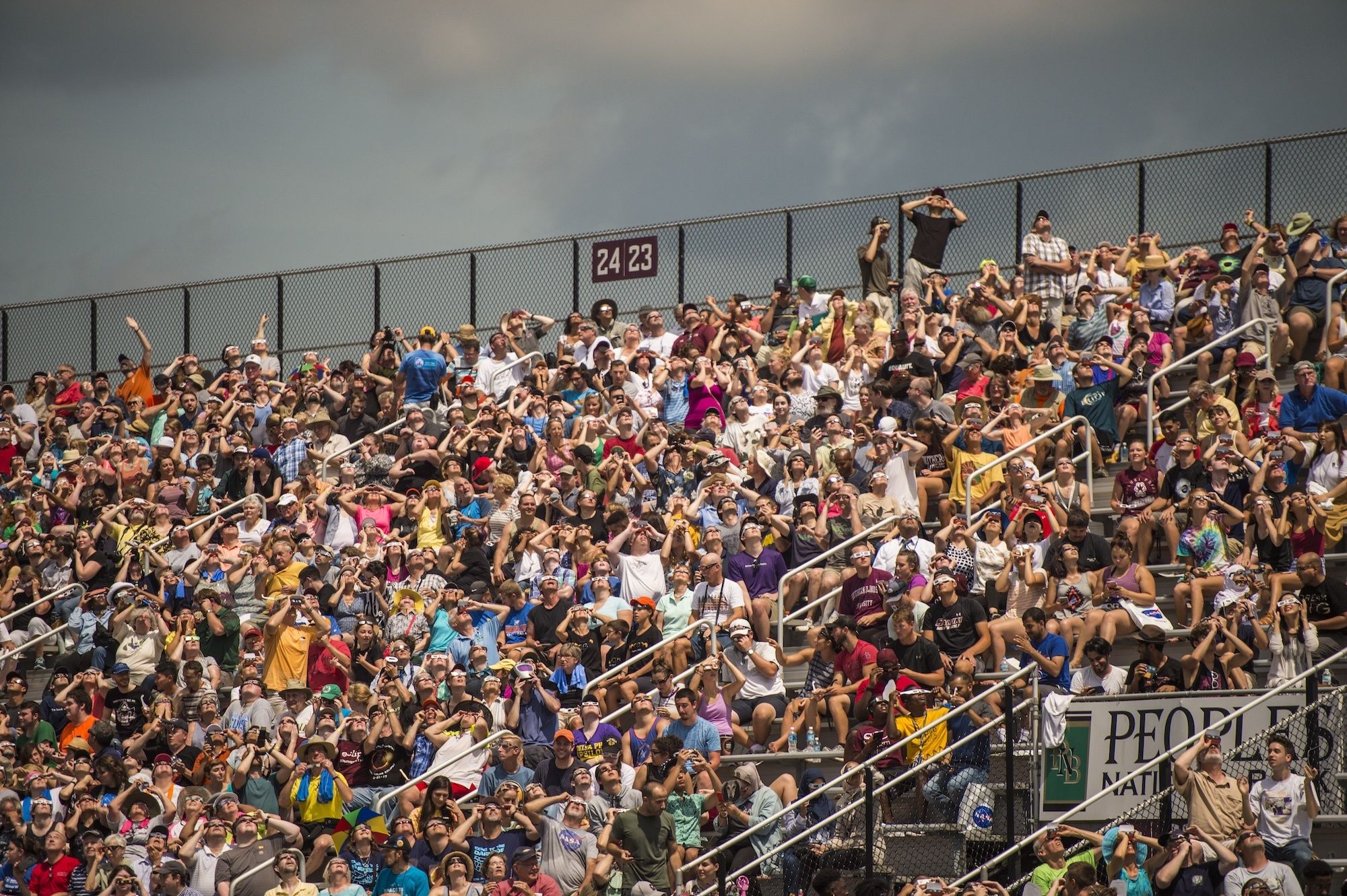
Zoom in: SIU is calling Carbondale the "Eclipse Crossroads of America" and celebrating with a four-day festival, complete with astronomy talks, music performances, "celestial connection through rhythm and dance" and, of course, a viewing from the stadium.
- Can't make it to southern Illinois? NASA TV will have telescope feeds from the campus.
What's ahead: The next solar eclipse won't happen for 20 years.