Infrastructure confusion driving bike crashes in Chicago

Add Axios as your preferred source to
see more of our stories on Google.
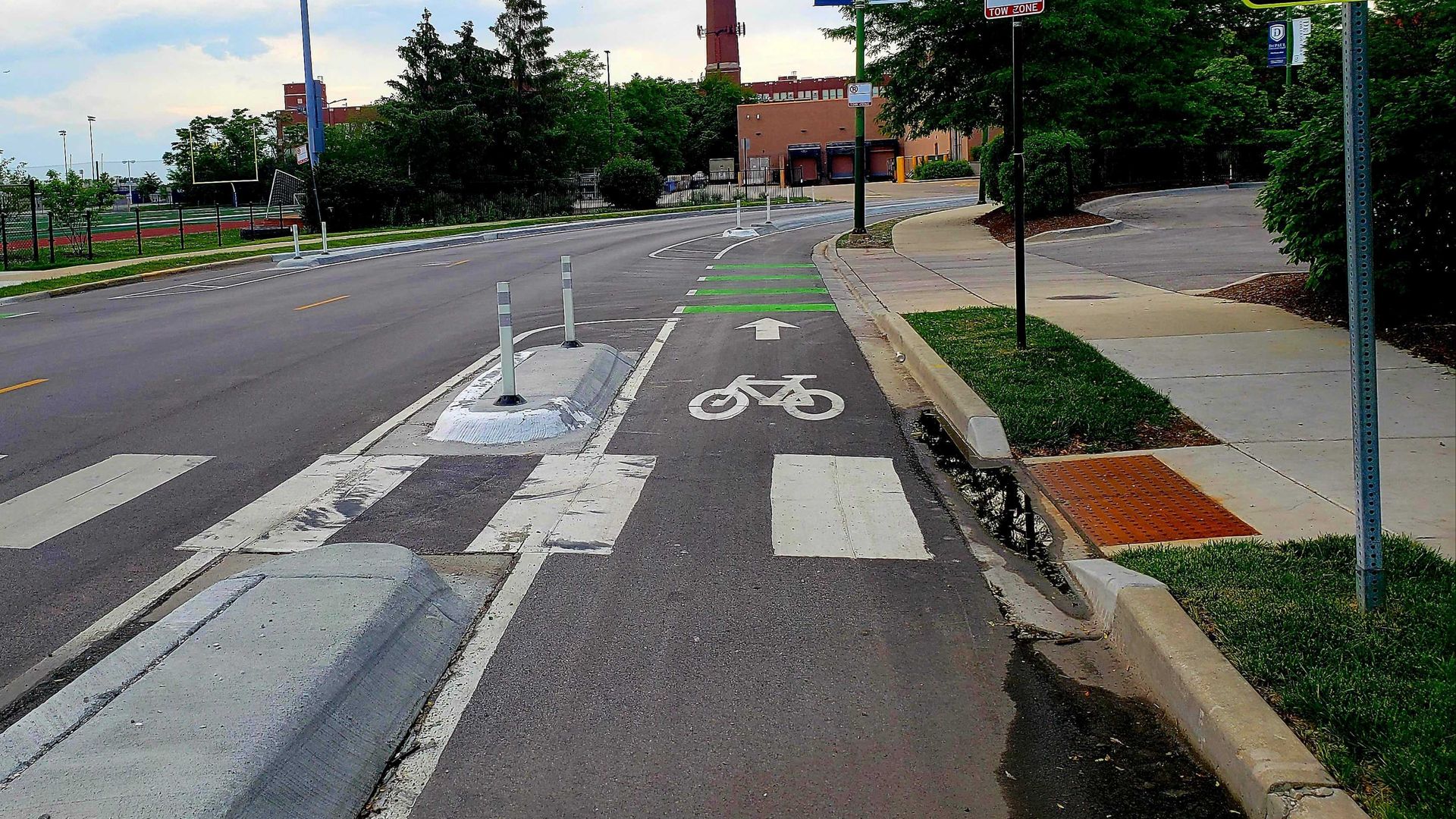
Bike advocates are calling for more barrier-protected lanes like these near DePaul College Prep. Photo: Monica Eng/Axios
Recent bike tragedies, including one that killed a 3-year-old last week, have shined a new light on local bike safety.
Why it matters: Many Chicagoans have conflicting ideas on bike infrastructure rules, which is confusion that could cost more lives.
- For example, a ComEd truck was reportedly blocking a bike lane at the scene of last week's crash.
- The company said it had a permit to work in the area, but Chicago Department of Transportation officials responded by saying permits that allow vehicles to block bike lanes don't exist.
By the numbers: The most recent local analysis from Chicago's Active Transportation Alliance shows 2,816 annual bike crashes, 2,635 injuries and 13 deaths, but that's using 2016 data.
- Nationally, early estimates of bike crashes in 2021 show a 5% increase from 2020, according to the Department of Transportation.
- A 2022 National Highway Traffic Safety Administration report shows that compared to 2011, cyclist fatalities in 2020 increased 38%, from 682 to 938.
What they're saying: "The most common cause of a crash where the bicyclist is at fault is when [cyclists] ride the wrong way against traffic," David Simmons, executive director of Ride Illinois, said on WBEZ's "Reset."
- And when the driver is at fault, it's generally "when a motorist misjudges a cyclist's speed and speeds up to make a right turn and causes a crash at an intersection."
Of note: The NHTSA report found that:
- More than a quarter of crashes happen at intersections.
- Bicyclist deaths were 7 times higher for males than for females in 2020.
- One in four fatal bike crashes in 2020 involved a bicyclist who had been drinking alcohol.
Between the lines: Drivers and bicyclists could both benefit from some basic rules, laws and tips.
- By law, Illinois drivers must give cyclists at least 3 feet of room on the street as they pass, even if that means waiting until it's safe to move into the next lane.
- The "Idaho stop" — when bikers yield but don't stop at a stop sign — is not legal. State lawmakers blocked it again in February despite studies showing it actually increases safety.
- You can reduce door accidents with the "Dutch reach," where motorists look over their shoulder for bikes before opening a door to the street.
- For more on different types of local bike infrastructure, check out our story with advocate and journalist John Greenfield.
Be smart: Test your bike and motorist safety knowledge with this Ride Illinois quiz.