Apr 27, 2022 - Business
The winners and losers in Chicagoland's grocery wars

Add Axios as your preferred source to
see more of our stories on Google.
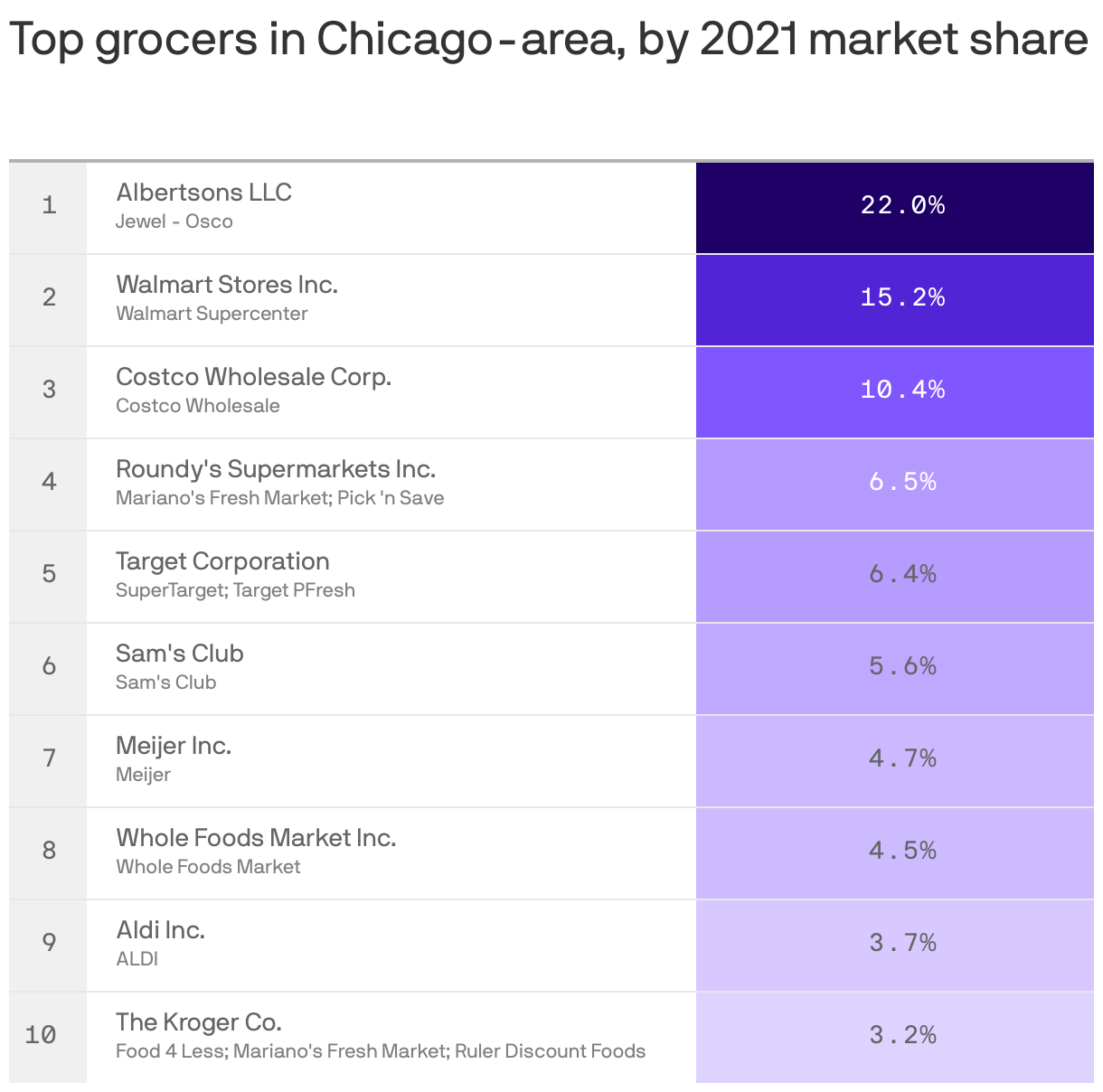
Despite the rise of discount, big-box and specialty grocery stores, Jewel is still Chicagoland's grocery king when it comes to market share, according to a new analysis.
- This data reflects the whole metropolitan area, from Kenosha to Gary to Aurora.
Why it matters: When Dominick's disappeared a decade ago, some predicted the demise of large, mainstream grocery stores in Chicago, but that hasn't entirely happened.
- It's clear that many people — especially outside the city — like to buy their groceries from big-box stores.
- Still, specialty and discount grocers like Whole Foods, Aldi and Mariano's are holding their own with almost 18% of the market.
By the numbers: This data set, covering 13 counties in parts of three states and 9.5 million people, offered other interesting stats.
- Grocery sales in the area totaled $24.5 billion in 2021.
- The region includes 3.5 million households containing an average of 2.6 people and earning $107k a year.
- In 2021, the average Chicagoland household spent 4.5% of its income on food and drink for the home. The national average was 5% in 2020. No figures yet for 2021.
- But U.S. grocery prices were also up 3.5% from 2020 to 2021 as people were eating at home.