Summer nights heating up in Atlanta


Add Axios as your preferred source to
see more of our stories on Google.
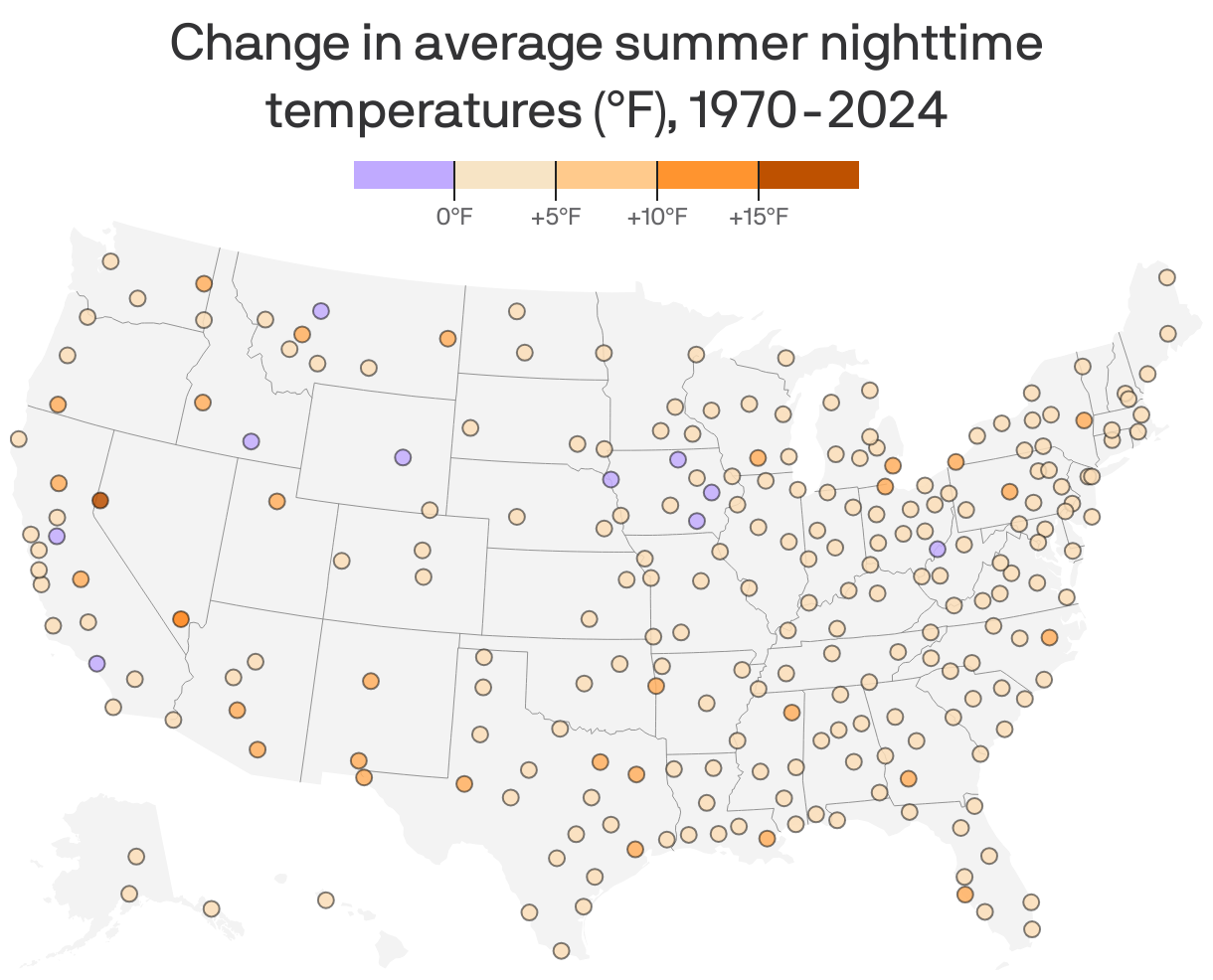
Summer evenings are getting warmer in Atlanta and across much of the U.S. amid climate change, a new analysis shows.
Why it matters: Higher overnight temperatures can have health consequences for vulnerable groups, as well as increase demand for air conditioning.
- That, in turn, can strain electrical grids and increase energy demand, fueling a vicious cycle with more greenhouse gas emissions.
Driving the news: Average summer nighttime temperatures increased between 1970 and 2024 in 96% of 241 locations analyzed in a new report from Climate Central, a research and communications group.
- Among cities with an increase, temperatures rose by 3.1°F on average.
Zoom in: That's lower than the average increase in Atlanta, which saw temperatures rise by 4°F.
- Excessive heat, along with stormwater flooding, are the most prominent effects of climate change in Atlanta.
Threat level: Along with cool roofs, trees are arguably Atlanta's biggest weapon in the fight against heat, and they can also help clean the air and prevent stormwater erosion.
- City programs to offer greater access to solar power and energy-efficient home upgrades could help residents offset rising energy costs.
Zoom out: Reno, Nevada (+17.7°F), Las Vegas (+10°F), El Paso, Texas (+8.9°F) and Salt Lake City (+8.2°F) saw the biggest increases.
Between the lines: Hundreds of U.S. cities are experiencing more frequent warmer-than-average summer nights "with a strong climate change fingerprint," Climate Central says.
- That's based on the group's "Climate Shift Index" — a method of measuring climate change's impact on local daily temperatures — and the 1991-2020 climate normals.
The bottom line: It isn't just daytime highs getting warmer in much of the U.S., but evening lows, too.