Memorial Day heat wave puts Texas on verge of crushing May power records

Add Axios as your preferred source to
see more of our stories on Google.
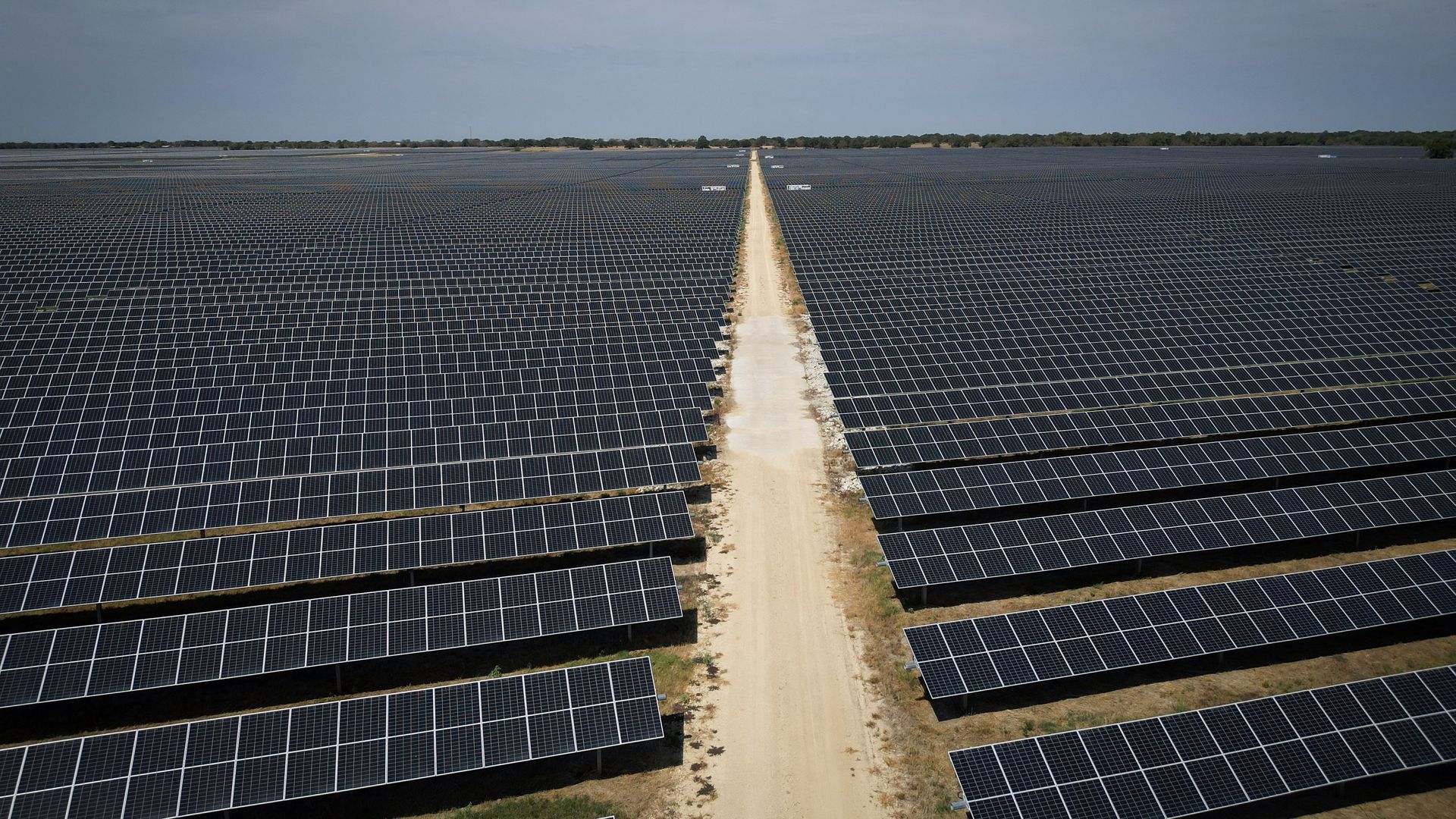
A solar and storage plant in Iola, Texas. Photo: Jon Shapley/Houston Chronicle via Getty Images
Texas' power grid is expected to break demand records for the month of May as Texans turn to air conditioning during a scorching heat wave over Memorial Day weekend.
Why it matters: Human-caused climate change is expected to heavily strain U.S. electrical grids, including Texas', which has been vulnerable to winter and summer weather extremes in the past.
- The reliability of Texas' power has been under increased scrutiny since mass power outages during a historic multi-day winter storm in February 2021 contributed to hundreds of deaths.
By the numbers: The Electric Reliability Council of Texas (ERCOT) projects it could see power demand peak at over 75,358 megawatts (MW) beetween May 24 and 26.
- Those peaks would surpass the previous May demand record of 72,261 MW, which was set on Monday.
- ERCOT set an all-time peak demand record of 85,464 MW on Aug. 10, 2023.
- Doug Lewin, the author of the Texas Energy and Power Newsletter, noted the grid could set new solar power generation records throughout the heat wave, too.
Zoom out: Parts of South Texas and southern Florida could see "extreme" heat risk conditions over the coming days, with expected highs near 100°F and heat indices of 110°F or above, Axios' Andrew Freedman reports.
- The heat will bring triple-digit temperatures to some areas of the country around a full month earlier than average.
- It will also arrive after parts of Texas, particularly the Houston area, were hit by a severe windstorm last week that was tied to a record-shattering heat wave over Central America.
Threat level: That storm brought down electrical infrastructure in parts of the state, and over 87,000 homes and businesses were still without power Thursday afternoon, according to Poweroutage.us
- Extended periods without power during extreme temperatures is a deadly combination. It leaves people with with fewer options to cool down, especially if nighttime temperatures are elevated, too, which is often the case during heat waves.
- In general, extreme heat is the deadliest weather hazard in the U.S., though its death toll and destruction are often not immediately known.
The big picture: In addition to warming temperatures from climate change, Texas' grid has had to adjust to compensate for increased energy demand from the rapid expansion of data centers and artificial intelligence in the state.
- Last year, Texas' grid comfortably endured winter tests after the state was blasted by Arctic air on multiple occasions.
- ERCOT also set 11 new peak demand records last summer, with a high of 80,148 MW recorded on July 20.
Go deeper: A long, hot U.S. summer is looming, forecasters say
