Scorching heat wave to roast Texas, Gulf Coast over Memorial Day weekend

Add Axios as your preferred source to
see more of our stories on Google.
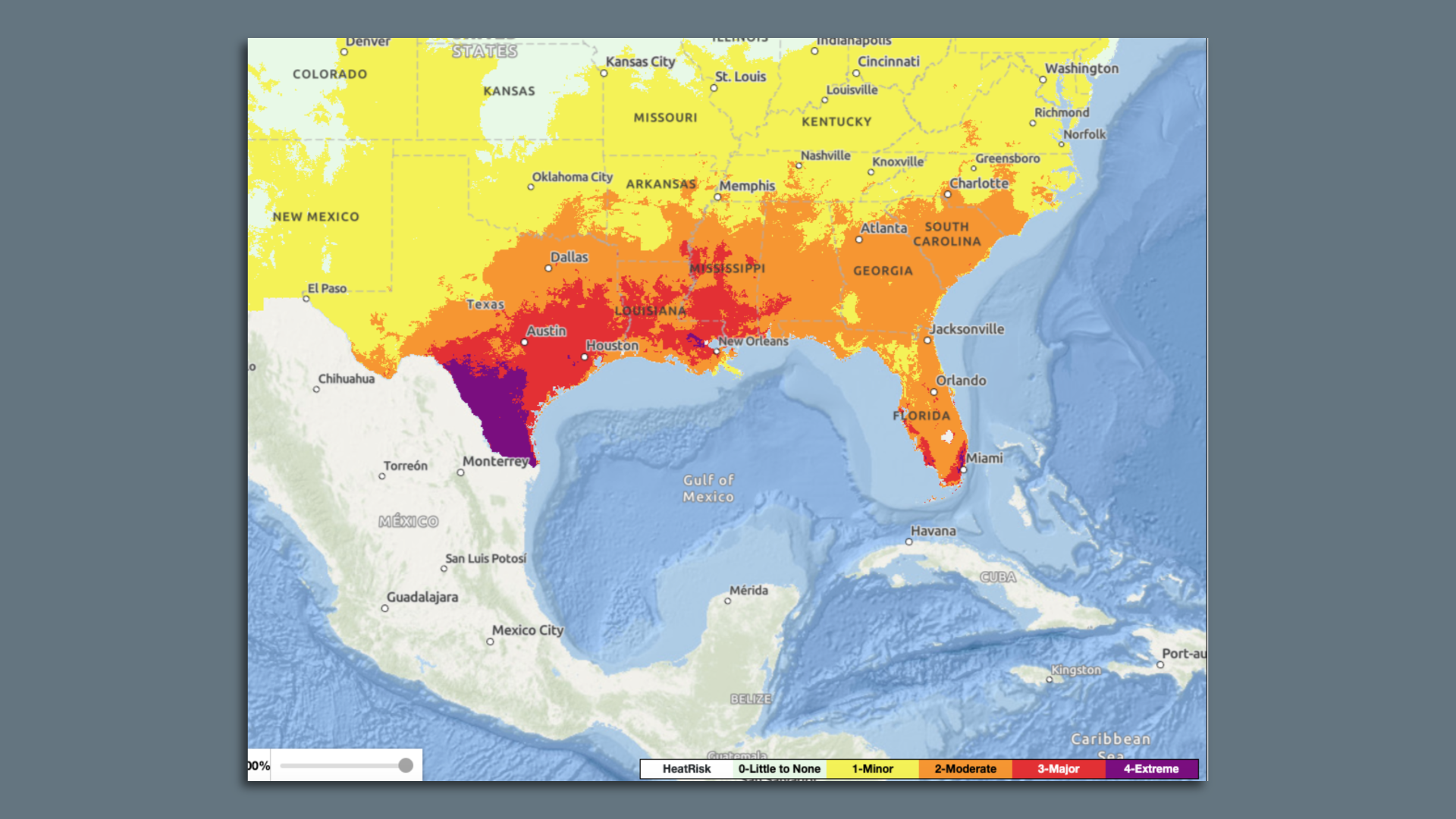
Map showing the heat risk categories across the southern U.S. on Sunday. Image: NOAA
The first of what will likely be many extreme heat events this summer is on tap for much of Texas, Louisiana and the Southern Plains, along with Florida during the next week.
Why it matters: Extreme heat is the deadliest weather hazard in the U.S., and this event will bring triple-digit temperatures to some areas as soon as a full month earlier than average.
Threat level: According to the NOAA Weather Prediction Center, "oppressive" conditions across South Texas and southern Florida are expected to worsen throughout the week and expand to the Central Gulf Coast and parts of the Southern Plains.
- Highs near 100°F with heat indices of 110°F or above are expected in this region into next week, making for "extreme" heat risk conditions.
- The heat will be especially dangerous for those lacking air conditioning, including the 70,000 customers who have not yet regained power following last week's storms in Houston.
Stunning stat: If the temperature in Austin or San Antonio reaches 100°F or above this weekend, as currently forecast, it would be about a month earlier than the typical start of triple-digit heat there.
- In San Antonio, for example, the typical first 100°F day occurs on June 26, according to the local National Weather Service forecast office.
- The weekend will be particularly hot from South Texas through the central Gulf Coast, with overnight temperatures and potentially daily highs setting records as well.
- Heat indices in South Texas, Houston, New Orleans and other areas may approach or exceed 115°F this weekend.
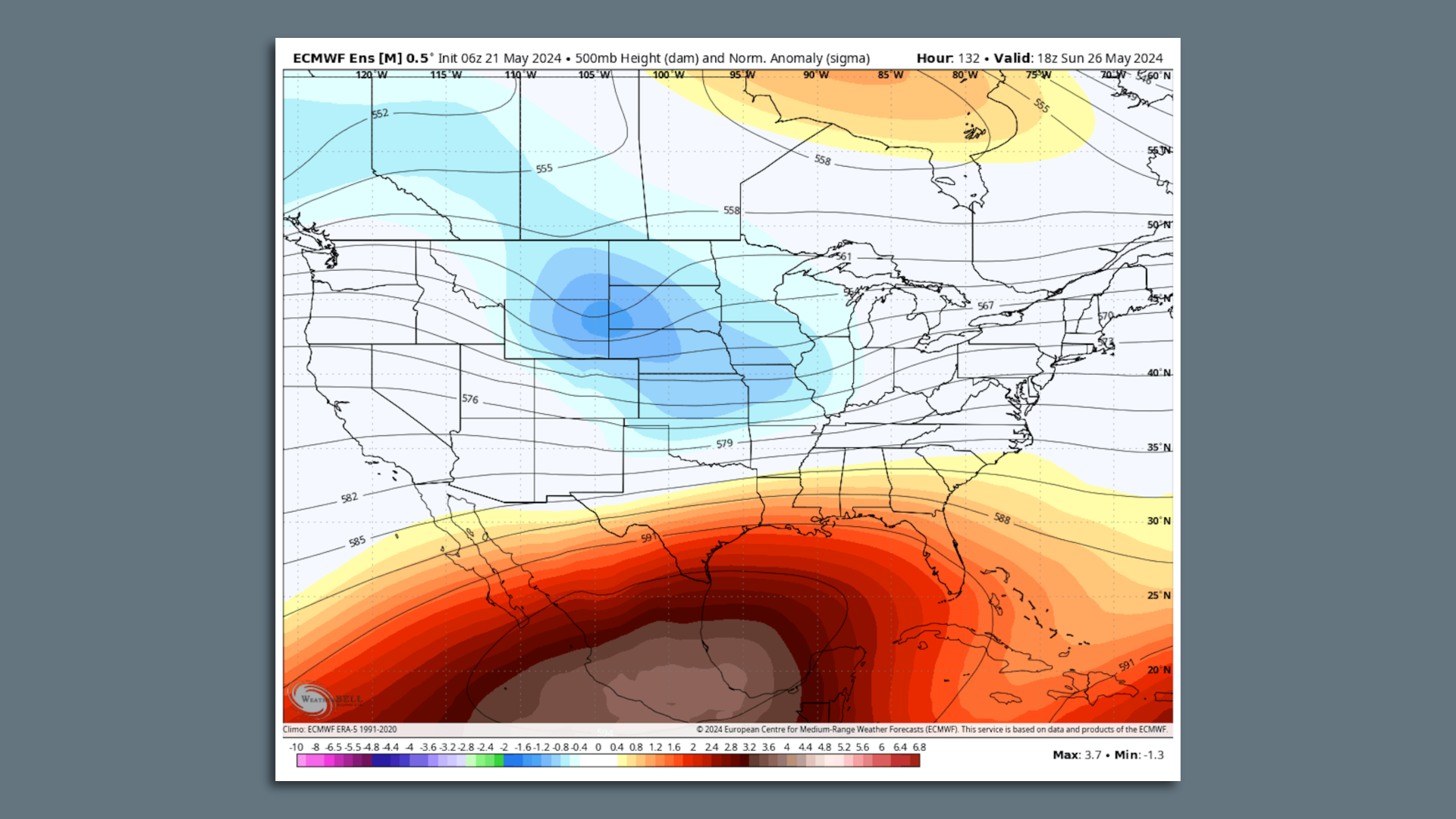
Between the lines: The cause of this particular heat wave is a powerful and sprawling area of high pressure aloft, also known as a heat dome, parked over Mexico and affecting areas from Central America to the Southern Plains.
- Computer models have consistently shown this heat dome will be historically strong, at about 4.5 standard deviations above average for this time of year.
- The hottest temperatures will continue to occur in Mexico and Central America, but the northern reaches of the ridge will push far enough north to cause Americans to sweat too.
Context: Extreme heat is the hazard most clearly tied to climate change. The probability of these events along with their intensity and duration rises dramatically as the global average temperature increases.
- Numerous studies have shown that certain heat waves would have been virtually impossible had it not been for human emissions of greenhouse gases that pushed temperatures upward.
What's next: Computer models do not show extended relief arriving through the rest of the month, though some areas may cool down toward the end of May, including southeastern Florida.
- Using NOAA and the CDC's new heat risk system, South Texas is predicted to be in the "Extreme" category for maximum daily heat risk through Sunday, NWS said. "Major" heat risk is likely in Houston and New Orleans.
- "Those spending extended time outdoors and not acclimated to the early
season heat could be susceptible to heat-related illness if not
taking proper heat precautions," said the NWS forecast office in Austin regarding the weekend heat in a forecast discussion Tuesday. - Florida, where cities have endured record high temperatures is expected to continue to experience unusually hot conditions.
- May is likely to go down as Miami's hottest such month on record.
Go deeper: Miami meteorologist airs unusual climate warning on record heat day, urges people vote
