Metro Atlanta heat waves are becoming longer and more frequent

Add Axios as your preferred source to
see more of our stories on Google.
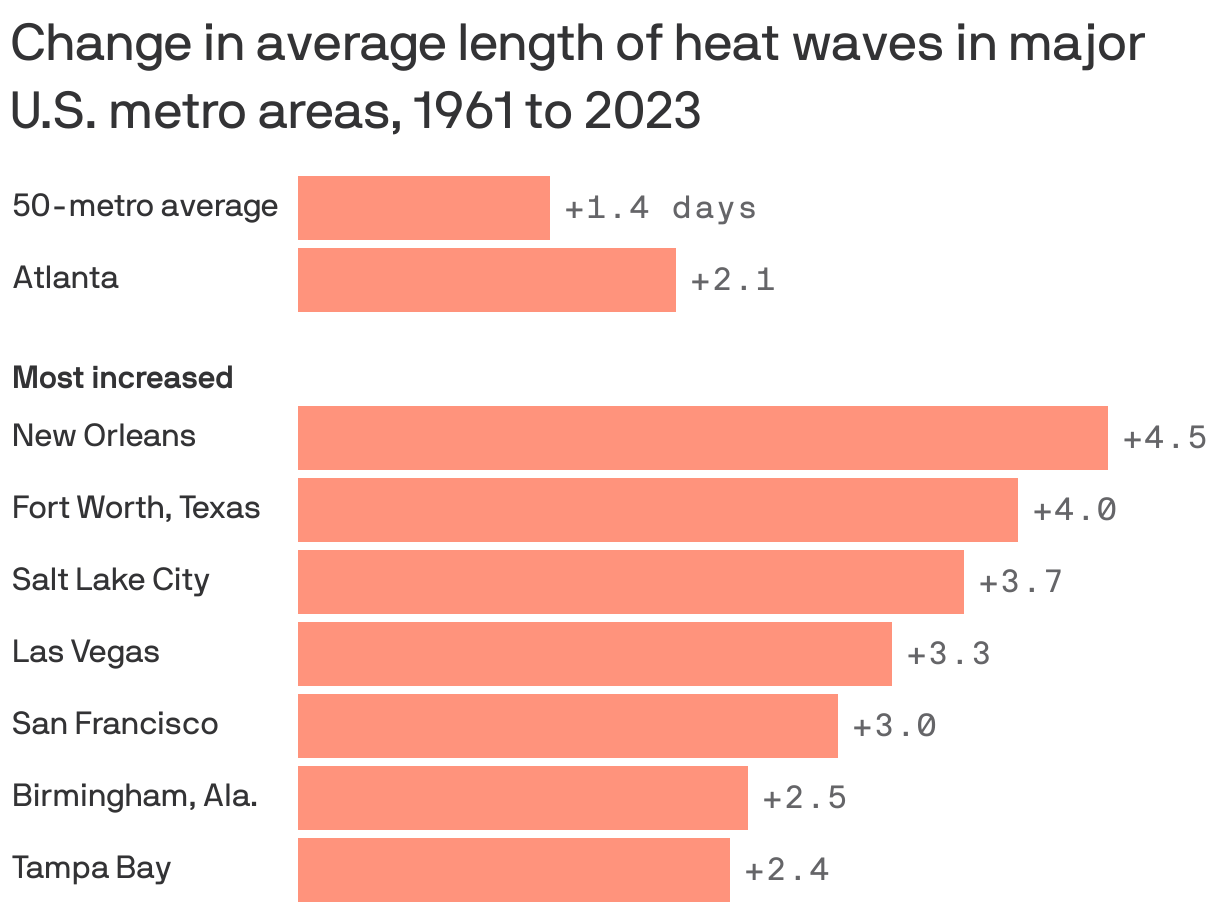
Heat waves in metro Atlanta now last two days longer than they did in the 1960s, according to the Environmental Protection Agency.
Why it matters: Prolonged heat can cause illnesses and death, and put a strain on power grids.
Zoom in: In Atlanta, the number of heat waves has increased by six per year compared to the 1960s.
How it works: The EPA analyzed climate trends in the 50 largest U.S. metro areas by tracking events of two or more consecutive days when daily, humidity-adjusted temps topped the 85th percentile of historical July–August temps in 1981–2010.
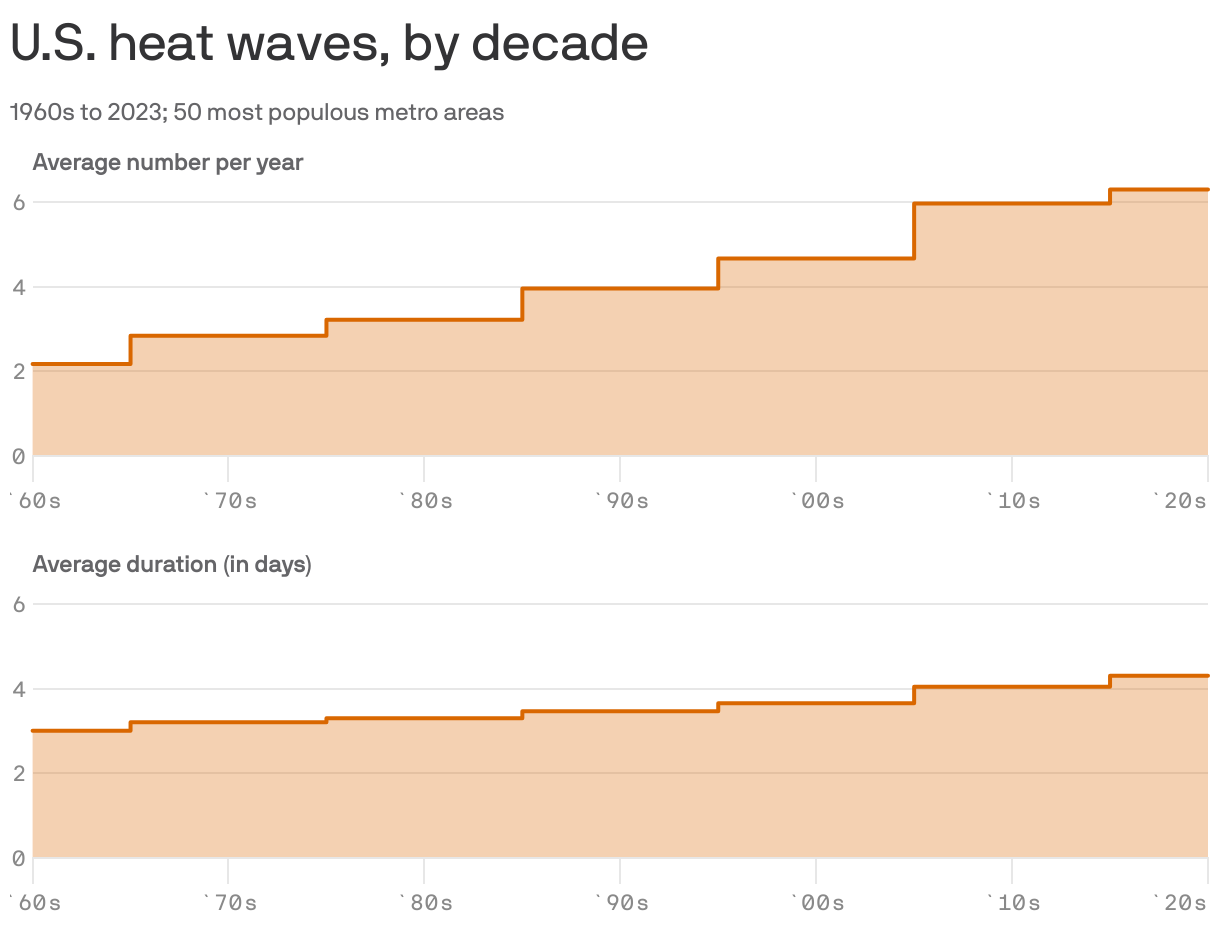
The big picture: Heat waves nationwide are becoming longer, more frequent and more intense. The average number of heat waves has increased from two per year in the 1960s to six per year in this decade.
- And they last about a day longer now than they did in the 1960s.