Where "Cop City" leaders stumbled when seeking public support


Add Axios as your preferred source to
see more of our stories on Google.
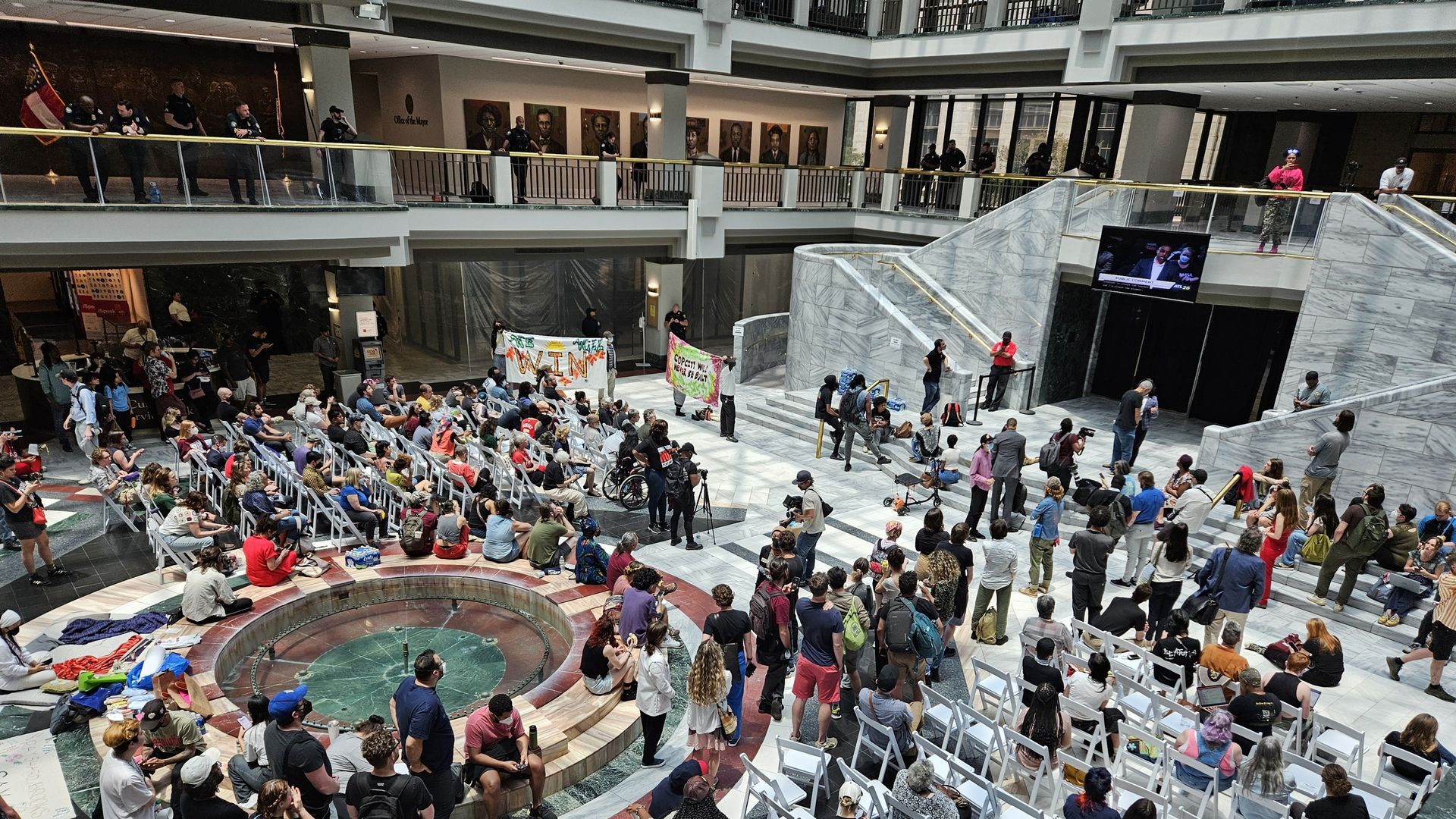
Hundreds of people filed into Atlanta City Hall on Monday to share their thoughts ahead of a vote on the proposed public safety training center. Photo: Kristal Dixon/Axios
Winning widespread support for the proposed public safety training center in the middle of the South River forest, which people once dreamed of turning into a giant, public greenspace, was always going to be difficult.
- But the fierce backlash we've seen here — including nationwide movement against the center that crescendoed with an intense 14-hour public comment session before the final vote to approve Tuesday morning — far exceeds that of any publicly funded project in Atlanta's recent history.
What's happening: We asked city officials, activists and observers to analyze where the forces behind the training center that opponents have dubbed "Cop City" stumbled when trying to build support for the plan.
Why it matters: Informing and engaging communities are key ingredients to building and maintaining the public's trust.
- And this is where City Hall watchers say the project went wrong.
Details: Axios spoke with journalists, nonprofit leaders and people inside City Hall who have closely monitored the project. They identified two key areas where the project's backers misstepped:
- Timing: In 2021 — her final year in office — Mayor Keisha Lance Bottoms announced plans for the center. City Council OK'd the proposal in September, just a few months before municipal elections that would usher in a new administration and eight new council members.
- Transparency: A lack of clear and easily accessible information about the project, a dysfunctional community advisory board, and law enforcement's slow release of autopsy results after the shooting death of an activist inside the forestdeath of an activist created confusion. The recent news, first reported by the Atlanta Community Press Collective, that the city would pay the foundation $1.2 million a year to pay off the foundation's construction loan emboldened opposition.
What they're saying: George Chidi, a longtime journalist who runs The Atlanta Objective newsletter, told Axios he believes the city thought an "unprecedented rise" in crime in December 2021 — when the Council voted on the project — would largely fuel public support.
- However, Atlanta police data shows the homicide rate has fallen 35% since around the same time last year, and "I think that changes the conversation,” Chidi told Axios.
Tiffany Roberts, public policy director for the Southern Center for Human Rights, told Axios that Mayor Andre Dickens’ administration fell behind in the public relations campaign because it did not try to include more critical voices or perspectives.
- The ACLU of Georgia resigned from the community task force, Roberts notes, and she thinks the administration will have to clear a chasm to rebuild ties with organizations focused on reforming public safety.
- "It is very adversarial to any kind of dissent," she said of the administration.
City Council President Doug Shipman told Axios, "It's always best in a process like this to be over-communicating," particularly on what the project entailed and how much it's expected to cost.
- "I don't think that that was really communicated on a proactive basis," he said. "I saw the public ask me quite basic questions that should be clear by now."
The bottom line: "Police training costs what it costs," Chidi said. "The problem is that there is plainly a lack of oversight going on if this is how this sort of thing comes out, and the city has been far more focused on getting it done than ensuring that it's done correctly.”
Editor's note: This story was updated to include the final vote on the facility.