Meta agreed to settle with U.S. states for up to $16.7 billion in a landmark deal over allegations Facebook and Instagram were designed in ways that harm children.
The company is calling on its peers to sign on to the pact as well, saying it won't work unless they jointly line up behind broad reform.
Why it matters: This is social media's version of the landmark 1990s tobacco settlement, a settlement that effectively reshapes the industry and the way young Americans experience some of their favorite platforms.
Employers' best-laid strategies for addressing steep health cost increases next year may be overly optimistic, according to a new survey the Business Group on Health released Tuesday.
Why it matters: Corporations are consistently underestimating their future costs due to extreme volatility in health markets, underscoring the need to overhaul strategies for providing worker benefits.
Missed forecasts are affecting wages and companies' ability to hire and invest in their core business, said Ellen Kelsay, president and CEO of the Business Group on Health.
Two people in Pennsylvania have died from measles, the state's health department said Tuesday — they are the state's first deaths from the illness in more than three decades.
Why it matters: The U.S. is currently experiencing its highest count of measles cases in 35 years. The two deaths are the first reported in the U.S. in 2026.
Health and Human Services Secretary Robert F. Kennedy Jr. and Transportation Secretary Sean Duffy have both launched YouTube shows in recent weeks, the latest examples of how the Trump administration is redefining how government communicates with the American public.
Why it matters: The White House has bypassed traditional press relations while assuming an unorthodox approach to media that puts itself in the role of content creator.
Oura, the Finnish smart ring maker, will seek to raise up to $3b in a U.S. IPO that could come as early as next month, according to Bloomberg.
Why it matters: This would test whether Wall Street believes the wearables market will evolve from personal electronics into reimbursable health care services.
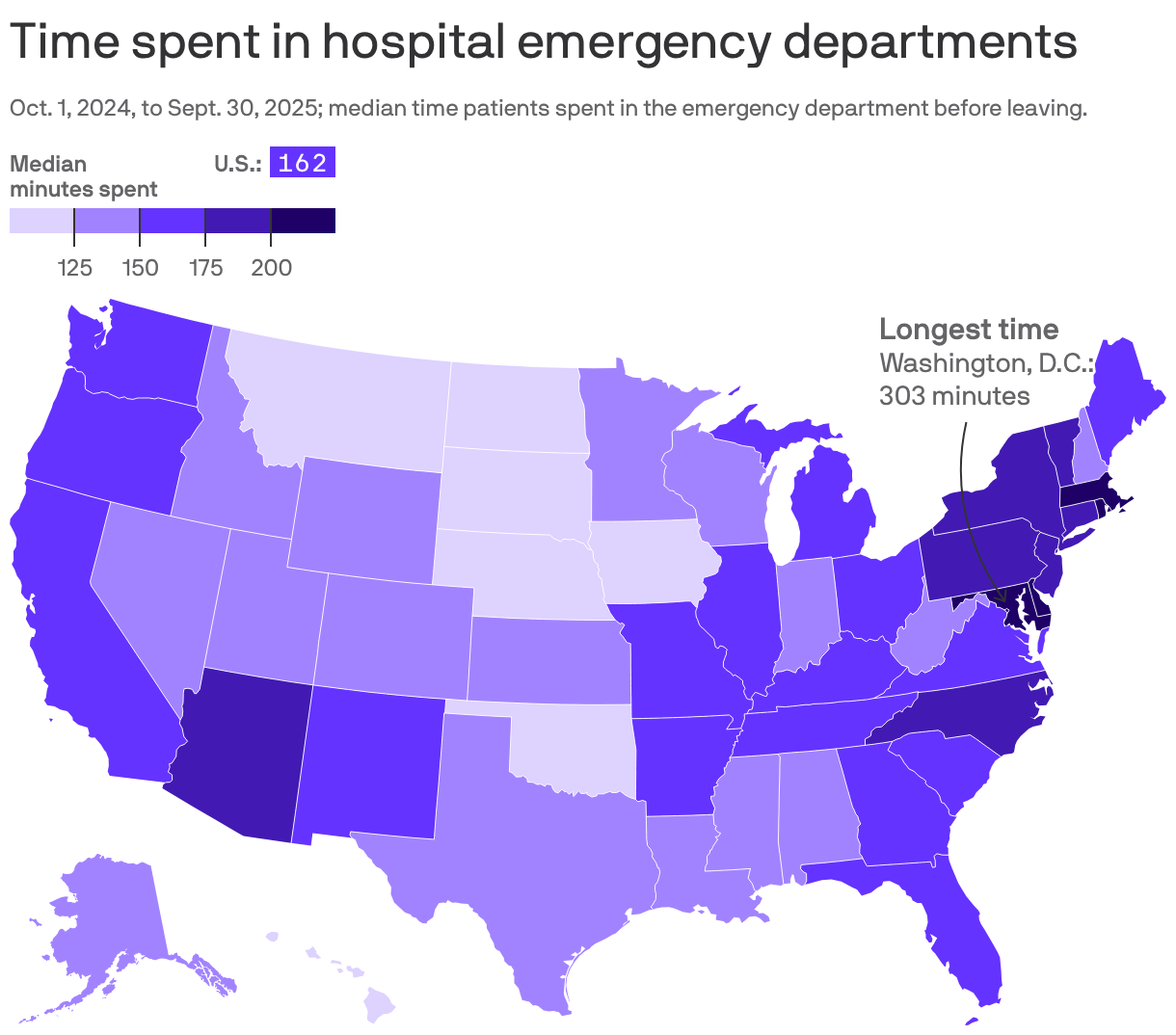
Data: Centers for Medicare and Medicaid Services; Map: Jim Sergent/Axios
Patients now spend an average of more than two and a half hours in hospital emergency departments, and visits have been getting longer in nearly half of the states, new federal data shows.
Why it matters: Forthcoming insurance eligibility and cost changes could lead people to put off care until their health reaches a crisis point, sending even more patients to an ED.