Saturday's health stories

Axios Future of Health Summit: Maternal mortality solutions within reach, experts say
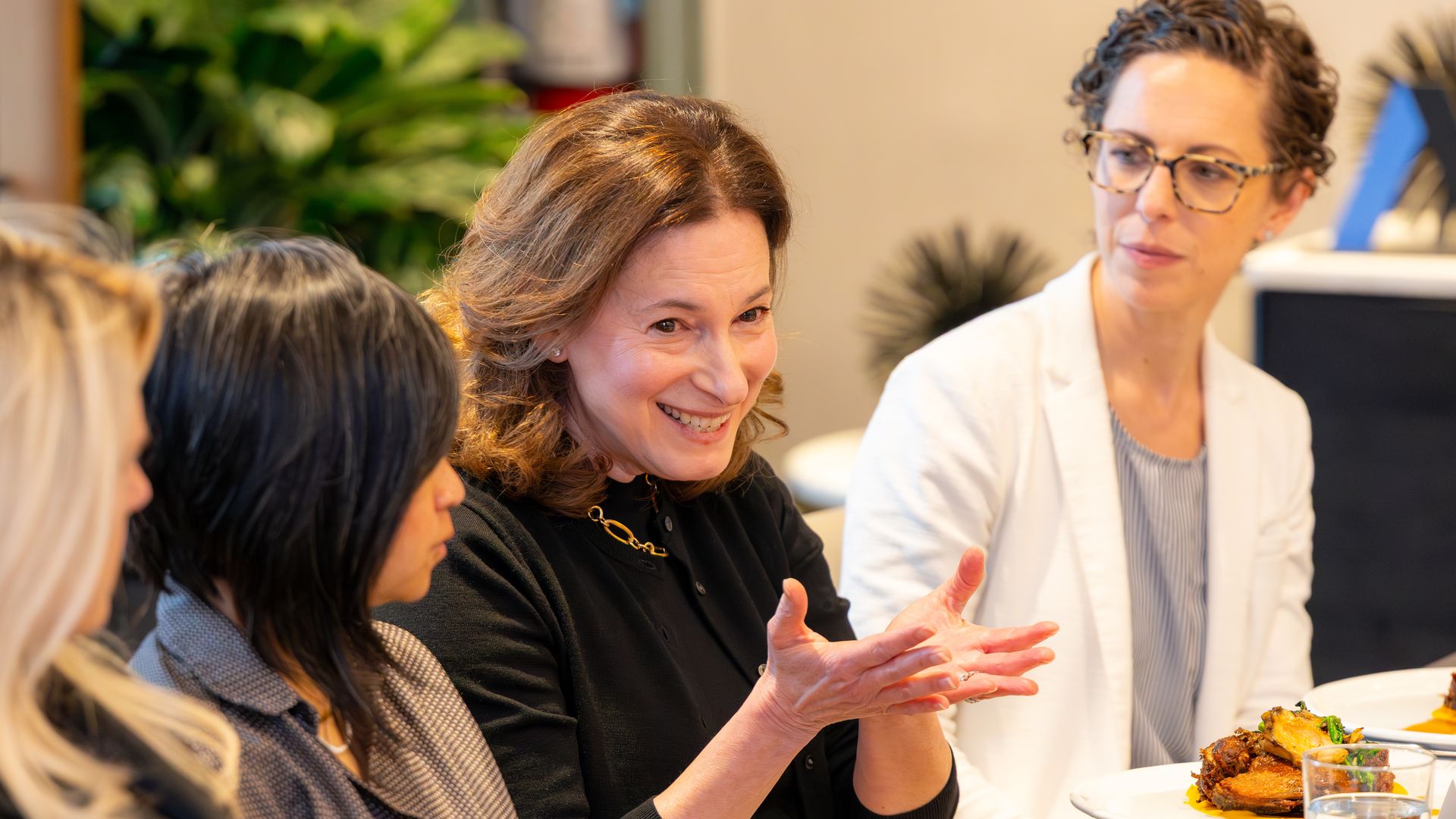
WASHINGTON — High maternal mortality in the U.S. is preventable, according to advocates, physicians, policy leaders and executives at an Axios Future of Health event on May 13.
Why it matters: The United States has the highest maternal mortality rate among wealthy countries, despite most pregnancy-related deaths being preventable.
Axios' Maya Goldman and Caitlin Owens moderated the Expert Voices roundtable, which was sponsored by Heartland Forward.
By the numbers: 649 women died of maternal causes in the U.S. in 2024, according to the Centers for Disease Control and Prevention. Most of these deaths are considered avoidable and the actual numbers may be undercounted.
- One-third of U.S. counties lack hospitals, obstetricians or birth centers, said Stephanie Ogorzalek, Planned Parenthood Federation of America vice president of research and policy.
- Black women are up to three times more likely to die from pregnancy-related causes, she added.
Case in point: 4Kira4Moms founder Charles Johnson's wife, Kira, died due to preventable internal bleeding shortly after she delivered their son via C-section in 2016.
- "One of the things we're focused on is developing programs, tools, and giving fathers everything they need to show up as that rightful advocate and support person," he said.
What they're saying: "It's actually not rocket science," Centene chief health officer Alice Chen said. "We don't need a lot more studies."
- What families need are doulas, midwives and continuous postpartum Medicaid eligibility, she added.
- Paid leave and eradicating maternal mortality are "inextricably linked," Bobbie director of impact and policy Michele Lampach said.
- "Giving everyone remote blood pressure monitors is incredibly effective," said Ivirma Global chief transformation officer Elena Mendez-Escobar.
Stunning stat: Preeclampsia, the condition of dangerously high blood pressure associated with pregnancy, accounts for "11%–14% of maternal mortality globally and is the second most frequent direct obstetrical cause of death," according to a 2025 study.
State of play: White House officials hope to build on a four-year pilot program involving over 200 hospitals that found a "41.5% reduction in maternal mortality," Health and Human Services chief counselor Chris Klomp said.
- "We had funds. We've done it. We want to do more of it, because that's an extraordinary result."
What's next: Advocates need to craft and spread a compelling narrative, BirthFund founder Elaine Welteroth said.
- "We don't want to just keep telling Black women or other women that you're going to die in birth," she said. There is "a solution and a pathway to safer, beautiful, joyful, sacred birth."
- "Data informs people, but people move people," Johnson said.
Content from the sponsor's remarks:
Olivia Walton, founder of the maternal and child health center for policy and practice at Heartland Forward, and founder and CEO at Ingeborg, said that her bipartisan "Healthy Moms, Healthy Babies America" initiative is part of a five-year sprint to cut the U.S. maternal mortality rate in half.
- "The stakes are too high and the solutions are too clear not to get arm-in-arm and work on this together," she said.
- "We know what works. We know the time is now," Heartland Forward president Angie Cooper added.

How Jerome Powell navigated pandemic, inflation and Trump

In his eight years at the helm of America's central bank, Jerome Hayden Powell has guided the U.S. economy through extreme tumult and fought off unprecedented presidential efforts to undermine the Federal Reserve's independence.
- But that's not what I'll tell my now-young children about Powell once they're old enough to care about central bankers.
The big picture: It is Powell's approach to duty and public service that is his ultimate legacy as a leader and that will shape his place in history.
Axios Future of Health Summit: U.S. health care prices are unsustainable, leaders agree

WASHINGTON — Health care costs and how to address them dominated the conversations at Axios' second annual Future of Health Summit this week as the country approaches the 2026 midterm elections.
Why it matters: Prices are top of mind for executives, policymakers and industry leaders as health care bills continue to strain Americans' finances.
- The event was sponsored by Covista, Genentech, Heartland Forward and UnitedHealth Group.
By the numbers: A KFF poll released this week revealed more than half of voters said health care costs would influence their votes.
- 75% of respondents in the summit's live audience poll said the one thing they'd change about the health care system would be costs.
Catch up quick: Here are our top five takeaways from the conversations …
1. Pharmaceutical leaders say high drug costs are being driven by complex legislation, FDA volatility and unfair international policy.
- "340B [the federal discount drug program] is a classic example of legislation that was well-intentioned, that has gotten out of control," Bristol Myers Squibb board chair and CEO Chris Boerner said.
- "We need predictability and, by extension, stability," he added.
- Other countries not paying their fair share of prescription medicine "amounts to about a 26% tax on U.S. consumers," PhRMA president and CEO Stephen J. Ubl said.
2. Fraud is top of mind, as leaders point to wasteful and inaccurate spending.
- Caryn Seidman Becker, chair and CEO of facial recognition technology CLEAR, says identify verification can reduce instances of fraud and save the government money.
- "If you look at a GAO report from December … there were 125 [policies] associated with one Social Security number," she said.
- "We are putting a national moratorium on all new hospices," Mehmet Oz, administrator of the Centers for Medicare and Medicaid Services, told Axios' Caitlin Owens, citing concerns in New York and California.
3. The health care system itself isn't designed for our modern reality, Sesame co-founder and CEO David Goldhill said.
- "We built a health care system based on what health care looked like in the mid-20th century," and now it "has more people managing the payment system than practicing physicians," he said.
- The company hopes to alleviate barriers between patients and providers by eliminating the insurance go-between entirely.
4. Sen. Peter Welch (D-Vt.) said he would support a proposal from President Trump to reduce health care costs for American families.
- He would "not only vote for it, I would work actively and aggressively to make it happen."
- Reality check: "The president hasn't introduced any legislation."
5. Oz announced a coalition to address prior authorization delays.
- "All of a sudden, the long arm of insurance comes in there, even though you're paying your fees [and] your premiums," he said. It is "probably the single most disliked part of the health care system."
- "The payers, the insurance companies, have been playing ball. Guess who's not been playing ball until today? The providers."
What's next: Republicans must decide whether they want to wade into controversial waters between now and the November election.
Content from the sponsors' segments:
In View From the Top conversations, Covista medical and veterinary president Scott Liles shared that 80% of health care professionals who responded to a joint survey with Gallup reported not having enough of what they need, "including colleagues on the floor."
- The report also found that 92% of health care executives are struggling to hire physician specialists.
Olivia Walton, founder of the maternal and child health center for policy and practice at Heartland Forward, and founder and CEO at Ingeborg, said solutions to the maternal mortality crisis aren't unaffordable.
- "America spends on average $19,000 per birth," Walton said. "You can actually make birth safer while spending less money on it."
- Maternal mortality "is a systemic issue, and it is going to require systemic interventions," said Elaine Welteroth, founder of BirthFund, author of "More Than Enough" and former Teen Vogue editor-in-chief.
Jon Mahrt, CEO of Optum Rx and chief growth officer of Optum, said the company is focused on addressing costs and transparency.
- "The pharmacy care ecosystem was designed for a simpler time," he said. "Patients crave that simplicity, and the opacity of the system undermines the confidence in that system today."
- "Consumers want direct-to-consumer cash price. … We've built and are launching the Optum Price pharmacy to do just that."

College-educated fathers are stepping it up at home


College-educated fathers are spending less time doing paid work and more time doing things like child care and chores at home, according to a new analysis of Census data.
Why it matters: Millennial and Gen X men are more involved fathers than previous generations, a pattern that appears to have accelerated in the post-pandemic period.

Health care's solvable problem: maternal mortality

The exceptionally high U.S. maternal mortality rate may be a grim topic, but it's also one of health care's solvable problems that can rally widespread bipartisan support.
Why it matters: While health policy is notorious for creating winners and losers, making a dent in maternal mortality stands out for its lack of downsides.
- "This is a priority. I'm here. Others are here. We're paying attention," Health and Human Services chief counselor Chris Klomp, who attended a recent Axios-sponsored lunch on the subject, told attendees.
- And the upfront costs — perhaps the largest barrier to action — could be recouped through reduced future health care spending and higher economic output.
- "There is a positive dollar [return on investment] to making these investments," he added. "What is the cheapest care? It's the care you never needed to render in the first place," he added.
By the numbers: As of December, the Centers for Disease Control and Prevention estimates the maternal mortality rate at 16.6 deaths per 100,000 live births. In 2024, 649 women died during pregnancy or within 42 days of the pregnancy ending.
- More than 80% of those deaths are preventable, the agency said.
- Top causes of death include severe bleeding, infection or sepsis, and cardiovascular conditions, according to the Commonwealth Fund.
Where it stands: Heartland Forward's Healthy Moms, Healthy Babies America launched its campaign this week to cut the rate in half over the next five years. (Heartland Forward sponsored the Axios lunch, though it had nothing to do with me writing about this.)
- It announced a partnership with HHS that will take an evidence-based approach to the issue, including by expanding a federal perinatal improvement collaborative.
- HHS also rolled out Moms.gov, an informational site that attempts to connect new and expecting mothers to resources. The website drew controversy from some corners for its anti-abortion ties.
Details: The Perinatal Improvement Collaborative is a network of more than 220 hospitals and health care teams that are trying to improve maternal and infant health and measure the outcomes.
- In its first four years, it saw a 41.5% reduction in mortality, Klomp said, and severe neonatal complications were reduced by almost 20%, an HHS official said after the event.
- "You want to pay for a program, there's your answer right there. It's paid for because those are really expensive cases," he said.
Yes, but: Reducing maternal deaths is one thing, but truly eliminating the preventable ones requires solving some of health care's thorniest systemic problems.
- Expanding access to care and narrowing maternity deserts tie into much bigger issues around insurance coverage, payment policy, workforce issues and the future of rural health care.
- And addressing those issues is where things can get political, fast.
Plus, some experts argue that the Trump administration's actions have actually undercut its stated commitment to reducing maternal mortality.
- "Cutting maternal mortality in half in five years won't happen if the policy prescriptions are to expand narrowly focused pilot programs while cutting federal funding for Medicaid and cancelling research, grants and programs in the name of ending DEI," said Jennifer Klein, professor of professional practice at Columbia University and chair of the Clinton Policy Institute.
My thought bubble: Maternal mortality is one of those things everyone agrees is bad and should be worked on — and yet U.S. death rates are still high relative to other nations.
- Caring about the issue is one thing, and acting on it is another. But that's why the Perinatal Improvement Collaborative is interesting — it appears to be a genuinely successful effort that could be replicable on a larger scale.
- Its reduction in the mortality rate makes Heartland Forward's goal of reducing deaths by half in the next five years sound less audacious.
Editor's note: This story has been updated to show the reduction in severe neonatal complications was almost 20% (not almost 60%), after an HHS official corrected the remark.