Tuesday's health stories

Measles response puts personal choice over orders

Officials responding to a South Carolina measles outbreak are following an increasingly familiar script in their advice to families: You should vaccinate your kids, but it's your choice.
Why it matters: Nationwide measles cases have topped 1,900 this year, according to the Centers for Disease Control and Prevention — higher than any year since the disease was declared eradicated in the U.S. in 2000.
- Even though outbreaks like the one in South Carolina are confined to a small area, that's no reassurance for local officials, who know it's easy for even a localized flareup to spread.
The latest: South Carolina had 129 confirmed cases as of Dec. 9, with more than 250 exposed people quarantining. Most of the cases are in Spartanburg County, in the northwestern corner of the state.
- South Carolina Republican Gov. Henry McMaster last week ruled out vaccine mandates to control the spread, citing the pandemic experience, but underscored the importance of vaccination as a personal choice.
- "There's some people who don't want to do it, and that's up to them," McMaster said. "People need to understand it's dangerous just like a lot of other diseases. If there's some way to prevent it, you ought to do it."
The big picture: The three biggest outbreaks this year — in west Texas, along the Utah-Arizona border and now in South Carolina — all followed a familiar pattern.
- The epicenters were politically conservative, outlying communities where vaccination rates were below the 95% threshold public health authorities say is necessary to contain the virus' spread.
- People still travel long distances for work and necessities, increasing the risk of spillover. And in the case of South Carolina, the beginning of the outbreak in early October set the stage for a spike in cases driven by more gatherings around Thanksgiving.
- Some students in South Carolina have been quarantined multiple times because of new cases detected in their schools.
What they're saying: The South Carolina Department of Public Health said there are no vaccination events now scheduled for Spartanburg County, adding its mobile health unit is available to any organization that requests a visit.
- "Some cases are travel-related exposures or close contacts of known cases. Other cases have no identified source, suggesting that measles is circulating in the community and could spread further," the health department said in a statement.
Threat level: Local officials worry that people who are either electing not to keep their kids up to date on vaccines or resist the shots completely tend to live close to each other, and are creating geographic pockets of significant risk for more outbreaks.
- "This is just another example of why it's important for us to have federal leadership ... our state boundaries are arbitrary in some way," Raynard Washington, health director in Mecklenburg County, N.C., which is about an hour from the outbreak center, told Axios.
- "The reality is that people in Fort Mill, South Carolina, come over to Charlotte every day for work or to shop or to play."
Between the lines: The quarantines and school closings are reminiscent of the early days of the pandemic and bring fresh reminders of how the politicization of medicine still is influencing public opinion.
- Some public health figures are calling for a more robust federal response that not only promotes vaccination, but fights misinformation.
- "Somehow the same people who want to dismantle the CDC for keeping our kids out of school in 2020 ... think keeping them out of school in 2025 is just fine," Jerome Adams, President Trump's first surgeon general, wrote on X.
Department of Health and Human Services spokesperson Andrew Nixon said Health Secretary Robert F. Kennedy Jr. has been clear that vaccination is the most effective way to prevent measles.
- "Any attempts to spin this are baseless," Nixon said. "Individuals should consult with their health care provider on what is best for them."
What we're watching: South Carolina state epidemiologist Linda Bell said Christmas travel and gatherings will be potential opportunities for additional exposures beyond households.
- Local officials are urging pragmatism while acknowledging personal choice.
- State Sen. Josh Kimbrell, a Republican who represents parts of Spartanburg County, told the New York Times he's trying to persuade vaccine-skeptical constituents worried about government overreach that the MMR vaccine is safe and effective.
- South Carolina hasn't asked for federal assistance, but HHS' Nixon said the CDC is ready to deliver technical assistance, laboratory support, vaccines and therapeutics, if requested.
Maya Goldman contributed to this report.

Trump designates fentanyl a weapon of mass destruction
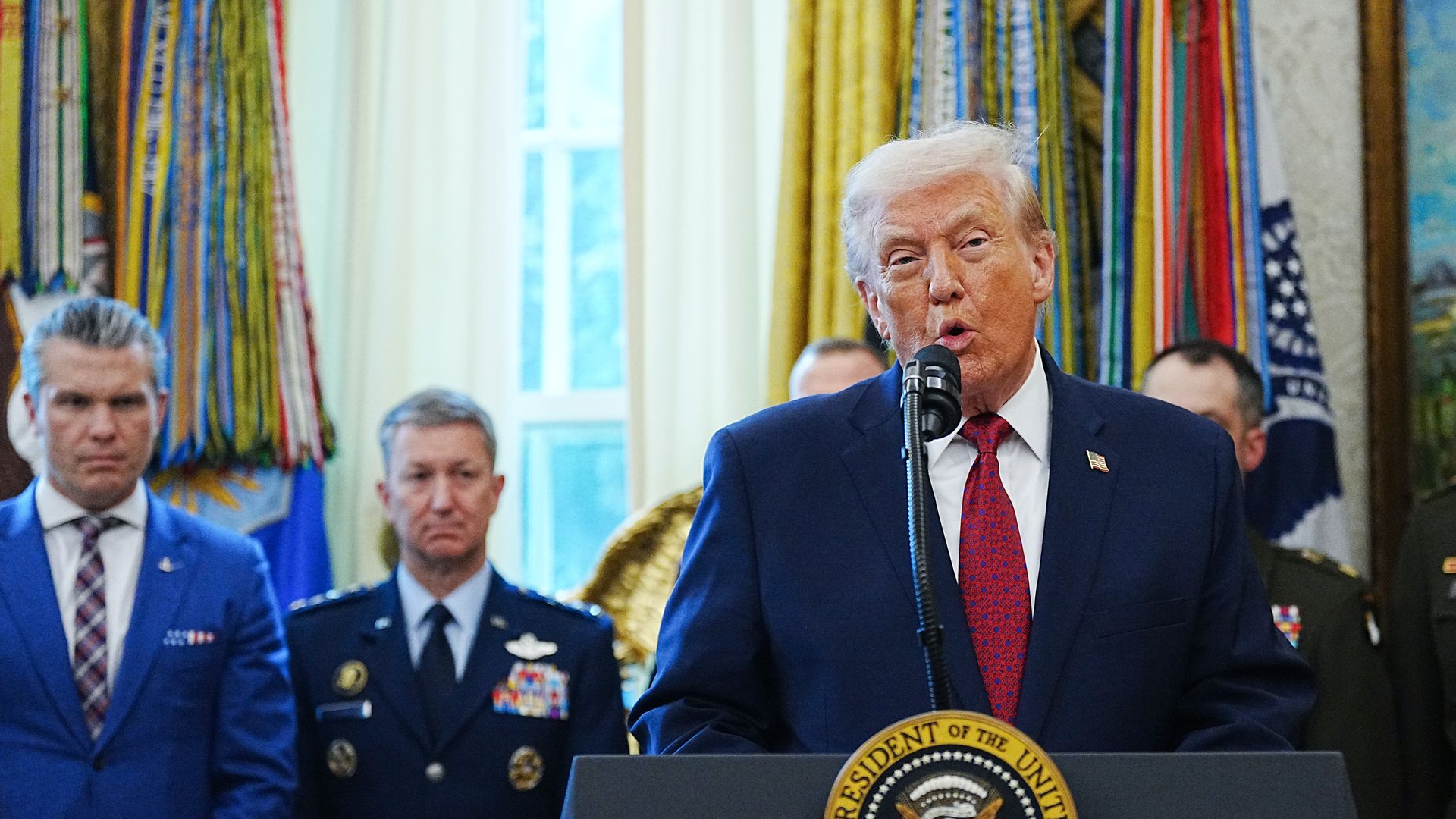
President Trump signed an executive order on Monday declaring illicit fentanyl a weapon of mass destruction.
The big picture: The order, which classifies the narcotic as a chemical weapon, authorizes several Trump administration departments and agencies to "eliminate" the threat of "illicit" fentanyl and its precursors.

FDA warns Target, Walmart over failure to pull recalled baby formula from shelves

The Food and Drug Administration sent Walmart, Target, Kroger and Albertsons warning letters last week for continuing to sell recalled baby formula after being instructed to remove it from their shelves.
Why it matters: The multi-state botulism outbreak has not only infected at least 51 infants, but it has also exposed the clear pitfalls of the FDA not requiring formula companies to test products for the bacteria that cause the illness.
51 cities earn medals in new CityHealth annual report

Local leaders in cities around the country are navigating tight budgets, shifting politics and growing community needs — but they're still delivering real results for residents, according to a new report from CityHealth.
- CityHealth's 2025 Policy Assessment shows how cities are implementing practical, proven policies — from green space to renter protection — to build healthier, stronger communities where people can thrive.

House Dems face choice on ACA compromises

The House is teeing up a series of health care votes this week as Democrats face a choice on their willingness to back anything but a straight extension of enhanced Affordable Care Act subsidies.
Why it matters: The question is whether Democrats will ally with a handful of vulnerable Republicans and force a vote on a compromise subsidy plan that GOP leaders have no intention of letting become law.

Unsettled health policies leave billions in health spending hanging

In a year dominated by vaccine policy, Medicaid and the Affordable Care Act, the Trump administration has set in motion other policy changes that are still in the works and could influence billions of dollars in health spending.
Why it matters: This year's generational debates over costs and coverage have overshadowed dozens of other efforts to reshape existing health programs or flesh out the details of new initiatives in drug pricing, rural health and other areas.
Trump's article of faith: Economy will soar in '26

President Trump and his advisers have an almost messianic belief the economy will take off in the first quarter of next year, based largely on stimulus from the "One Big Beautiful Bill" he signed in July.
- For the White House, it's an article of faith.
Why it matters: Trump's bullish belief is key to understanding why he's so reluctant to say there's an "affordability crisis." He calls that talk a "hoax" and a "con job," advisers say, because the problem didn't start under him and the economy is growing steadily.

Trump advisers strafe Hawley over new anti-abortion group
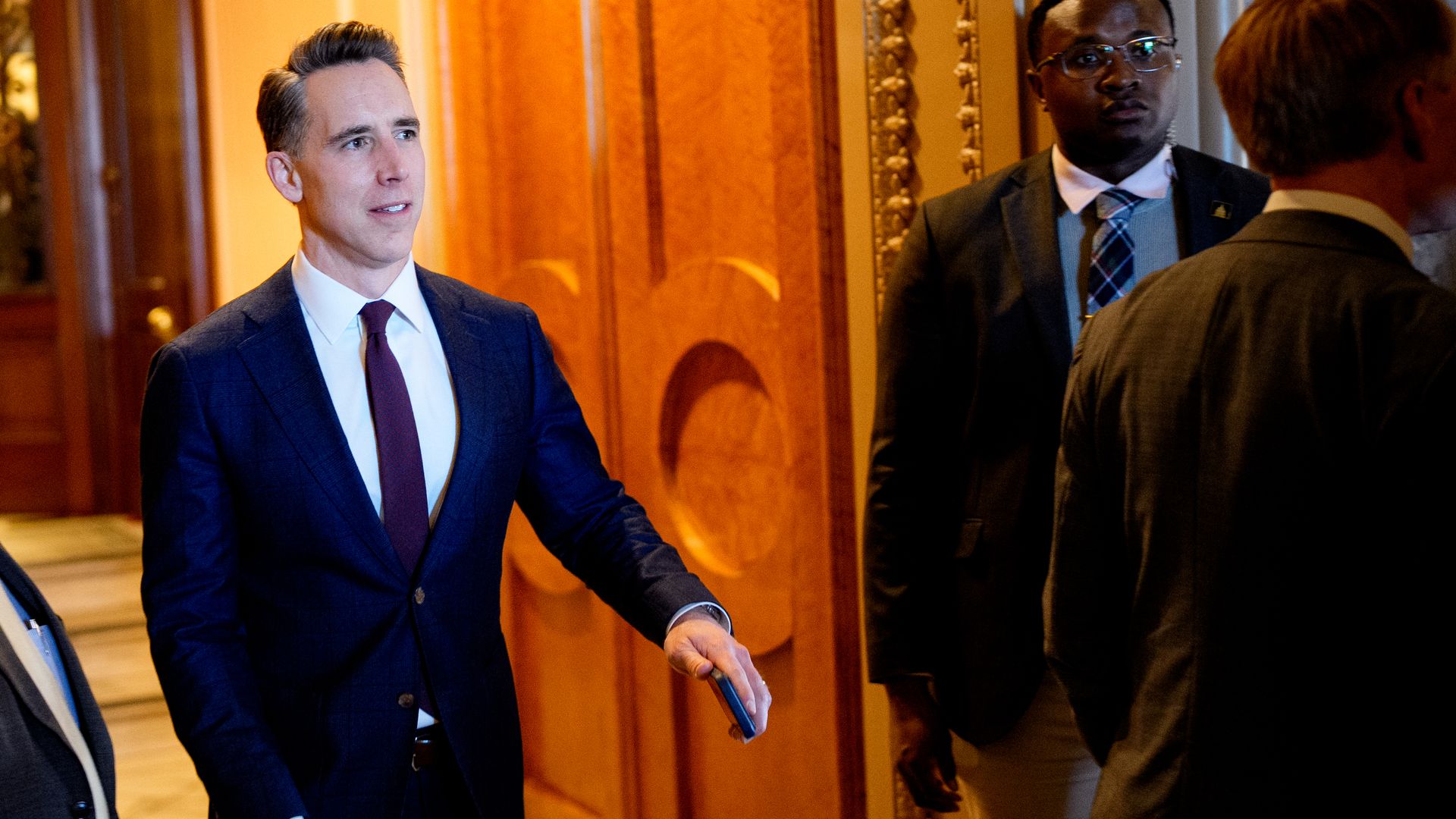
President Trump's advisers are furious with Sen. Josh Hawley (R-Mo.) for starting an anti-abortion group to spur new action on the issue, which the White House views as a loser for Republicans in next year's midterms.
- "Clearly, Senator Hawley and his political team learned nothing from the 2022 elections, when the SCOTUS abortion ruling [overturning Roe v. Wade] resuscitated the Democrats in the midterms," a close Trump adviser told Axios.
Why it matters: Trump's lieutenants believe the move by Hawley — a vocal populist who speaks up for the working class — is part of a plan to position himself to challenge Vice President Vance for the presidency in 2028.