Medicare is requiring more pre-treatment approvals in its fee-for-service program in a bid to root out unnecessary care, federal regulators announced Friday.
The big picture: Traditional Medicare historically hasn't required prior authorizations to access most drugs or services, a major perk for enrollees.
The Supreme Court on Friday rejected a challenge to a section of the Affordable Care Act that designates a federal task force to recommend which preventive services insurers must cover at no cost to patients.
Why it matters: The 6-3 decision will ensure continued access to free cancer screenings, HIV drugs and counseling for the roughly 150 million Americans with private health insurance.
The court said that the Health and Human Services secretary can still remove members of the task force.
Justice Brett Kavanaugh wrote the opinion, with Chief Justice John Roberts and Justices Sonia Sotomayor, Elena Kagan, Amy Coney Barrett and Ketanji Brown Jackson concurring.
Apple Tree Partners has invested billions of dollars to launch and grow biotech companies, but now a legal dispute threatens to shut many of them down.
The big picture: Apple Tree has an unusual structure for a venture capital firm, according to court documents filed in Delaware and the Cayman Islands.
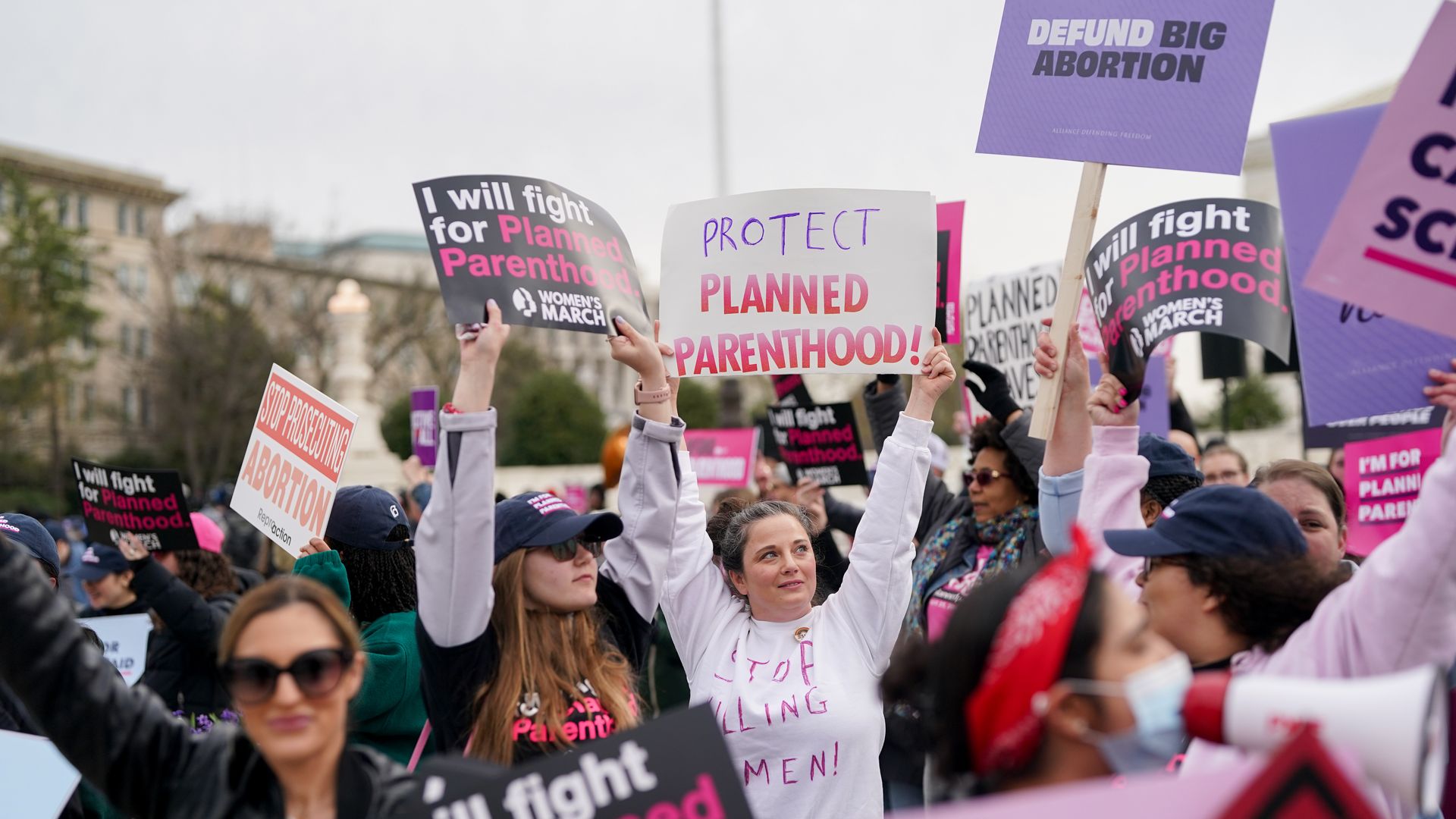
The Supreme Court on Thursday curtailed low-income patients' rights to chose their health providers while giving conservative-led states a bigger opening to exclude Planned Parenthood affiliates from their Medicaid programs.
The big picture: The 6-3 decision by the court's conservative majority potentially adds more obstacles to care, on top of financial barriers or poor health, and comes as Congress debates major changes to Medicaid that could cause millions of people to lose health coverage.
While the arguments before justices were narrow in scope, the ruling has huge ramifications for women trying to access reproductive care. Medicaid covers 1 in 5 women of child-bearing age and is the biggest source of coverage for women with low incomes, covering more than 4 in 10, per KFF.
The Supreme Court on Thursday curtailed low-income patients' rights to chose their health providers while giving conservative-led states a bigger opening to exclude Planned Parenthood affiliates from their Medicaid programs.
The big picture: The 6-3 decision by the court's conservative majority potentially adds more obstacles to care, on top of financial barriers or poor health, and comes as Congress debates major changes to Medicaid that could cause millions of people to lose health coverage.
The world's top 1% accumulated trillions in wealth over the past decade, while life-saving aid faces cuts, according to a Thursday Oxfam International report.
Why it matters: The amount of wealth that the rich amasses around the world could eliminate annual global poverty more than 22 times over.
HHS Secretary Robert F. Kennedy Jr.'s vaccine advisers voted on Thursday to no longer recommend that Americans get flu shots containing a preservative that anti-vaccine activists have suggested is linked to autism.
Why it matters: The decision endorsed the widely discredited belief that the mercury-containing compound, thimerosal, is harmful at the level at which it's included in vaccines.
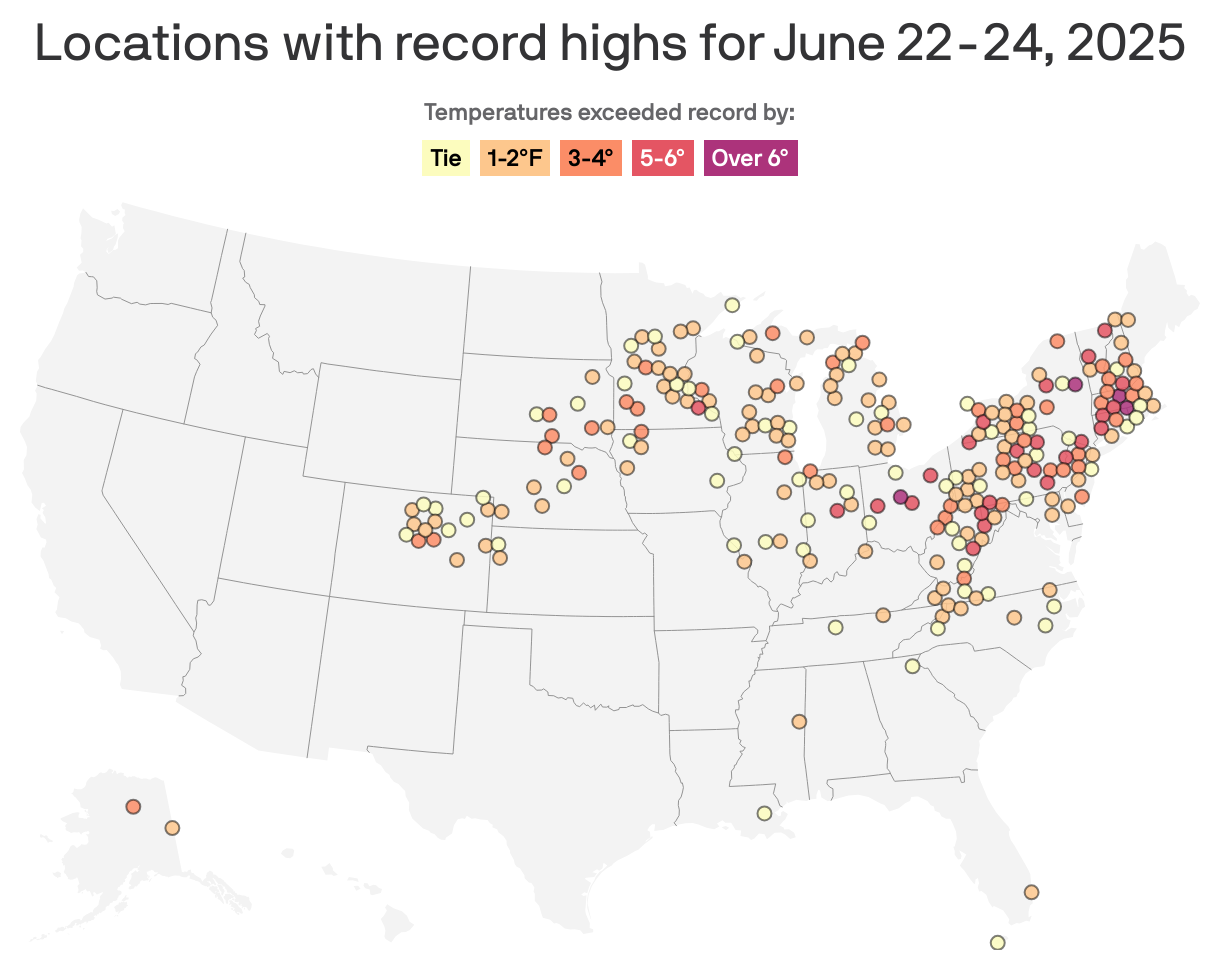
Heat records were broken in more than 280 locations across the U.S. this week, with more extreme temperatures expected.
The big picture: The scorching heat wave sweeping through the Midwest and the East Coast has brought dangerous conditions to nearly 130 million people under extreme heat warnings or heat advisories on Thursday, according to NOAA's Weather Prediction Center.
As unusually hot temperatures sweep much of the U.S. this week, millions of Americans remain under heat advisories or warnings.
The big picture: While extreme heat can have burdensome impacts on our bodies, it can also have tremendous impacts on vital — and aging — infrastructure.
Medicaid patients don't have a right to freely choose their medicalprovider, the Supreme Court ruled 6-3 on Thursday, in a case that carries major implications for Planned Parenthood.
Why it matters: The first abortion-relatedcase of President Trump's second term could resultin the defunding of Planned Parenthood, which derives a significant chunk of its funding from the safety net program and is the nation's biggest provider of abortion services.
Federal vaccine advisors on Thursday recommended Merck's new RSV antibody shot for infants younger than eight months old in their first respiratory virus season, if their mother didn't receive a vaccine during pregnancy.
Why it matters: The 5-2 vote marked the first decision from HHS Secretary Robert F. Kennedy Jr.'s handpicked committee, which advises the CDC on immunization policy.
CDC director nominee Susan Monarez tried not to contradict Trump administration policies, while still touting her credentials as a scientist, during her confirmation hearing before the Senate health committee yesterday, Peter Sullivan wrote first on Pro.
Why it matters: Monarez is a career government researcher who's regarded as a more mainstream nominee than President Trump's first pick, Dave Weldon, whose nomination was pulled amid concern from senators about his experience and vaccine views.
She's the first CDC director-designate to face Senate confirmation under a law Congress passed in 2023.
Federal officials and health workers are practicing a deadly disease response this week at Washington Dulles International Airport, using a new portable biocontainment unit and a Boeing 747 to simulate the transfer of four patients with an unknown condition between Toronto and D.C.-area hospitals.
The big picture: The Ebola outbreak underscored the importance of isolating and repatriating Americans with lethal viruses from hot zones, and transporting them between specially equipped hospitals, John Knox, principal deputy assistant secretary at HHS, told Axios.
The unit is essentially a movable hospital room that can transport up to 10 patients at a time and be converted into ER use with features such as negative pressure, Knox said.
🧬 A "superbabies" startup is seeking funding for a controversial push to genetically edit human embryos and eliminate inherited diseases. (Bloomberg News)
🏥 Senate Republicans are eyeing a $15 billion fund for rural hospitals to be added to the sweeping budget bill, according to a draft plan. (Axios)
🪖 The Pentagon is reinstating servicemembers discharged for refusing the COVID-19 vaccine. (Breitbart)
Kids and teens consumed fewer calories from fast foods over the decade that ended in mid-2023, according to newly published CDC data.
Why it matters: It showed the country may have been heading toward healthier options well before Health Secretary Robert F. Kennedy Jr. took office and made cleaning up America's diet a priority.
The first meeting of Health Secretary Robert F. Kennedy Jr.'s handpicked vaccine advisory board on Wednesday featured plenty of anti-vaccine talking points — and its proceedings didn't stick to the script.
State of play: It was revealed that one of Kennedy's eight appointees withdrew during the required financial review, leaving the board with only seven members.