The Food and Drug Administration on Thursday said it would begin phasing out animal testing requirements for antibody therapies and other drugs and move toward AI-based models and other tools it deems "human-relevant."
Why it matters: The agency is trying to reaffirm its role as a leader in modern regulatory science amid DOGE-directed cuts that have rattled drug developers and investors and stoked concerns about timely product reviews.
The Department of Health and Human Services needs to identify and create a formal way to coordinate its drug shortage response with other federal stakeholders, and it's unclear what it plans to do to make that happen, per a new report from a government watchdog.
Why it matters: Drug shortages have been disruptive, increasingly long-lasting and in some cases life-threatening in recent years. Industry often points to a need for policy interventions including improved coordination from federal agencies that are part of HHS.
Health Secretary Robert F. Kennedy Jr.'s stated goal of ending what he calls a chronic disease epidemic is in conflict with some of the Trump administration's early regulatory rollbacks and DOGE-directed cuts, experts tell Axios.
Why it matters: Some 129 million Americans suffer from diabetes, hypertension, arthritis and other chronic diseases, with tens of millions more expected to develop chronic illness in the next five years. A disproportionate number are low-income or otherwise disadvantaged.
Idaho will enforce a first-in-the-nation ban on vaccine mandates in businesses and schools this summer after legislators on the last day of their session passed a revised "medical freedom" bill.
Why it matters: The ban reflects a growing distrust of immunizations among Americans that helped install vaccine skeptic Robert F. Kennedy Jr. as the nation's top health official.
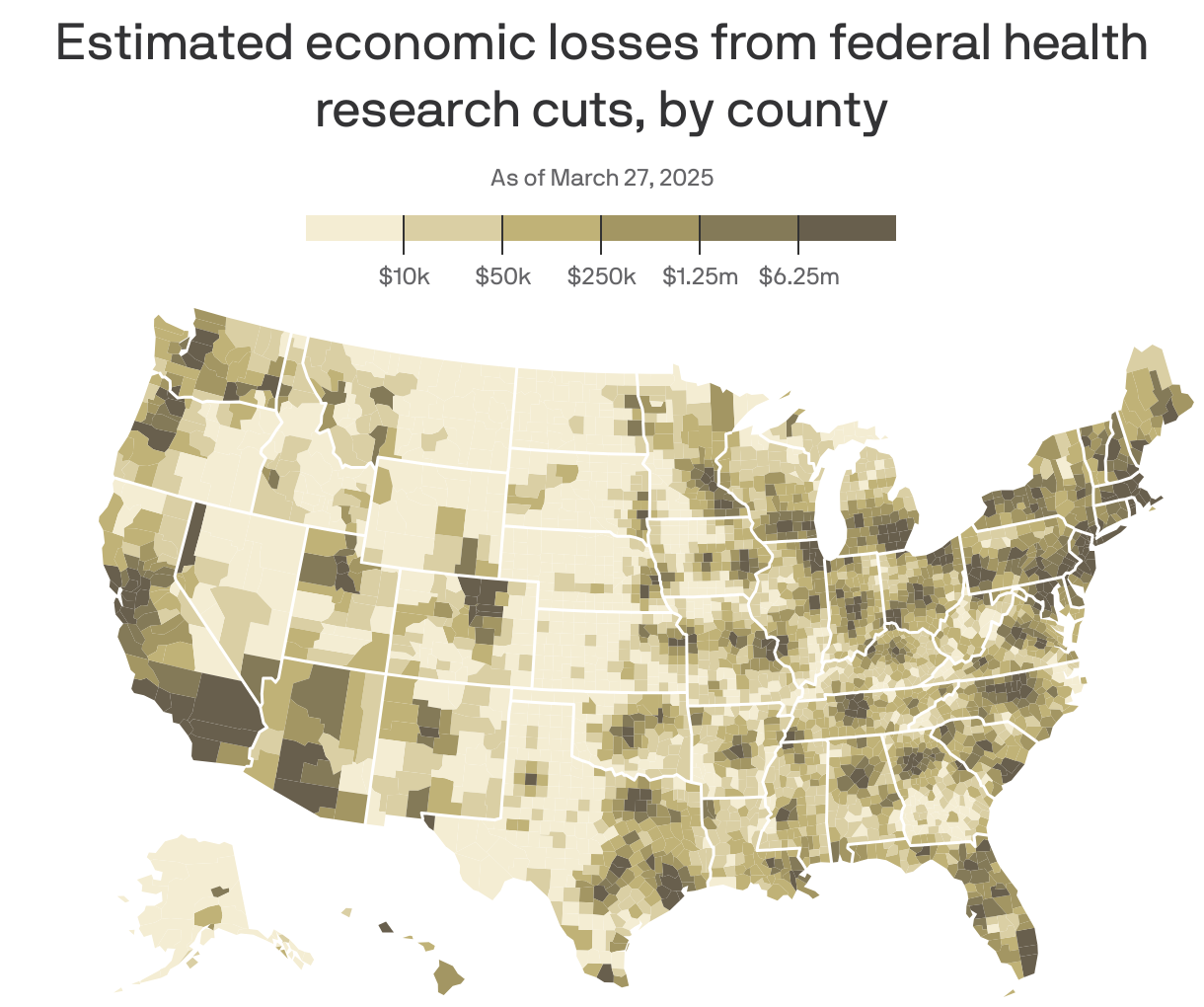
Nearly half of all U.S. counties will experience economic losses of at least $250,000 as a result of the Trump administration's planned cuts to indirect funding by the National Institutes of Health, per the Science & Community Impacts Mapping Project.
Why it matters: Much of the discourse around the cuts has focused on the impact to states or individual universities. But this data compiled from a consortium of universities shows just how widespread the effects of the cuts would be at the local level, researchers tell Axios.
Even before President Trump's announcement that he plans a "major tariff" on pharmaceuticals, the sector was getting hammered in the markets — and not just over concerns about higher costs.
Why it matters: Investors are also responding to broader uncertainty about the Food and Drug Administration and how the industry will be regulated, experts tell Axios.
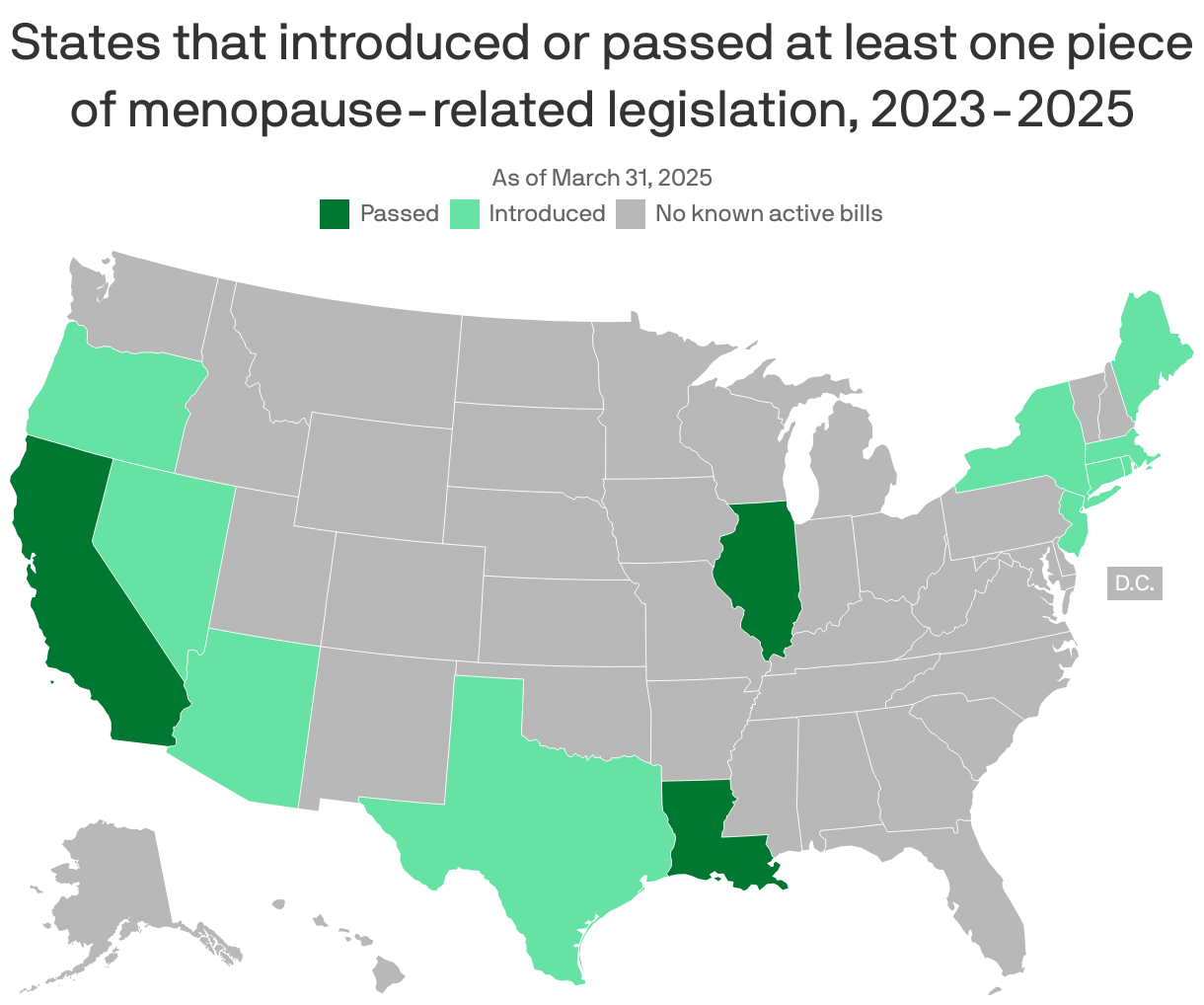
Data: Jennifer Weiss-Wolf, Citizen's Guide to Menopause Advocacy; Map: Axios Visuals
More than 20 bills focused on menopause care have been introduced across at least 13 states so far this year.
Why it matters: Menopause education isn't just having a moment. Changes that could permanently reshape insurance coverage and health care resources are being set in motion.