Private Medicare plans will get a more than $25 billion increase in federal payments for the 2026 plan year, according to a policy finalized by the Trump administration Monday.
Why it matters: The more than 5% payment bump is an unexpectedly big win for UnitedHealth Group, Humana, CVS Health and Elevance, among other big insurers.
China has pulled ahead of the United States in key areas of the life sciences, and the U.S. may only have a handful of years to regain dominance in the sector, according to an independent commission's report sent Tuesday to Congress and the White House.
Why it matters: Advanced biotechnology is critical to national security, public health and the ability to continue feeding the population.
The upheaval at the Food and Drug Administration is threatening to cripple the user fee system that funds reviews of new drugs, devices and diagnostic tests, with the most immediate threat to look-alike biological drugs, according to four recently dismissed agency officials familiar with the process.
Why it matters: Drug and device manufacturers pump billions of dollars into the system to ensure their products get timely evaluations. The collapse of that process could return the FDA to the early 1990s, when patients faced long waits before they could access promising treatments and devices.
A federal judge in Texas on Monday threw out a contentious Biden administration policy that would have required first-ever federal staffing minimums at nursing homes.
The big picture: The Trump administration is unlikely to appeal the decision from U.S. District Court Judge Matthew Kacsmaryk, marking a win for nursing home operators, who argued the standards were unworkable amid a shortage of health care labor.
Zoom in: Nursing homes have plenty of failures when it comes to staffing, infection control and oversight, Kacsmaryk's memo vacating the rule states.
But while the policy was "rooted in laudable goals," it goes beyond the Centers for Medicare and Medicaid Services' authority, he wrote.
Catch up quick: The staffing standard would have required nursing homes across the country to have a registered nurse on-site at all times, and provide at least 33 minutes of care from an RN per patient per day.
The requirements were due to be phased in beginning in 2026, with rural facilities getting an extra year.
Nursing homes filed a lawsuit to overturn the policy last year, arguing CMS didn't have the authority to create the policy, and that it would have created "impossible" standards.
Labor unions and advocates for the elderly backed the requirements.
What they're saying: The nursing home industry cheered Monday's verdict.
"This unrealistic staffing mandate threatened to close nursing homes and displace vulnerable seniors," Clif Porter, CEO of the American Health Care Association and National Center for Assisted Living, said in a statement.
"The court decision not only upholds the rule of law and balance of powers, but it protects access to care for our aging population."
The future of emergency care is getting more precarious, due to more complex cases, lower reimbursements and other stressors faced by emergency departments, according to a new RAND report funded by the Emergency Medicine Policy Institute.
Why it matters: Emergency departments are crucial for responding to life-threatening events like heart attacks and car accidents. But they've also become the safety net for some of society's most difficult problems, including the opioid epidemic, gun violence and severe mental illness.
The reality of deep cuts to Health and Human Services hit home for many last week when half of the department's 10 regional offices closed, leaving 22 states and five territorieswithout a local point of contact for heating assistance, child care programs, Meals on Wheels and more.
Why it matters: In the alphabet soup of federal health agencies, the department's regional offices not only act as a conduit for federal grants and aid, but also forge relationships between health departments, academic institutions and community-based organizations.
Health and Human Services Secretary Robert F. Kennedy Jr. advocated for the measles, mumps and rubella (MMR) vaccine during a visit to West Texas on Sunday to comfort two families whose children died of the disease.
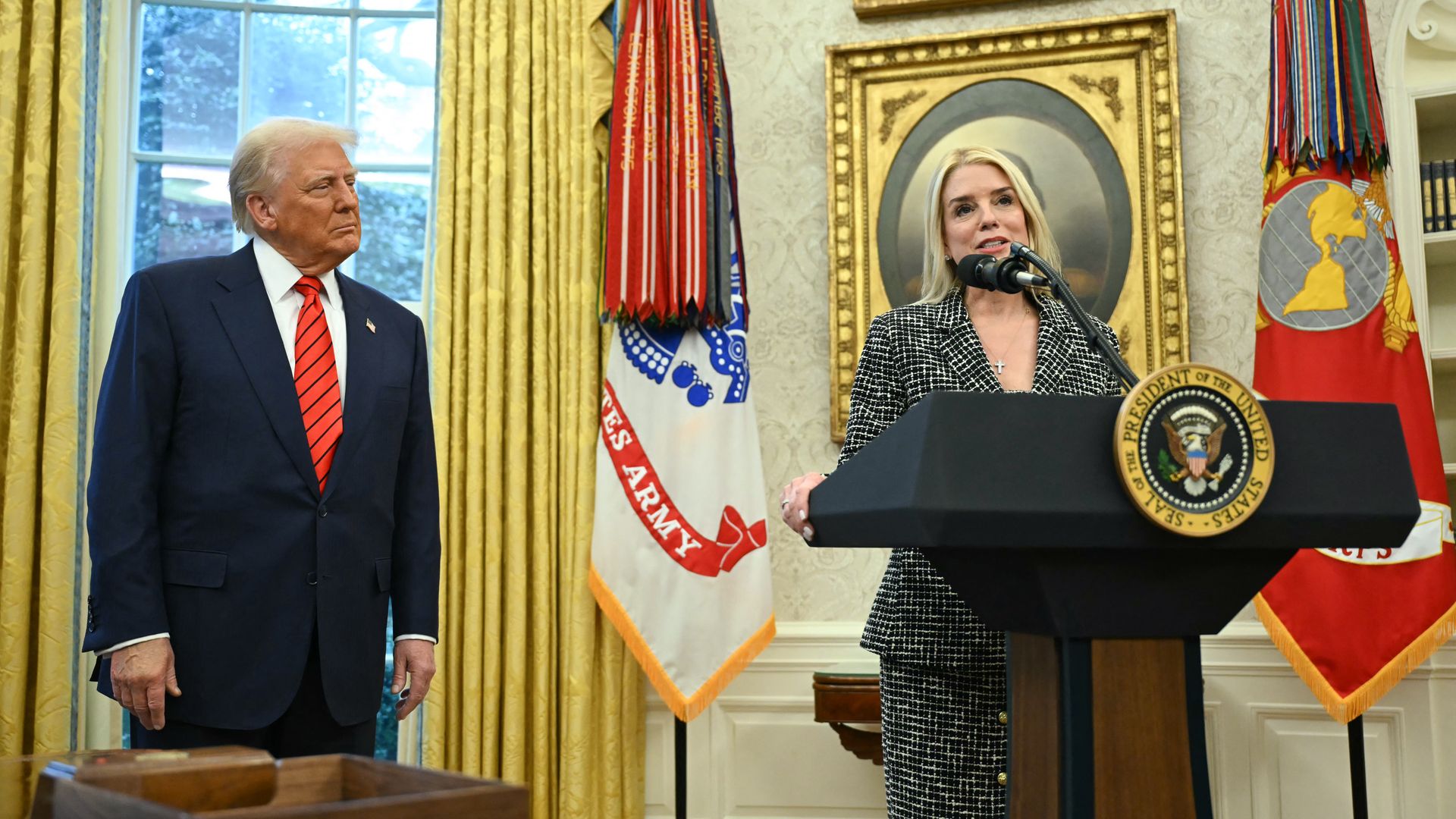
Attorney General Pam Bondi said Sunday she's had death threats for seeking the death penalty for Luigi Mangione, the man charged with murder in connection with the December killing of UnitedHealthcare CEO Brian Thompson.
What they're saying: "I feel like these young people have lost their way," Bondi said on Fox News Sunday in addressing a question from anchor Shannon Bream about some young people's support for Mangione, whose arrest triggered massive debate about the U.S. health care system.