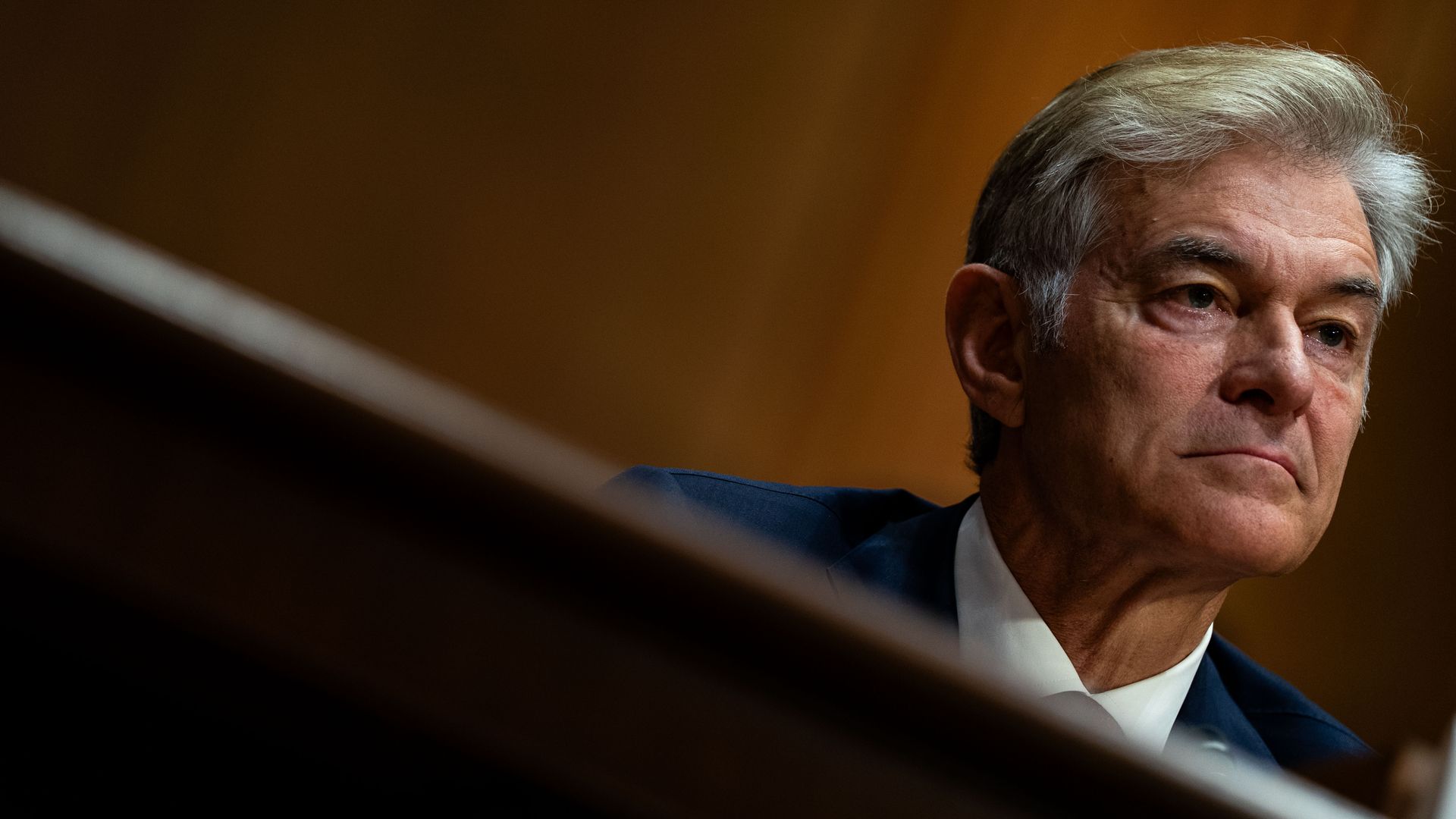
The Senate on Thursday confirmed Mehmet Oz to be administrator of the Centers for Medicare and Medicaid Services in a 53-45 party line vote.
Why it matters: It puts the former heart surgeon and TV talk show host in charge of an agency that oversees health care for 160 million Americans.
Oz will take the helm amid sweeping staff cuts throughout federal health agencies, though CMS was spared from the brunt of the DOGE-directed reductions.
State of play: Oz ducked questions about possible Medicaid cuts and how DOGE could affect the big health programs during a relatively smooth confirmation hearing in the Senate Finance Committee last month.
He said that he supported Medicaid work requirements and also signaled he could be open to looking at changes to eligibility for some higher-income beneficiaries of the safety net program.
Oz also said he would "defend" and "use" Democrats' Medicare drug price negotiation program, authorized in the Inflation Reduction Act.
Despite past support for Medicare Advantage, he was critical of some insurers' practice of "upcoding," or categorizing patients as sicker to get higher payments, vowing he would "go after it."
Addressing DOGE cuts, Oz said that he planned to be "speaking to the staff, raising morale, getting people excited" once confirmed.
CMS has reportedly cut about 300 jobs, including in areas like minority health, program operations and local engagement.
Catch up quick: Oz, who unsuccessfully ran for Senate in 2022 against Sen. John Fetterman (D-Pa.), has no prior experience running a big government agency like CMS.
He's drawn criticism in the past from other medical professionals for promoting treatments with no documented efficacy.
Working under HHS Secretary Robert F. Kennedy Jr., he could have wide latitude within his new role — including to enact policy more in line with GOP orthodoxy.
CMS could grant waiver requests from conservative-led states intent on reshaping Medicaid and also make key changes to Affordable Care Act markets.
If you need smart, quick intel on health care policy for your job, get Axios Pro.
Why it matters: The lawsuit, originally filed last year under the Biden administration, was considered a major challenge to the PBM industry after the agency accused the drug middlemen of inflating the price of insulin and driving up costs to diabetes patients.
Mass layoffs at the Department of Health and Human Services are leaving a communications gulf within the federal health system that millions of Americans rely on for information about drug safety, product recalls, disease outbreaks and other public health threats.
Why it matters: HHS Secretary Robert F. Kennedy Jr. frequently says he's bringing "radical transparency" to the agency. But as the government health establishment is turned on its head,there's the real prospect of a lingering information vacuum.
A day after deep Food and Drug Administration cuts rocked their world, drug and med tech companies faced another potentially big hit when President Trump announced a baseline 10% tariff on U.S. imports.
Why it matters: The life sciences are heavily reliant on foreign countries for raw materials and manufacturing, most of it duty-free. Experts said a radical shift away from free-trade policies could bring higher drug prices, supply chain disruptions and weaker margins for big industry players.
Pharmaceutical companies are growing increasingly concerned widespread cuts at the Food and Drug Administration could set the agency back as crucial review deadlines loom.
Why it matters: Health industries pay billions developing and shepherding drugs through the regulatory process, including user fees that help ensure there are enough staff to evaluate products on a predictable timeline.
Health Secretary Robert F. Kennedy Jr. is trying to leverage states' growing interest in banning certain food dyes and additives to speed up his efforts to reshape America's diet.
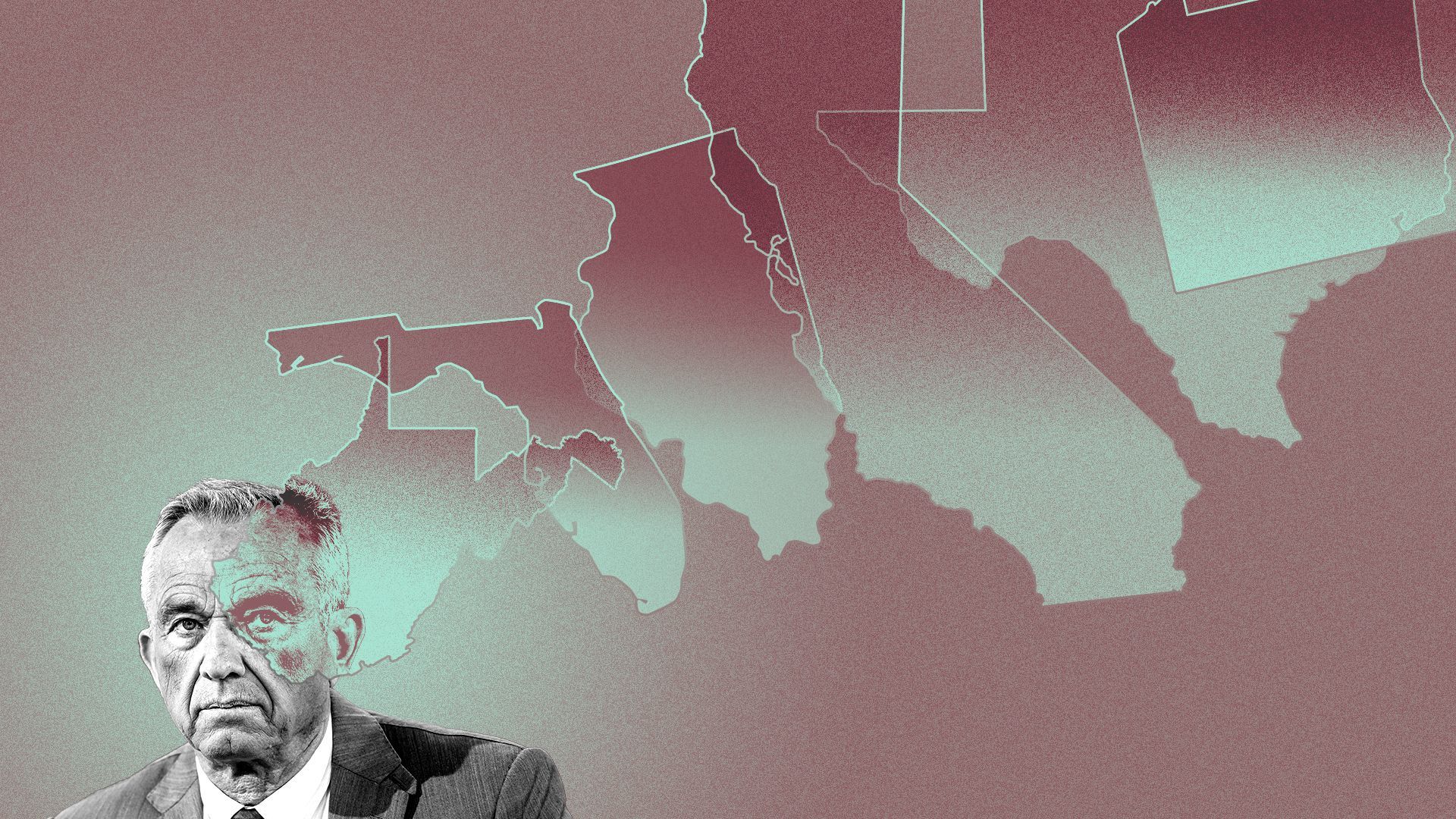
The big picture: West Virginia is providing an early proving ground, after passing a new law to ban nine synthetic dyes and additives from food sold in the state and planning to request a federal waiver to prohibit soda in the Supplemental Nutrition Assistance Program.
Veterinarians, population researchers, records officers and neuroscientists were all swept up in a chaotic series of layoffs Tuesday that effectively ended the government's health establishment as we know it.
The big picture: The sheer breadth of the cuts and reshuffling may not be apparent for weeks. But in the immediate aftermath, health care industry players and former federal workers say the workforce reductions will almost certainly affect drug approvals, low-income assistance, disease tracking and biomedical research once held up as the gold standard.
The White House is so frustrated by the lack of clear and fast communications by Health Secretary Robert F. Kennedy Jr.'s agency that it has set up a parallel press shop, five top Trump administration sources tell Axios.
Driving the news: The problem surfaced in February, after it took two days for the Health and Human Services Department to acknowledge — by tweet — that a West Texas child had become the first person to die in the measles outbreak.