Saturday's health stories

Trump admin won't let Medicare cover anti-obesity drugs

The Trump administration on Friday scrapped a Biden administration proposal to have Medicare cover anti-obesity drugs, including GLP-1s.
Why it matters: The decision sidelines a politically popular idea that had big implications for the program's finances.
Driving the news: A Medicare payment rule issued Friday would maintain a long-standing prohibition on covering drugs for weight loss.
- The Biden administration argued that reinterpreting the existing policy would have made the drugs more accessible to millions of Americans and potentially lower the prevalence of obesity-related illnesses.
- Medicare administrators may revisit the policy in the future, according to a fact sheet on the rule.
Catch up quick: Requiring Medicare and Medicaid to cover GLP-1s like Wegovy for weight loss would have cost the government nearly $40 billion over 10 years.
- Medicare currently covers the drugs to treat diabetes and heart disease.
- In nearly 25,000 comments to CMS on the policy, many individuals described their own positive experiences with the drugs. But insurers urged CMS not to finalize the change.
Between the lines: Prior to being nominated, HHS Secretary Robert F. Kennedy Jr. panned the use of Ozempic and other GLP-1 drugs for weight-loss.
- But he took a softer stance during his Senate confirmation hearings, calling the products "miracle drugs" for obesity and diabetes while saying they shouldn't be prescribed without exercise.
Zoom out: The rule issued Friday also didn't adopt Biden administration proposals on health equity analyses of how health services are managed, and guardrails for using artificial intelligence in Medicare Advantage.
- The administration did finalize technical updates to Medicare Advantage risk adjustment data collection and other smaller proposals.
What they're saying: "As we continue to review the final rule, we are encouraged that the administration took a measured approach and declined to make major changes at this time," Mary Beth Donahue, CEO of the Better Medicare Alliance, said in a statement.

Trump uses child abuse awareness proclamation to bash transgender people

President Trump's decision to target transgender care in a proclamation declaring April National Child Abuse Prevention Month "betrays" the month's purpose, LGBTQ advocates said.
Why it matters: Framing the trans youth experience as "abuse" further stigmatizes an already vulnerable community, as the Trump administration tries to erase trans people from American life through policies limiting access to health care, careers, sports, education and more.

Judge halts HHS plan to kill $11B in public health grants
A federal judge in Rhode Island froze a Trump administration plan to cut more than $11 billion in public health grants to state and local health departments that Congress allocated during the pandemic.
Why it matters: The Health and Human Services Department said the move was on the grounds that the pandemic was over. But it cast doubt on states' ability to contain infectious diseases, ensure access to vaccines and continue substance use disorder programs, among other efforts.
Driving the news: Judge Mary S. McElroy granted a temporary restraining order Thursday in response to a lawsuit filed by 23 states and the District of Columbia.
- The states had argued HHS "arbitrarily" stopped the funding without advance notice.
- "This funding provides essential support for a wide range of urgent public health needs," they wrote.
- The cuts endanger the public and violate the Administrative Procedure Act by exceeding the agency's regulatory authority, they wrote.
HHS declined to comment, citing ongoing litigation.
Catch up quick: States have also sued to block caps on NIH grants covering overhead at universities and medical research centers. A judge also granted a temporary freeze in that case.

States are losing billions in federal childhood vaccine funding
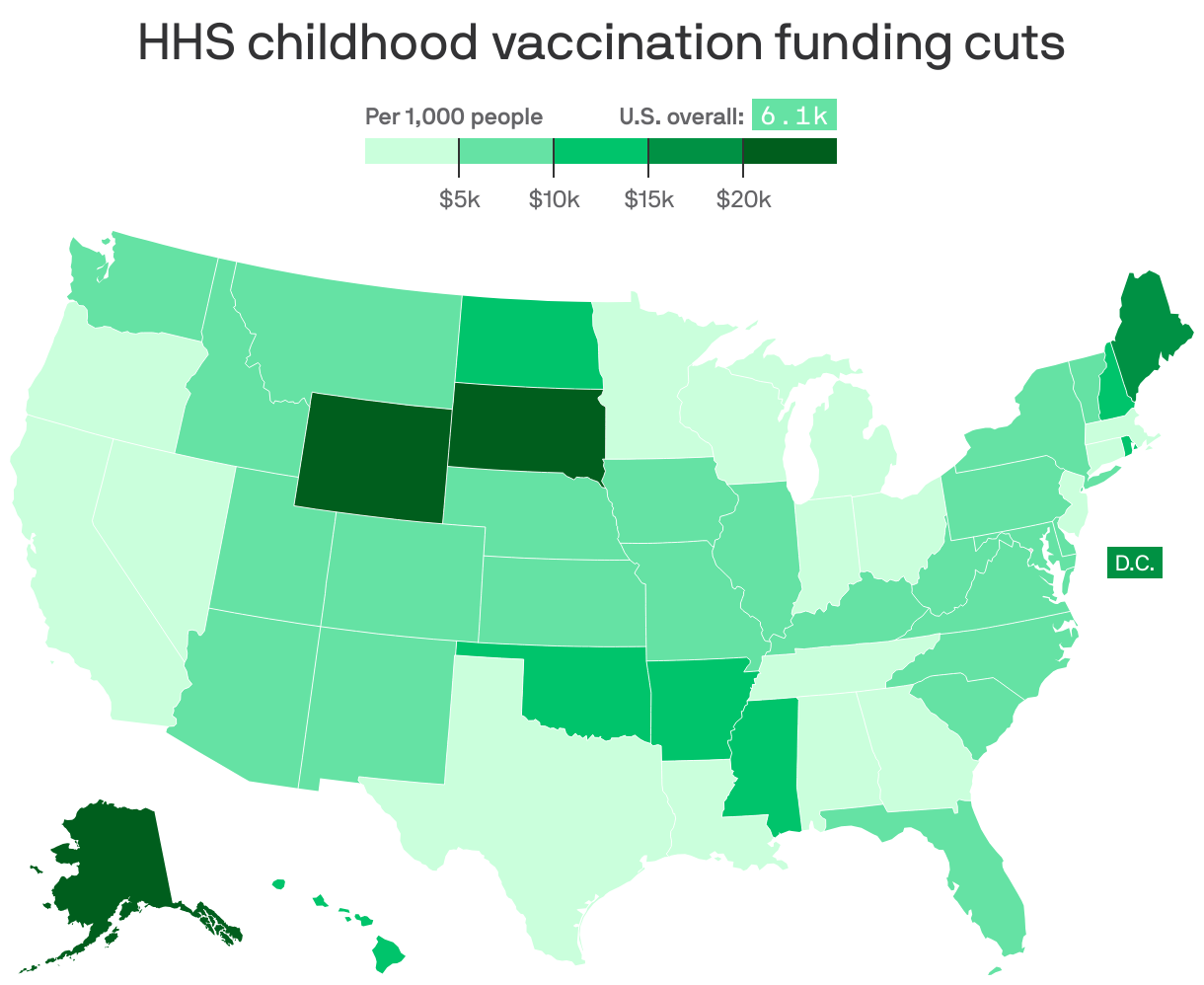
States and cities are losing over $2 billion in childhood immunization and vaccination funding as part of broader cancellations of pandemic-era federal public health spending, per government data.
Why it matters: Federal money helps fight preventable and sometimes deadly diseases like measles, which is now spreading in several parts of the country.