Drug and device makers confront Trump tariffs

Add Axios as your preferred source to
see more of our stories on Google.
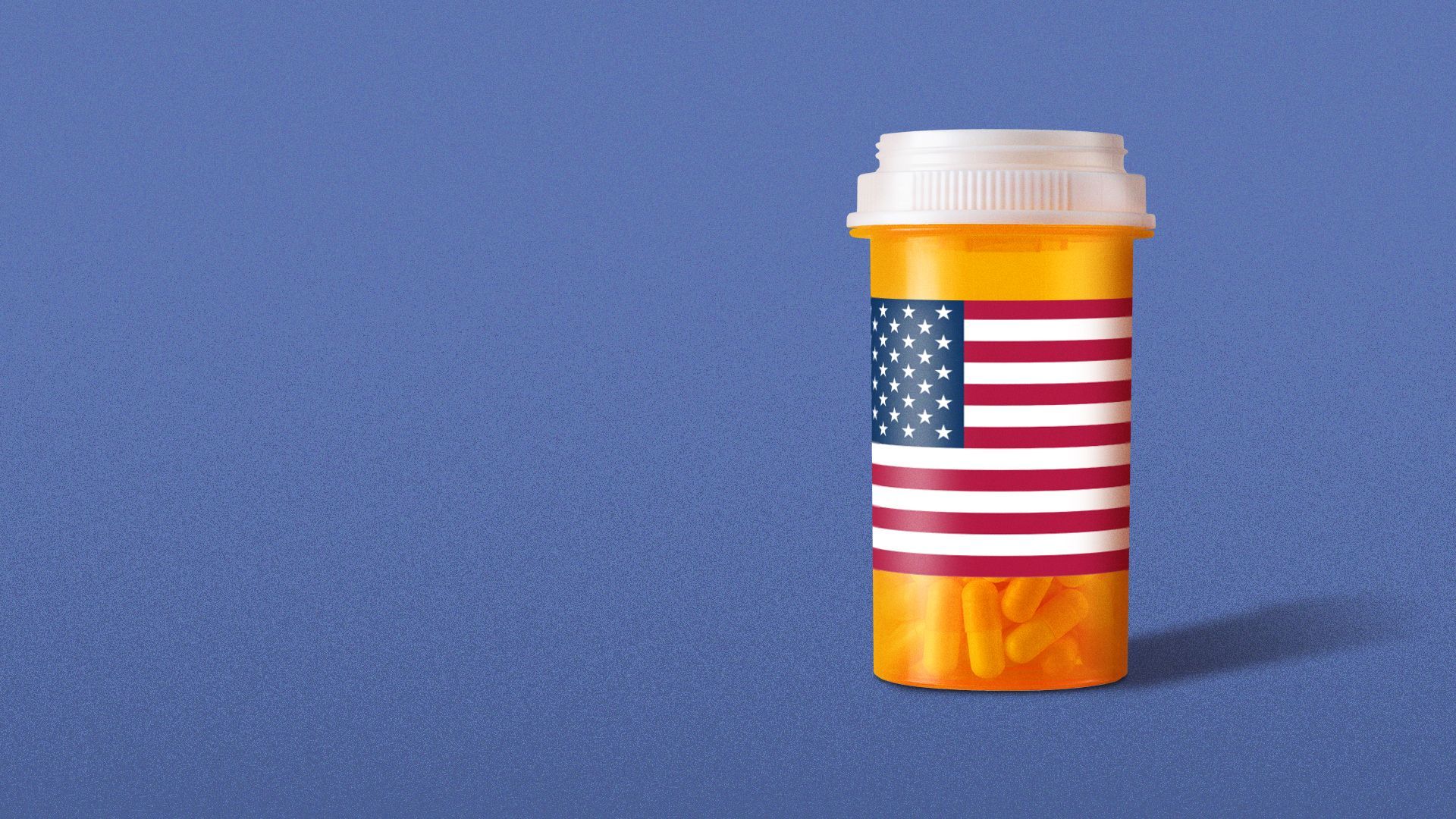
Illustration: Allie Carl/Axios
A day after deep Food and Drug Administration cuts rocked their world, drug and med tech companies faced another potentially big hit when President Trump announced a baseline 10% tariff on U.S. imports.
Why it matters: The life sciences are heavily reliant on foreign countries for raw materials and manufacturing, most of it duty-free. Experts said a radical shift away from free-trade policies could bring higher drug prices, supply chain disruptions and weaker margins for big industry players.
Yes, but: Pharmaceuticals were notably exempt from steeper reciprocal duties on goods from Europe, Japan and China that Trump announced, according to a White House fact sheet.
The big picture: Trump is wagering he can revive domestic manufacturing, raise revenues to offset tax cuts and push other nations to adhere to nontrade-related demands.
- He's already won big manufacturing commitments in the health space from Johnson & Johnson and Eli Lilly.
- But the actions announced Tuesday could dramatically raise industry costs and force drug and med tech companies to rethink their supply chains, find alternative strategies for sourcing raw materials and look for ways to increase cash flow.
What they're saying: "If implemented as proposed, broad-based tariffs of this nature would act much as an excise tax. It will have a negative impact on innovation, cost jobs, and increase overall costs to the health care system," said Scott Whitaker, president and CEO of the med tech trade group AdvaMed.
- The group argues the med tech industry should be exempted from the tariffs.
Some drug companies like AbbVie, Bristol Myers Squibb and Eli Lilly are better positioned to weather the tariffs, because they have more U.S. manufacturing plants and pharmaceutical ingredient sites, TD Cowen analysts wrote in a note Wednesday.
- Multinationals with operations in Ireland, Germany and Switzerland may have bigger problems. Ireland, in particular, accounts for 26.1% of annual drug and device imports, per PwC.
- A 25% tariff on Ireland could result in a $19.5 billion increase in tariff revenue, PwC said.
What we're watching: Trump could announce pharma sector tariffs in the next month. The administration still could exempt specific companies that have committed to significant new investments in the U.S., Leerink analysts wrote in a note.
The story has been updated to include AdvaMed and Leerink comments.
