The Food and Drug Administration on Friday approved the first therapy based on CRISPR gene-editing technology to address the painful effects of sickle cell disease.
Why it matters: The technology could be applied beyond the estimated 100,000 Americans with sickle cell to other blood disorders like hemophilia, as well as certain cancers and infectious diseases.
The Centers for Disease Control and Prevention released new data Friday indicating that roughly 3.3 million adults in the U.S. suffer from chronic fatigue syndrome.
Why it matters: The study is the first nationally representative estimate of the condition and estimate proves larger than previous studies suggested, AP reported.
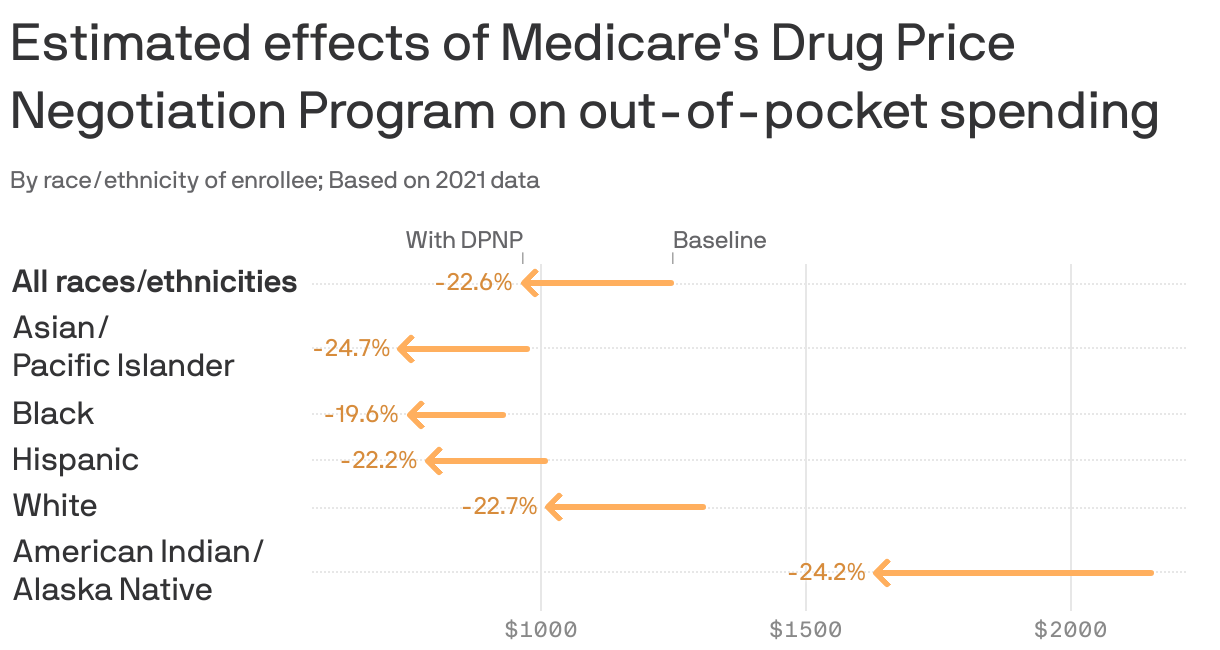
Medicare negotiations of prescription drug prices could have cut seniors' out-of-pocket costs by nearly a quarter had the program been in effect in 2021, according to an analysis Mathematica provided first to Axios.
Why it matters: The research consultancy's analysis offers a glimpse at potential savings enrollees might see as Medicare begins negotiating the prices of certain high-cost drugs.
Now coming to a mall, gym or office building near you: A self-contained doctor's office, powered by artificial intelligence, where you — the patient — draw your own blood and take your own vitals.
Why it matters: The traditional annual checkup is being disrupted in various tech-heavy ways, from telehealth to concierge medicine to the CarePod, above, a DIY health clinic-in-a-box.
The era of massive overhauls of the health care system appears to be over — at least for now.
Why it matters: Health care is shaping up to be a prominent 2024 campaign issue, but today's political environment has all but extinguished hopes for sweeping changes to the system.
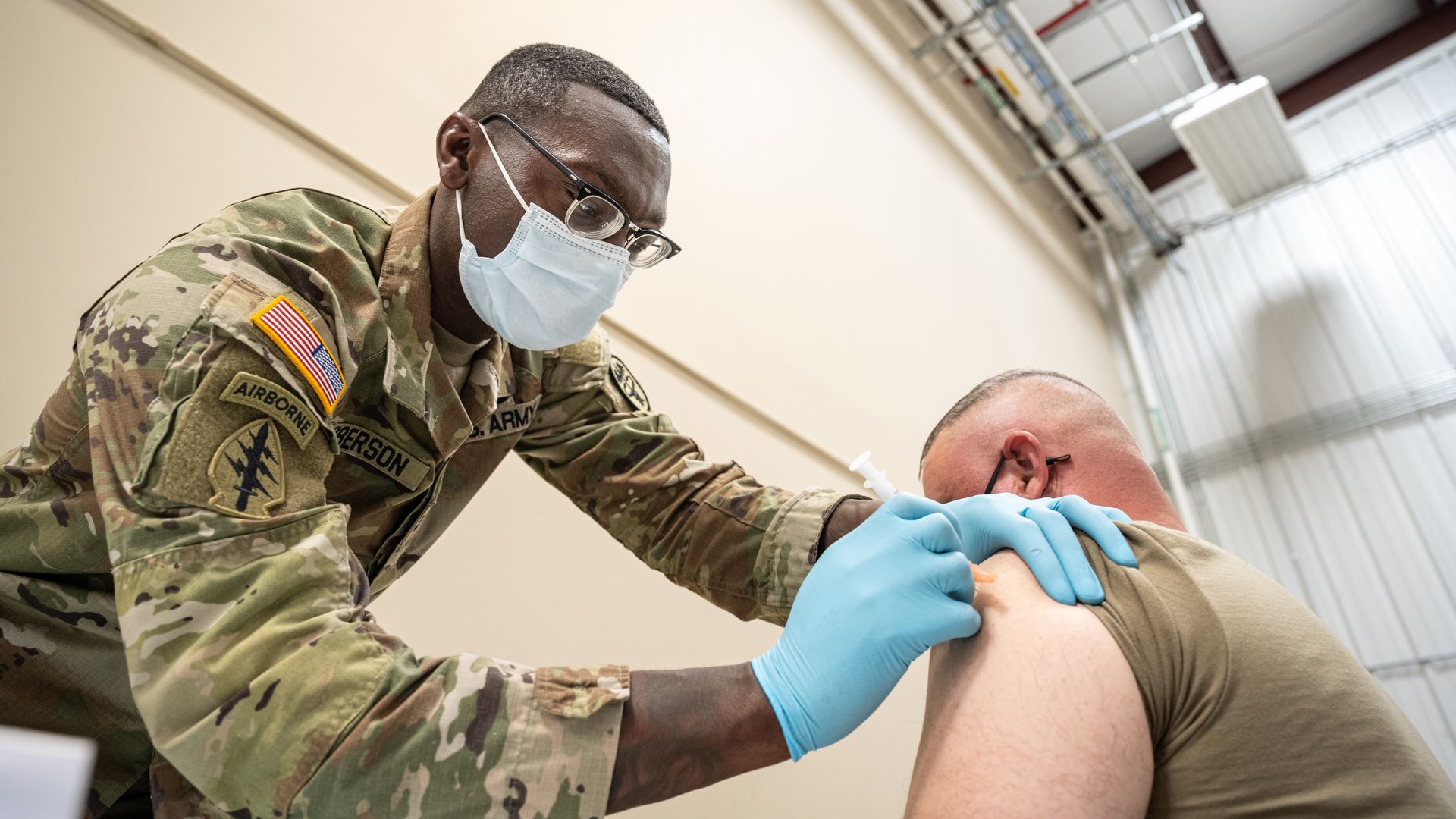
Congress may require the Department of Defense to review the reinstatement of former U.S. troops discharged for refusing to receive a COVID-19 vaccine, according to a draft of the annual defense bill released earlier this week.
Why it matters: The mandate, if passed in the final version of the bill, could see thousands of troops return to the armed services.
The Biden administration on Thursdaylaid out instances in which the federal government could break the patents of costly drugs developed with taxpayer funding in order to lower their prices.
Why it matters: Progressives have long advocated for so-called march-in rights, and President Biden's embrace of this authority plays into campaign messaging about taking on big pharma.
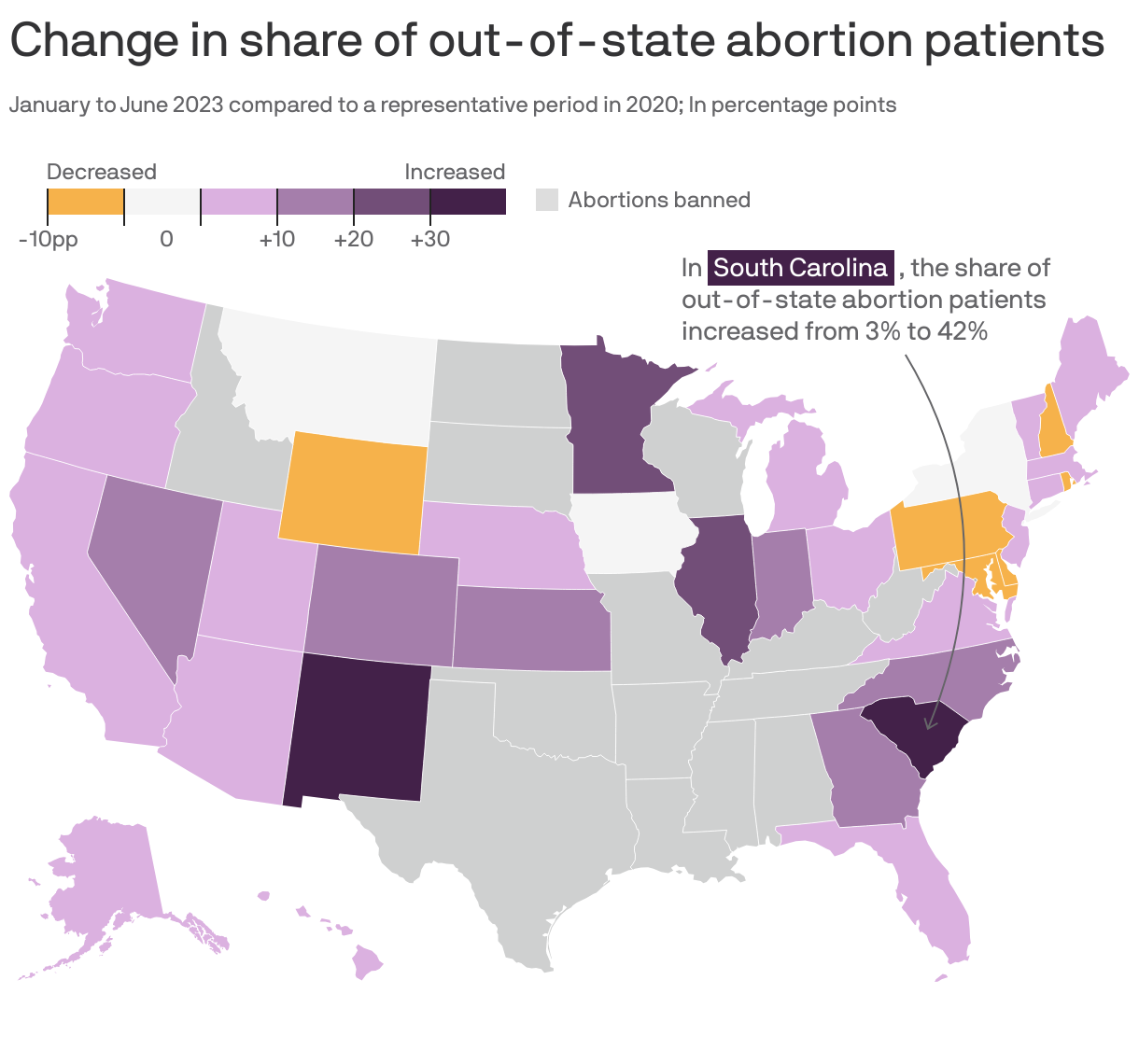
Data: Guttmacher Institute; Note: Wisconsin included in states where abortion was banned in the first half of 2023. Data unavailable for D.C.; Map: Simran Parwani/Axios
More than twice as many people crossed state lines for abortion care in the first half of 2023 compared with a similar period in 2020 when abortion was legal nationwide, according to a new analysis.
Why it matters: The Guttmacher Institute data demonstrates how state bans that took effect since Roe v. Wade was overturned have forced patients to travel longer distances to obtain an abortion.
The largest expansion of federally funded medical residency slots in over two decades was supposed to be a major lifeline for rural hospitals struggling with provider shortages. But very few rural hospitals have received the coveted slots so far.