The World Health Organization (WHO) on Thursday reconvened an emergency committee to reconsider whether it should declare monkeypox a public health emergency.
State and county health officials in New York announced on Thursday that a case of polio has been discovered in Rockland County.
Why it matters: No polio cases have originated in the U.S. since 1979. The last time the virus was brought into the country via travelers was in 1993, according to the Centers for Disease Control and Prevention.
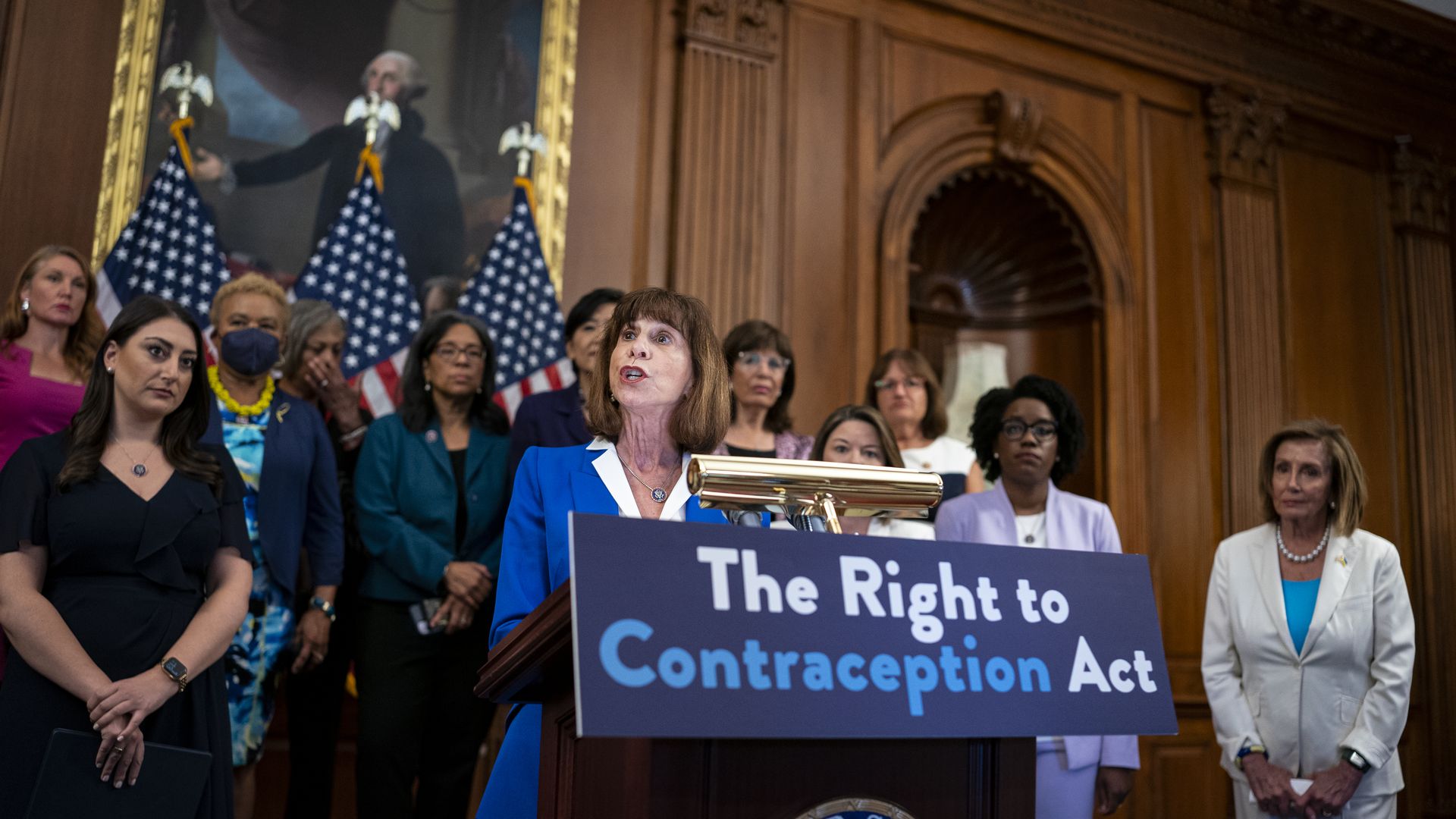
The House on Thursday passed a bill to protect a person's ability to access contraceptives in a 228-195 vote.
The big picture: Lawmakers have been introducing legislation in response to Justice Clarence Thomas' concurring opinion overturning Roe v. Wade saying that the court should reconsider "all of this Court’s substantive due process precedents," including those guaranteeing birth control access and marriage equality.
Amazon has agreed to acquire One Medical, the primary care chain, for $18 per share in an all-cash transaction. It values the latter at about $3.9 billion, including its net debt.
Why it matters: This is Amazon's latest move into health care after some efforts panned out better than others.
It turns out there are very few truly high or low-cost areas in the U.S. when it comes to health care, since there's little relationship between Medicare, Medicaid and private insurance spending trends, according to a new study in JAMA Network Open.
Why it matters: The lack of uniform spending across markets in the same region underscores the complexity of the U.S. health system — as well as the challenges of lowering health care costs.
The big picture: There's substantial variation between all three categories of insurance, although Medicare spending is more constant.
That's likely a reflection of Medicare's regulated payment rates, compared to the private market and Medicaid managed care's market-driven prices.
Between the lines: To further complicate things, the study found that each market's spending variation is influenced by different factors.
In the private market, regions with higher prices generally had higher spending. Within Medicare, regions with higher spending have more specialist physicians per capita. And within Medicaid, regions with higher spending have more hospital beds and births per capita.
The bottom line: How much you pay for health care relative to other Americans depends on where you live. This study proves how much it also depends on where you get your coverage.
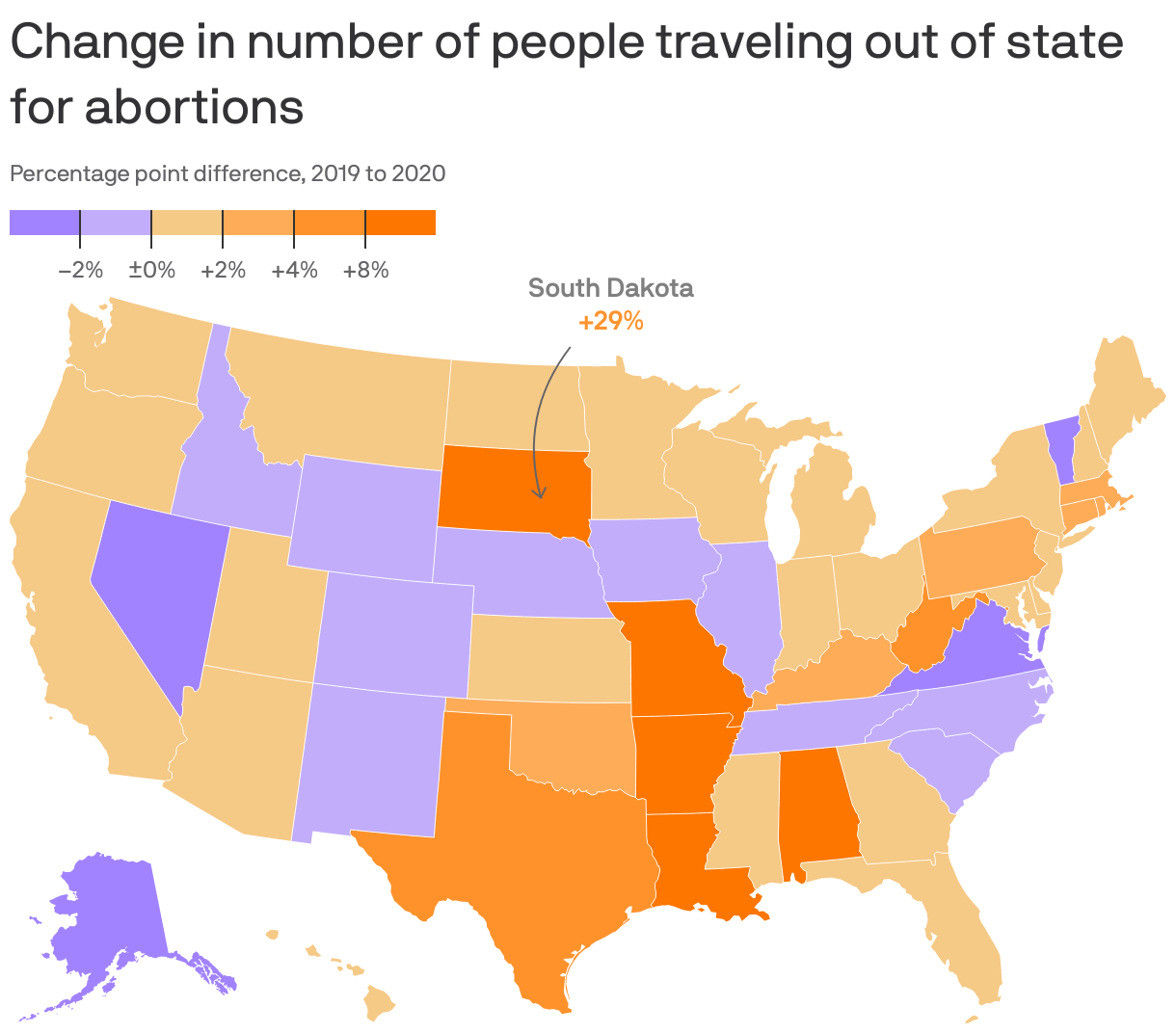
Almost 10% of abortions in the U.S. in 2020 were obtained by people who traveled out-of-state, and researchers say it's likely that the number will increase as more states ban or restrict access following the overturning of Roe v. Wade.
The big picture: Researchers from the Guttmacher Institute, a research organization that support abortion rights, found that the number of people leaving their home states to access abortion has been steadily increasing, from 6% in 2011 to 9% in 2020.
Cities could dramatically reduce peak summer temperatures by replacing hot, dark surfaces — like streets, rooftops, playgrounds and parking lots — with cooler alternatives, according to the Smart Surfaces Coalition, a new advocacy group.
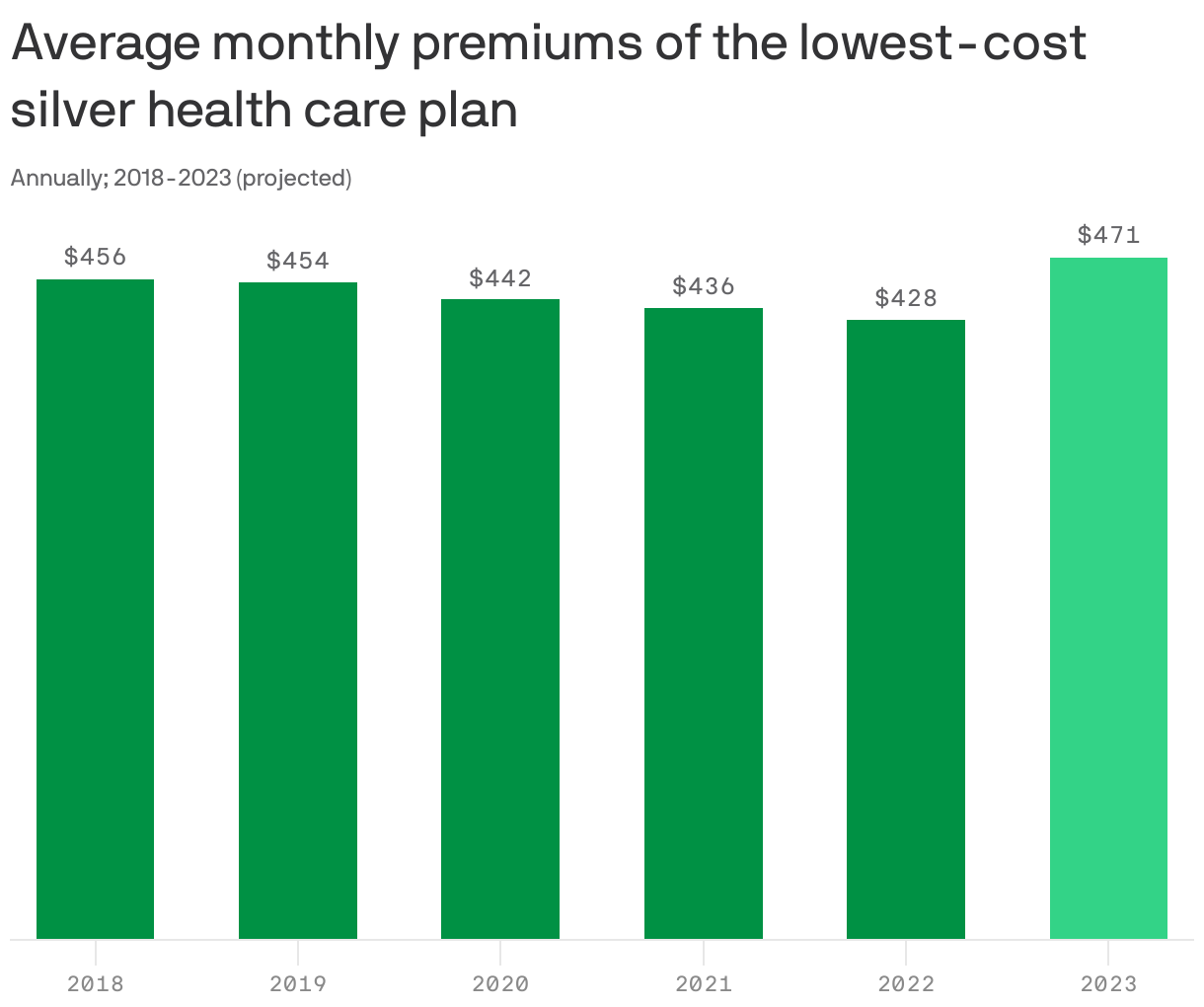
Democrats' 11th-hour scramble to avoid steep Affordable Care Act premium increases for enrollees next year glosses over the reality that premiums are going up regardless for many people, thanks to the steady upward march of health care prices.
The catch: If the Democrats succeed, most ACA enrollees won't notice the premium hikes — which preliminary filings suggest will be around 10% — thanks to the law's subsidy structure, which passes the tab along to the federal government.