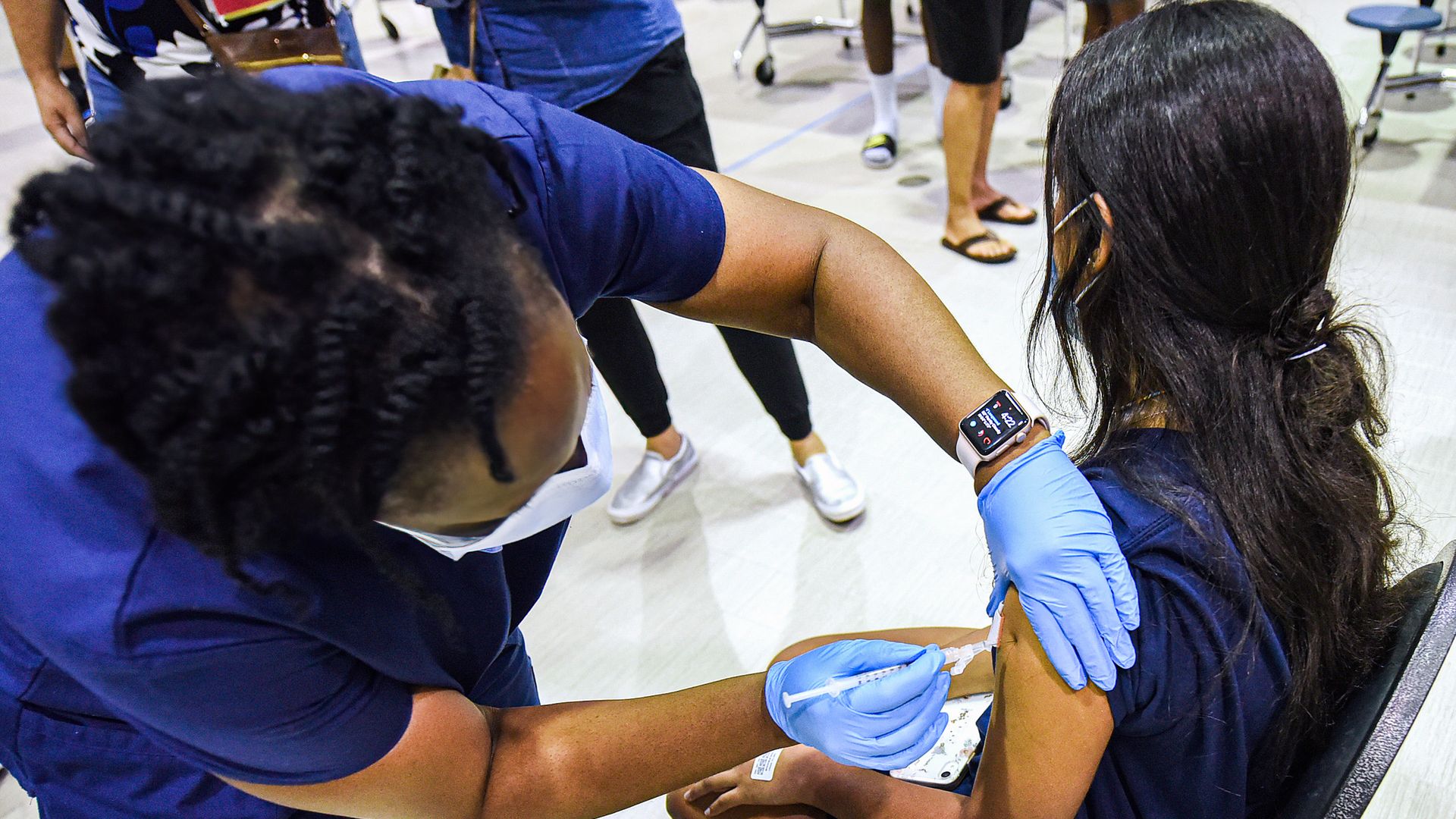
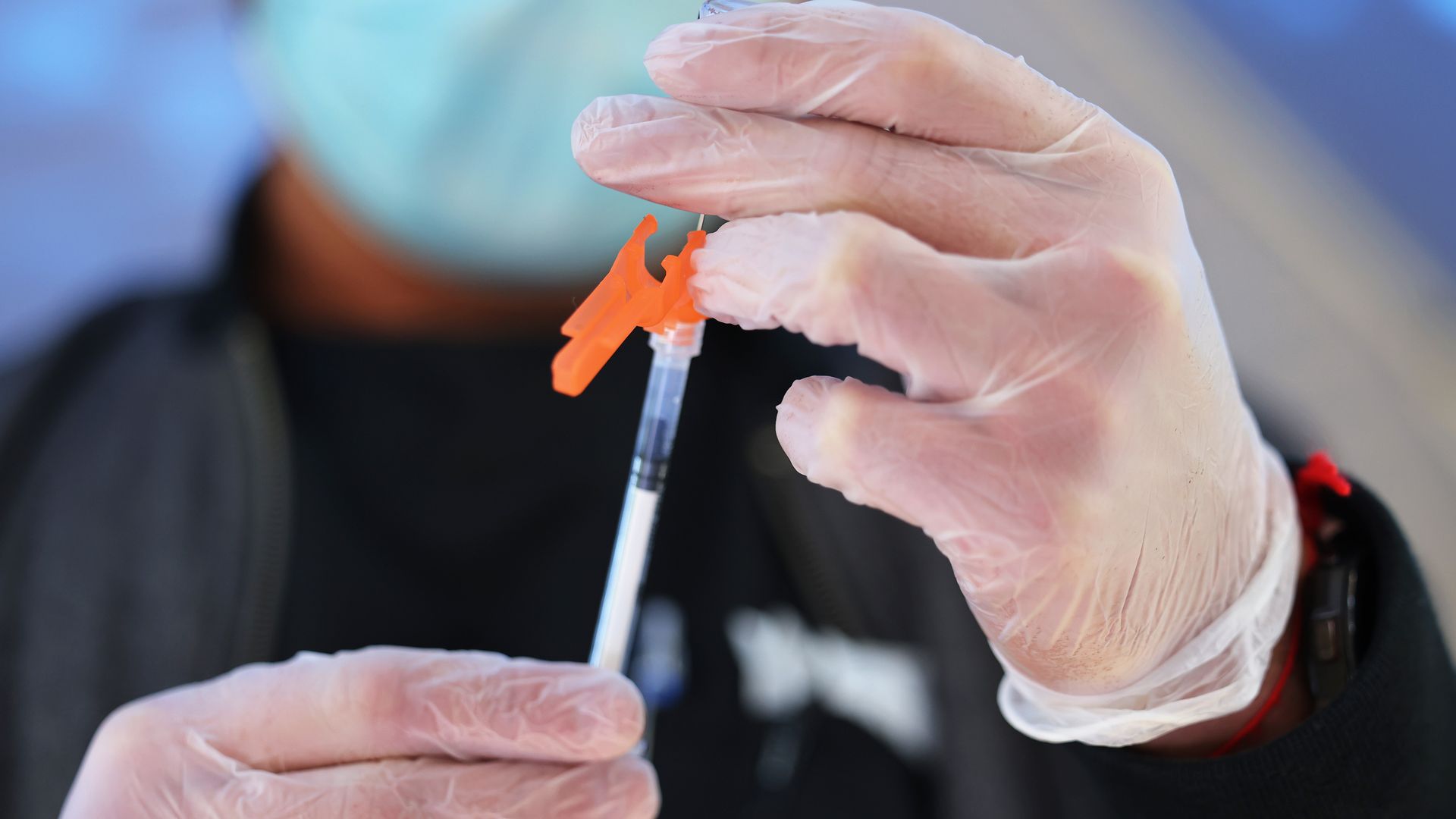
Food and Drug Administration regulators said Friday that the benefits of the Pfizer-BioNTech vaccine for children far outweigh the risks for children ages 5 to 11.
Why it matters: The announcement could add momentum to the FDA's authorization of doses for children on an emergency basis, which could happen as early as next week, according to the New York Times.
The Centers for Disease Control and Prevention identified Friday an aromatherapy spray imported from India as the source of a serious tropical disease that sickened four people earlier this year, killing two.
Driving the news: A CDC investigation found the same type of bacteria that causes an extremely rare disease called melioidosis in a spray bottle sold at nearly 55 Walmart stores between February and October.
Illinois Gov. J.B. Pritzker (D) announced Friday that all daycare workers in the state will be required to receive the COVID-19 vaccine or or submit to weekly testing.
Driving the news: Pritzker said he was issuing the requirement to protect "babies, toddlers, and young children not yet eligible for the vaccine."
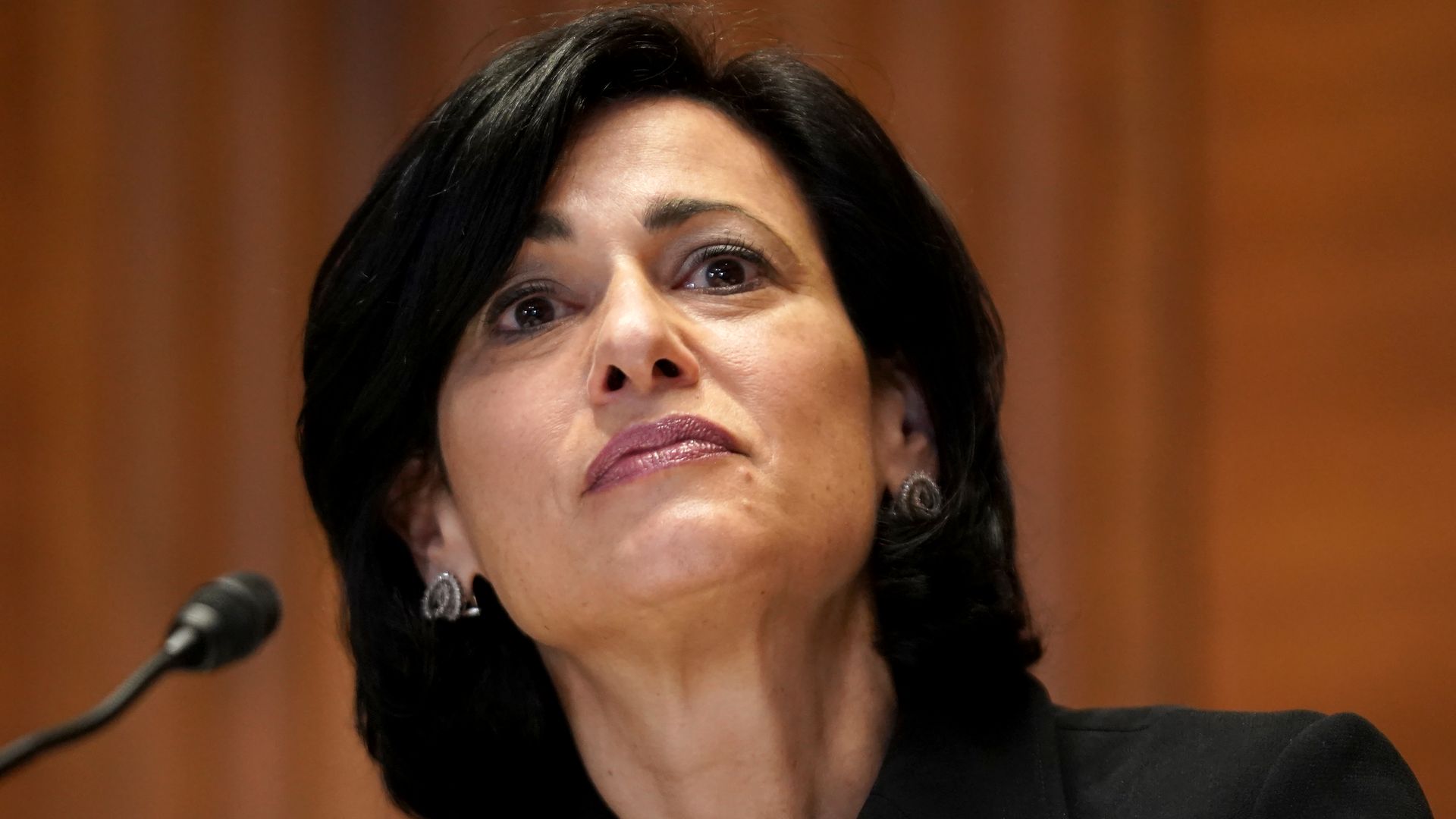
Rochelle Walensky, director of the Centers for Disease Control and Prevention, said Friday the U.S. "may need to update" its definition for what it means to have full vaccination against COVID.
The big picture: The CDC and the FDA have officially approved boosters with every authorized vaccine in the U.S. for people who meet specific requirements. Walensky explained that since not everyone is eligible for a booster, the definition has not been changed "yet."
Pfizer and BioNTech said their COVID-19 vaccine was more than 90% effective at protecting children between the ages of 5 and 11 from symptomatic infections from the virus, according to a study posted online by the FDA Friday.
Why it matters: Pfizer is seeking an emergency use authorization to vaccinate children — one of the last groups of Americans still largely ineligible to receive a coronavirus vaccine.
This winter probably won't bring another crushing COVID wave, experts say.
Why it matters: Last winter was the deadliest phase of the pandemic, and many Americans are braced for cold weather to once again usher in a surge in cases and deaths. But there are good reasons to think this year won't be nearly as bad.
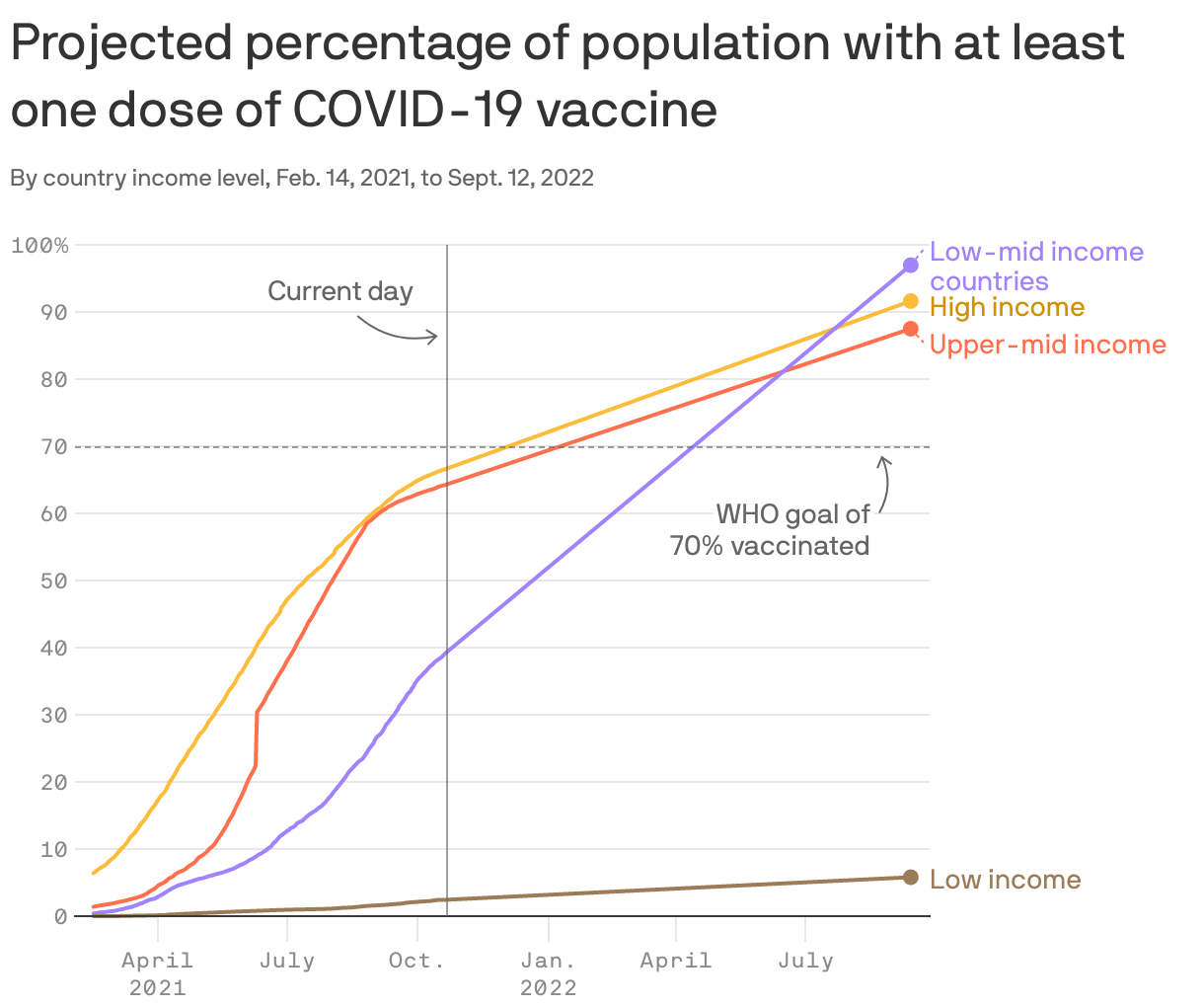
The world as a whole is on track to meet the WHO's goal of 70% of the global population vaccinated by mid-2022. But low-income countries are very much not, according to a new KFF analysis.
Why it matters: Without some kind of intervention, people who live in low-income countries will keep dying long into the future as the virus keeps circulating, and the risk of dangerous new variants will rise.