Americans spent $3.65 trillion on health care in 2018 — 4.6% more than the year before. That growth also was higher than the 4.2% rate from 2017, according to revised figures from independent federal actuaries.
Between the lines: U.S. health care spending climbed again not because people went to the doctor or hospital more frequently, but because the industry charged higher prices. And private health insurers didn't do a particularly good job negotiating lower rates.
New data from the National Youth Tobacco Survey show that 6.2 million middle school and high school students use tobacco, the highest level since 2000.
Why it matters: Tobacco use among middle schoolers and high schoolers remains high thanks to the popularity of e-cigarettes.
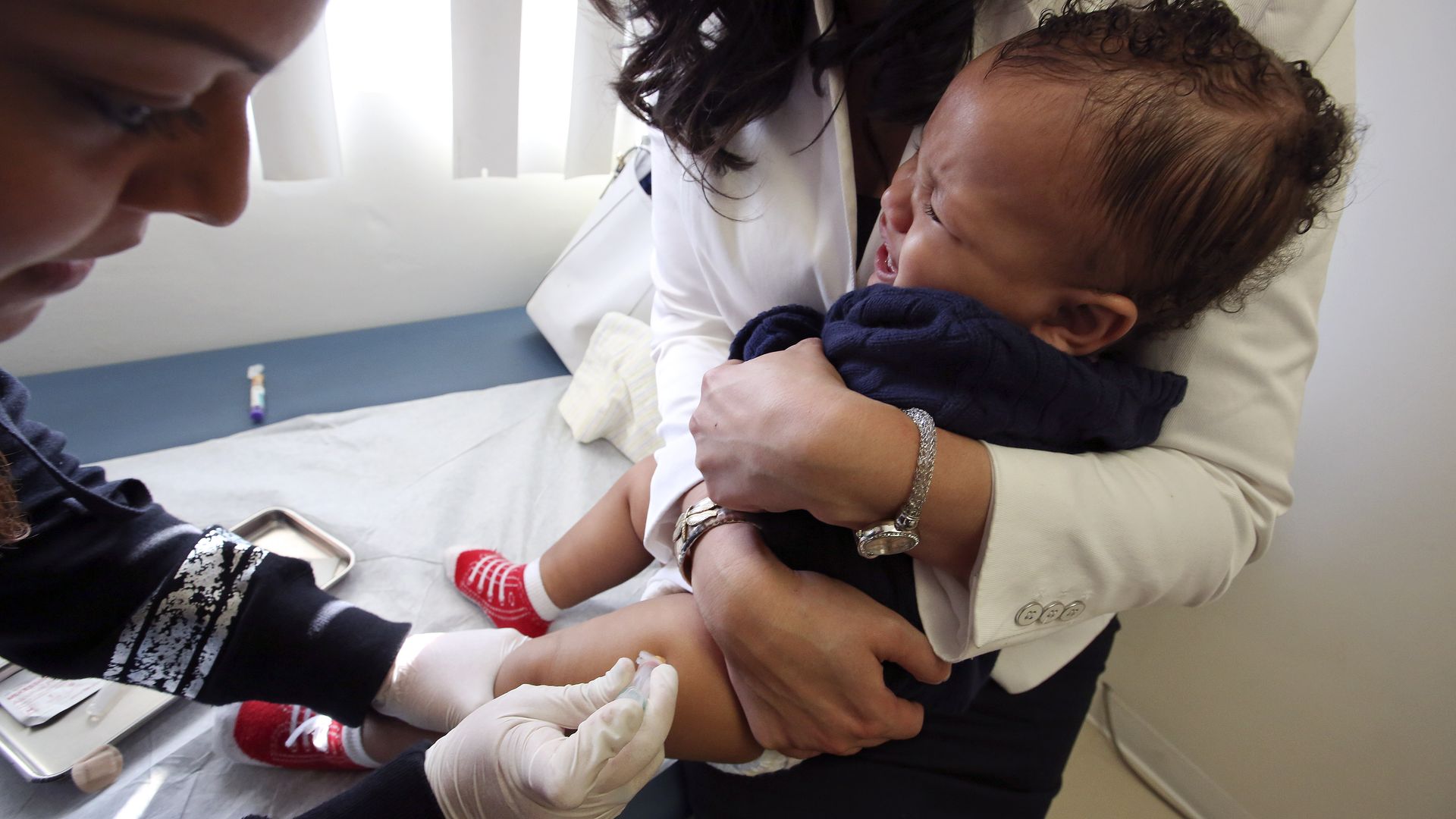
142,300 people — mostly children under 5 years old — died from measles in 2018, the World Health Organization said on Thursday.
The big picture: Cases of the vaccine-preventable infection continue to spike around the world. Ukraine, the Democratic Republic of the Congo (DRC), Madagascar, Liberia and Somalia had the highest incidence rates of the infection in 2018.
Americans spent $3.65 trillion on health care in 2018 — 4.6% more than the year before. That growth also was higher than the 4.2% rate from 2017, according to revised figures from independent federal actuaries.
Between the lines: U.S. health care spending climbed again not because people went to the doctor or hospital more frequently, but because the industry charged higher prices. And private health insurers didn't do a particularly good job negotiating lower rates.
Hospitals sued the Trump administration yesterday over its requirement that they disclose their negotiated rates, the latest of the industry's moves to protect itself from policy changes that could hurt its revenues.
Why it matters: Hospitals account for the largest portion of U.S. health costs — which patients are finding increasingly unaffordable.
Physician staffing firm TeamHealth sent thousands of surprise medical bills to patients in 2017, a strategy used to obtain higher payment rates from insurers, according to a letter from the company sent to a group of senators in March, which was obtained by Axios.
Why it matters: These bills can be unaffordable for the small portion of TeamHealth's patients who receive them, and the subsequently high in-network rates raise premiums for everyone.